
CCTV Monitoring Services
Grand Protective Security provides CCTV monitoring services, live video monitoring, and remote video monitoring that add active security oversight to authorized surveillance-camera feeds. Monitoring should be structured around agreed coverage hours, priority camera zones, event rules, verification, site-specific response procedures, and incident documentation so suspicious activity can be reviewed and escalated appropriately.
Get a CCTV Monitoring Quote or request a Security Assessment at (510) 417-6817. Grand Protective Security is based in Albany, California, and provides 24/7 security services.




Request a Free Quote!
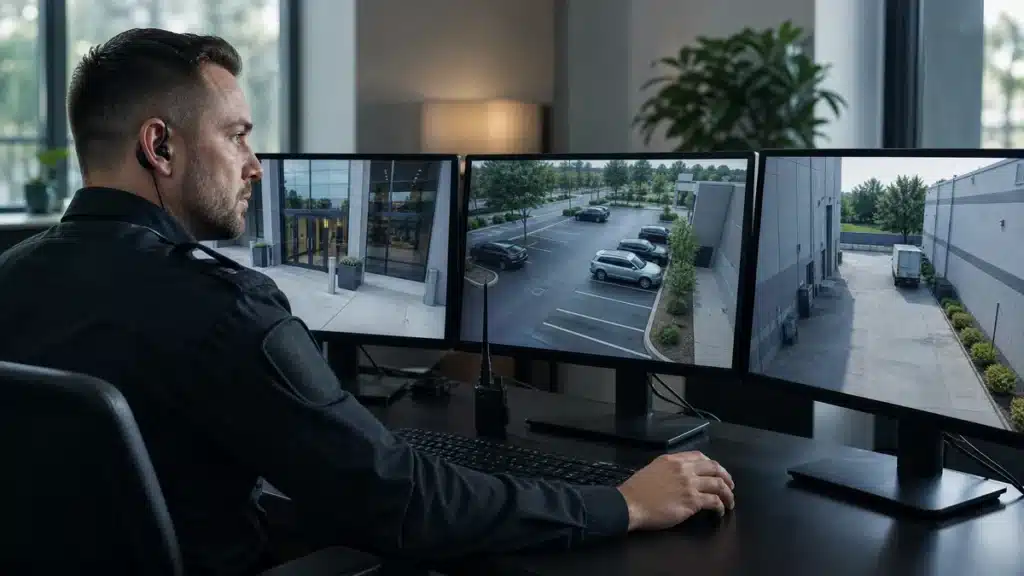
What Are CCTV Monitoring Services?
CCTV monitoring services are the active observation or review of authorized security-camera feeds by trained security personnel and/or monitoring technology under agreed rules. As part of broader integrated security services, monitoring can work within a wider site-specific protection strategy. Unlike simple recording, professional monitoring can identify an event, verify whether activity is suspicious, follow a response protocol, and create an incident record while the situation is still relevant, helping a professional security company support a more coordinated response.
CCTV Monitoring vs Recording-Only Cameras
| Factor | Active CCTV Monitoring | Recording-Only CCTV |
|---|---|---|
| Primary function | Observe/verify activity under monitoring rules and trigger response procedures | Record footage for later review |
| Human/security review | Live or event-driven review if included | Usually none until someone checks footage |
| During an incident | Can support verification, notification and escalation | Primarily creates evidence after the event |
| False-alarm handling | Can review video before escalation where supported | No professional verification unless another service is added |
| Documentation | Incident/event reporting may be generated | Video recording only unless manually reviewed |
| Best fit | Properties needing proactive oversight and defined response | Properties primarily needing evidence/history |
What''s iNlcuded in CCTV Monitoring SERVICE
Camera Feeding
CCTV cameras or IP cameras cover agreed camera zones such as entrances, perimeter, parking, gates, loading areas, common areas, yards, or critical asset zones depending on the property.
Detect Suspicious Activity
The surveillance system will be monitored continuously, during scheduled windows, or on an event-driven basis. Motion detection or video analytics may prioritize activity only where those functions are actually used.
Security Person Verification
Where human review is part of the service, trained security personnel or a monitoring operator reviews the security camera feed and uses context to distinguish routine movement from a potential concern.
Our Service Areas
Grand Protective Security provides complete CCTV monitoring services across California and the San Francisco Bay Area.Our service areas include Albany, Oakland, Berkeley and San Jose.
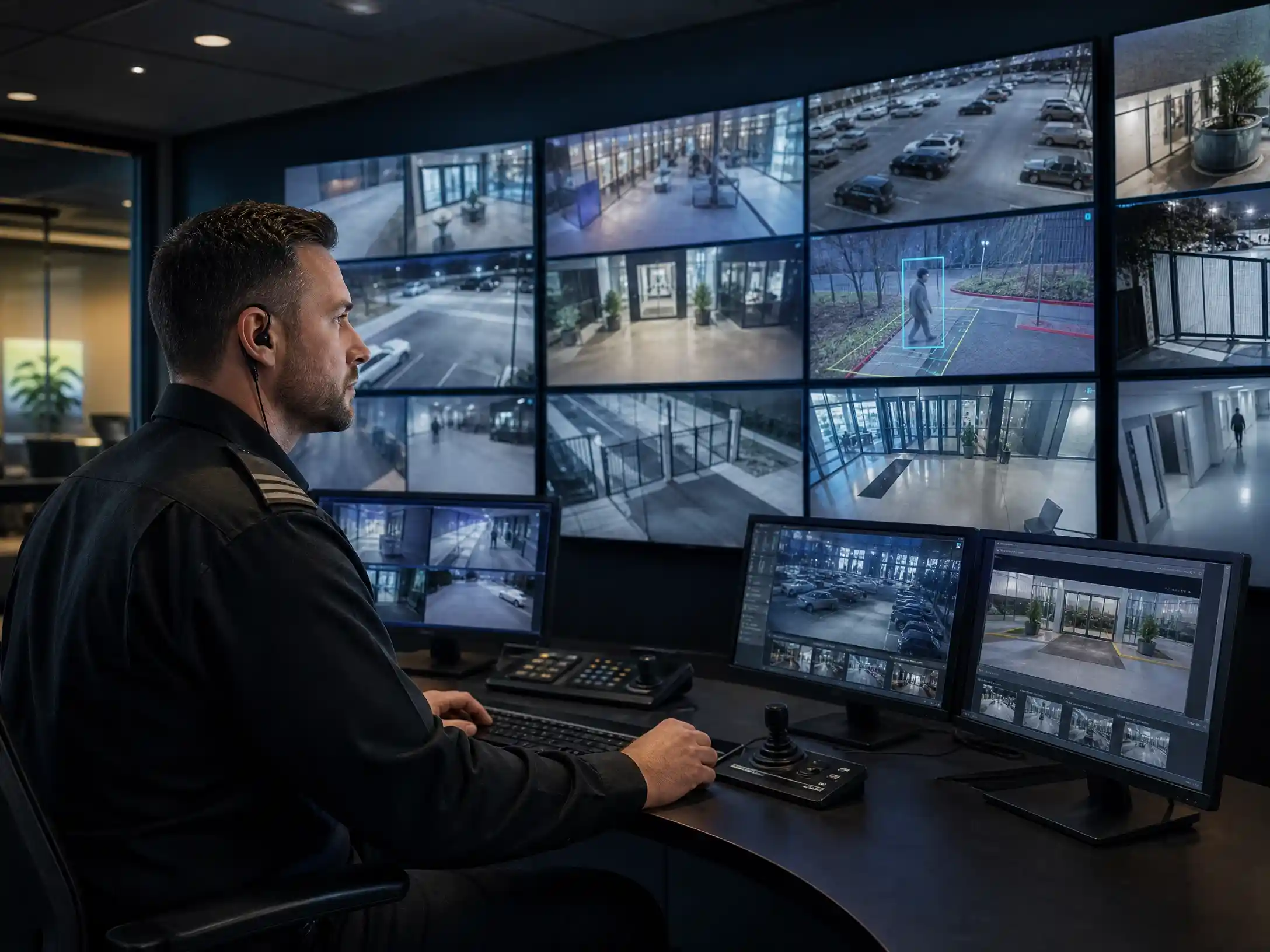
What Happens When Suspicious Activity Is Detected?
When suspicious activity is detected, the approved response sequence should be clear: review the footage, verify the concern, follow site instructions, notify the designated client contact, use available intervention tools, dispatch mobile patrol or on-site security where included, contact law enforcement or emergency services when appropriate, and document the event.
Private security monitoring does not replace 911, police, fire, or EMS during an active emergency.
Human Monitoring, Video Analytics and False-Alarm Verification
Human judgment provides context that a raw event alert cannot. A monitoring operator can compare activity with operating hours, camera zone, authorized access, and normal property behavior before escalation. False-alarm verification can reduce unnecessary escalation when routine movement, weather, lighting changes, animals, or other benign events trigger alerts.
Can Grand Protective Security Monitor Existing CCTV Cameras?
Existing-camera compatibility depends on camera type, IP camera or video recorder setup, network connection, secure credentials, software or VMS/NVR platform, stream reliability, image quality, and security requirements.
How Grand Protective Security Builds a CCTV Monitoring Plan
Understand the Property and Security Risks
Review layout, operating hours, incidents, high-value areas, access points, after-hours vulnerabilities, blind areas, current surveillance system, and client concerns.
Identify Priority Cameras and Monitoring Zones
Define which CCTV camera feeds matter most and which zones require active review, event alerts, or evidence retention.
Define Monitoring Hours and Event Rules
Set after-hours, scheduled, event-driven, or 24/7 monitoring for your property.
Create Site-Specific Response Protocols
Define who receives client notification, when mobile patrol or guards are dispatched, when police/fire/EMS are contacted, and what events require documentation.
Define Reporting and Evidence Requirements
Confirm whether incident logs, screenshots, video clips, event summaries, retention, and client reporting are part of the service.
Review Trends and Adjust Coverage
Use incident patterns, blind spots, false alerts, camera health, and client feedback to adjust camera priorities or response rules.
CCTV Monitoring by Property Type
Commercial Spaces
Apartment Communities and HOAs
Construction Sites
Warehouses and Industrial Facilities
Retail Centers and Shopping Plazas
Parking Lots and Garages
Vacant and Temporarily Closed Properties
Multi-Property Portfolios
CCTV Monitoring vs On-Site Security Guards
| Factor | CCTV Monitoring | On-Site Guard |
|---|---|---|
| Coverage | Can view multiple camera zones simultaneously | Physically present in assigned areas/post |
| Physical presence | No, unless combined with patrol/guard response | Yes |
| Access control / visitor interaction | Limited unless integrated with access systems | Strong fit for direct entry/visitor management |
| Evidence | Video + incident records where available | Guard observations + reports; other evidence only if used |
| Response | Remote verification and escalation; physical response requires another resource | Immediate on-site officer presence |
| Multi-site scalability | Often strong where camera infrastructure exists | Requires staffing at each post/site |
| Best fit | Broad remote visibility, after-hours oversight, event verification | Continuous physical presence, access control, public interaction |
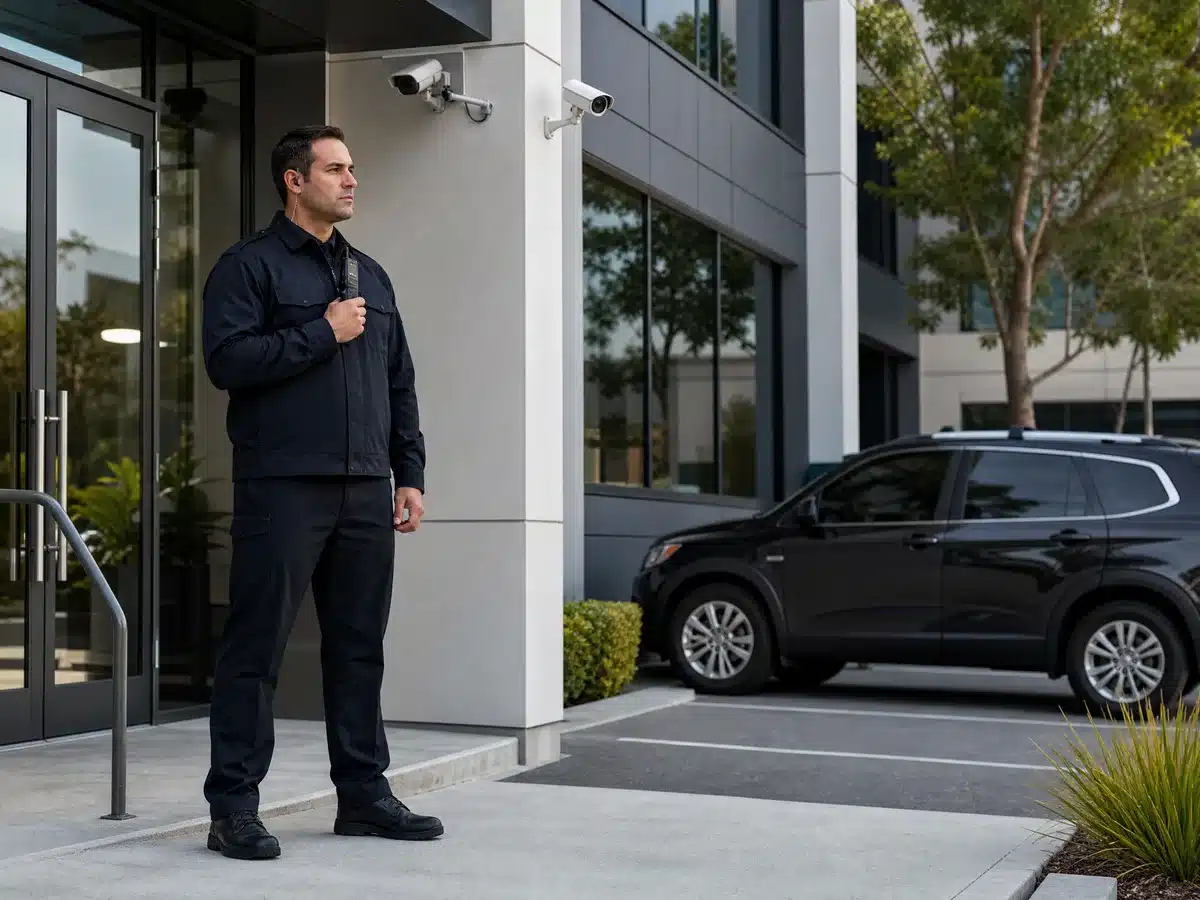
CCTV Monitoring + Mobile Patrol + Security Guards: Layered Security
CCTV monitoring, professional mobile patrol services, and on-site security guards solve different parts of the same security problem. A camera event can trigger remote verification and a patrol check; monitored cameras can notify an on-site guard; an access-point guard can manage people while cameras cover parking, perimeter, or other remote zones.
Incident Reporting, Video Evidence and Accountability
After a monitored incident, a commercial buyer should know what documentation is available. For properties with broader commercial security needs, clear records can also support accountability and follow-up after an incident. Our deliverables include event time, camera or zone, monitoring observations, client notifications, response actions, screenshots, video clips, an incident log, or incident report.
Privacy, Authorized Access and Camera Monitoring
Professional CCTV monitoring should use only authorized camera access under the client’s property policies, agreed monitoring scope, secure credentials, and applicable law. The monitoring plan should define who can access footage, which security camera feeds are monitored, how credentials are controlled, and who is authorized to request or receive incident evidence.
When CCTV Monitoring Is the Right Security Solution
CCTV monitoring is a strong fit for properties that need after-hours visibility, wide camera coverage, remote oversight, event verification, multi-zone monitoring, incident documentation, or layered security. The best results come from usable camera coverage, reliable connectivity, well-defined event rules, and a response protocol—not simply from adding more cameras.
When CCTV Monitoring May Not Be Enough
CCTV monitoring cannot replace every physical-security function. It does not provide continuous physical access control, customer-facing visitor management, patrol of areas outside camera coverage, or on-site response unless another resource is part of the plan.
A property may need unarmed security guards, armed security guards where documented risk supports them, mobile patrol, access control, or a security risk assessment in addition to or instead of monitoring.
How to Request a Quote
Call (510) 417-6817 or use the quote form on this page. Tell us your property type, the hours you need covered, and the kind of coverage you are looking for, and our team will prepare your quote.
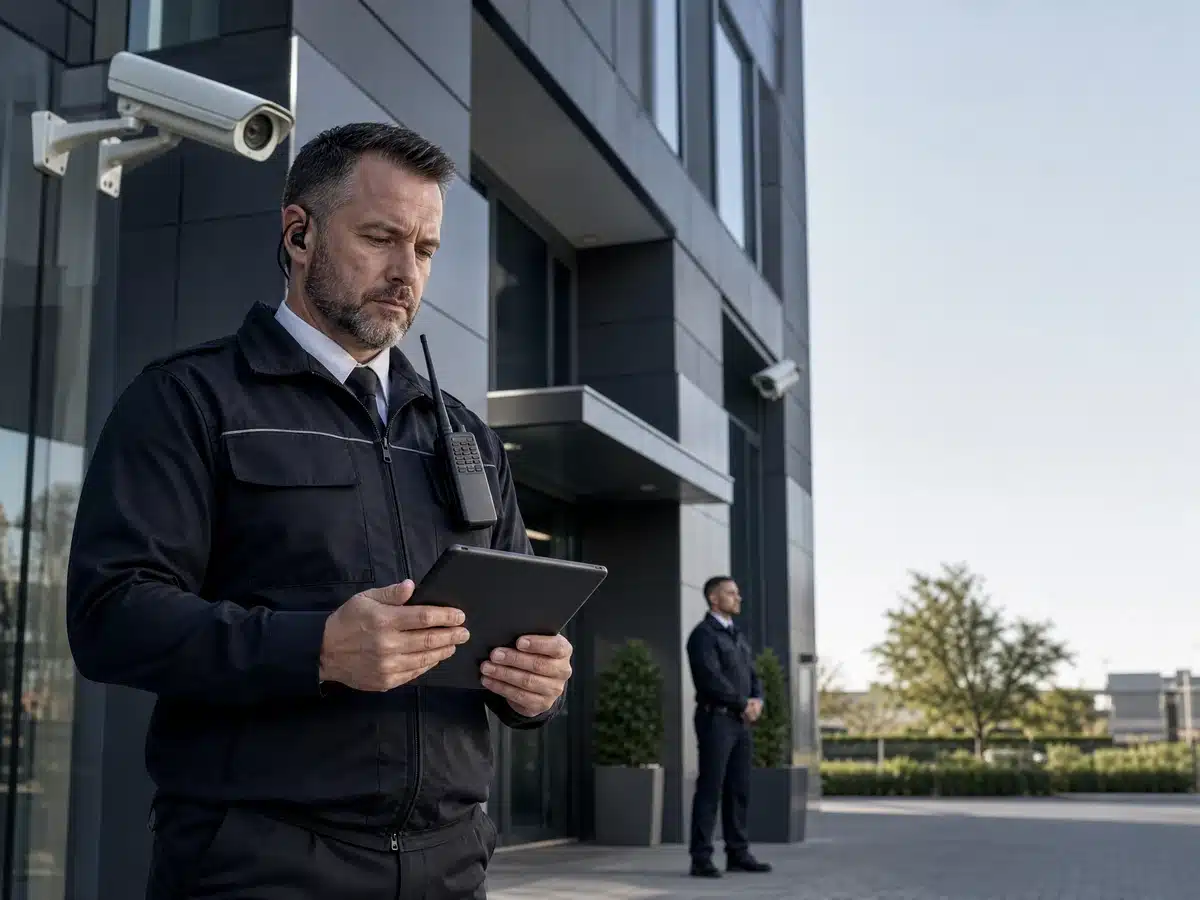
Why Choose Grand Protective Security for CCTV Monitoring?
- Site-Specific Monitoring Plans
- Human Security Judgment
- Clear Incident Documentation
- Integration With Physical Security Services
- Albany-Based Security Company Serving San Francisco Bay Area Properties
CCTV monitoring services actively review authorized surveillance-camera feeds according to agreed monitoring rules. The service can identify relevant activity, verify whether an event appears suspicious, follow a site-specific response protocol, and document the incident rather than simply store footage for later review.
Recorded surveillance mainly stores video for later investigation. Active CCTV monitoring adds live or event-driven review, verification, notification, and escalation procedures. The exact monitoring model depends on the contracted service and should not be assumed to mean every camera is continuously watched.
Yes, we provide 24/7 security coverage. Monitoring can be live-human, event-driven, scheduled, AI-assisted, or hybrid.
Possibly, depending on camera type, IP camera or recorder setup, network connection, credentials, platform compatibility, image quality, and security requirements. A compatibility assessment should confirm whether existing feeds can be used or what changes are needed.
The monitoring function should review the footage, verify the concern, follow site instructions, notify the designated contact, use available intervention tools, dispatch patrol or on-site security where contracted, contact emergency services when appropriate, and document the event.
Yes. CCTV can provide remote verification while mobile patrol or an on-site guard provides physical response or access control. A layered plan is useful when the property needs both broad camera visibility and an on-site security function.
Commercial buildings, construction sites, warehouses, retail centers, apartment communities, auto dealerships, parking facilities, vacant properties, and multi-site portfolios may benefit when they need remote visibility, after-hours oversight, event verification, or evidence across defined camera zones.
Professional verification can help distinguish routine or benign movement from a genuine security concern before escalation. The result depends on camera quality, event rules, analytics where used, and human review. No system should promise zero false alarms.
Incident evidence include screenshots, video clips, logs, or reports. Access, storage, retention, credentials, and release should follow authorization, property policy, contract terms, and applicable legal requirements.
Provide your business name, property type, city, camera count, current camera or recorder system, monitoring hours needed, number of locations, main security concerns, preferred response options, and desired start date.
Request CCTV Monitoring Coverage
To request CCTV monitoring coverage, provide your name, business name, phone, email, property type, city, number of cameras, existing camera system, monitoring hours needed, number of locations, main security concerns, desired response options such as notification, patrol, or guard where available, start date, and any additional requirements.