
Armed Security Guard Services in Oakland, CA
Grand Protective Security provides armed security guard services in Oakland, CA for properties where a site-specific risk profile, high-value assets, serious incident history, sensitive access, vulnerable operating hours, or another documented condition supports an armed presence. Armed security officers work under defined post orders and can perform access control, visitor screening, observation, foot patrol, incident reporting, de-escalation, and escalation according to the approved assignment.
Request an Oakland Armed Security Assessment or call (510) 417-6817. Grand Protective Security publishes CA PPO 122124 and serves Oakland within its broader East Bay security market where operationally available. Any GPS-specific claims about 24/7 armed deployment, screening, firearms-permit verification, supervisor checks, relief coverage, reporting systems, or Oakland assignment experience should be published only after internal verification.




Request a Free Quote!
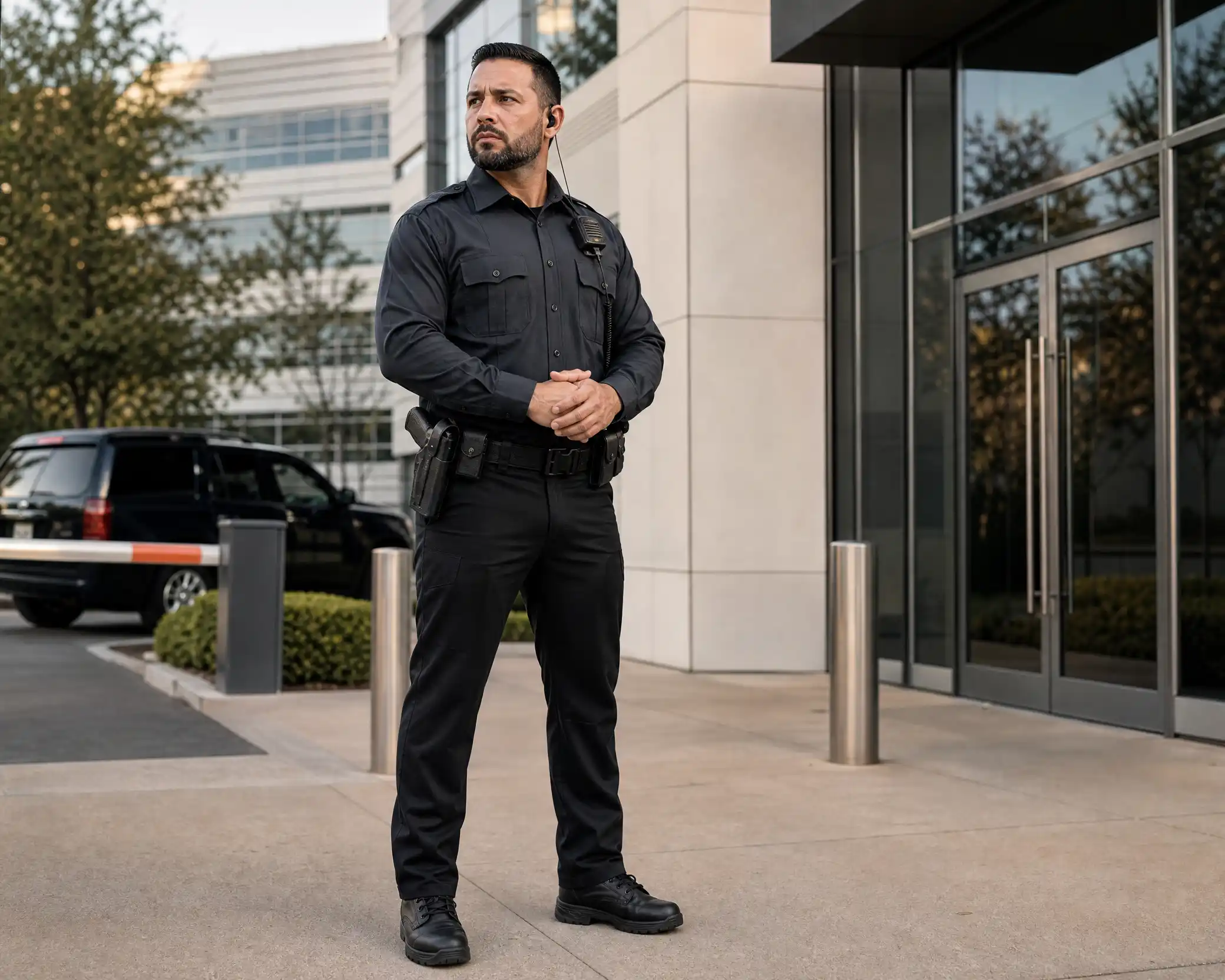
When Should an Oakland Business Consider Armed Security?
An Oakland business should consider armed security when a documented risk assessment identifies elevated threat exposure, high-value assets, repeated serious incidents, sensitive or restricted access, cash or high-value inventory, vulnerable operating hours, or another condition where an armed presence is justified. Armed staffing should follow evidence and site conditions rather than prestige, fear, or a one-size-fits-all security package.
Properties with routine access-control or customer-service needs may be better served by unarmed guards, mobile patrol, CCTV monitoring, or a layered security model.
When Armed Security May Not Be Necessary
Armed security may not be necessary for routine lobby or front-desk coverage, standard visitor screening, hospitality or customer-facing environments, lower-incident commercial properties, apartment reception posts, or properties that mainly need recurring after-hours checks. In those cases, an unarmed security guard, mobile patrol, CCTV monitoring, or security risk assessment may better match the actual need.
Choosing a less intensive model when the risk does not justify armed coverage can improve service fit, customer experience, and cost control without weakening the security plan.
What Do Armed Security Guards Do at an Oakland Site?
| Duty | Purpose | Oakland Property Context |
|---|---|---|
| Visible professional presence | Maintain an accountable staffed security post | Commercial, warehouse, construction, retail and sensitive properties |
| Access control | Apply authorized entry and restricted-area procedures | Offices, logistics sites, high-value inventory and sensitive facilities |
| Visitor / vendor screening | Verify authorization and delivery/contractor access | Commercial, warehouse, construction and institutional settings |
| Foot patrol / site rounds | Inspect assigned areas from the standing post | Perimeter, parking, yards, loading zones and restricted spaces |
| Observation / incident recognition | Identify unusual or prohibited activity | All contracted armed posts |
| De-escalation / communication | Use professional judgment before escalation where appropriate | Public-facing or mixed-use environments |
| Incident reporting | Document observations, notifications and actions | Property management and commercial accountability |
| Emergency escalation | Follow post orders and contact public responders when required | Serious security, medical or fire emergencies |
Armed security personnel are private security officers, not police officers. This page does not imply broader police authority or guaranteed incident prevention.
How Grand Protective Security Decides Whether Armed Coverage Is Appropriate
- Review the Property and Operations
- Review Threat and Serious-Incident History
- Review Existing Security Controls
- Compare Armed, Unarmed, Patrol, CCTV and Layered Models
- Define the Armed Post Scope if Justified
- Document Post Orders and Reporting
- Review Performance and Risk Changes
Armed vs. Unarmed Security Guards in Oakland
| Factor | Armed Guard | Unarmed Guard |
|---|---|---|
| Decision driver | Elevated documented risk | Routine/professional presence without firearm |
| Customer-facing fit | Depends on environment | Often stronger for hospitality, lobby and routine visitors |
| Access control | Strong | Strong |
| Licensing | Guard Registration + applicable Firearms Permit | Guard Registration |
| Cost tendency | Usually higher | Usually lower for comparable hours |
| Best fit | Higher-risk/high-value/sensitive sites where assessment supports it | Routine access/customer-facing/lower-risk continuous coverage |
Armed Security vs. Mobile Patrol in Oakland
| Factor | Armed Standing Guard | Mobile Patrol |
|---|---|---|
| Presence | Continuous during contracted post hours | Intermittent scheduled/random visits |
| Best use | Continuous higher-risk post or access point | Distributed after-hours checks or multiple sites |
| Access control | Strong continuous fit | Limited during each visit |
| Patrol | Foot/site rounds from assigned post | Vehicle/foot checks across a route |
| Scalability | One assigned post/site | Can cover several properties |
| Cost tendency | Higher continuous labor | Often lower when intermittent checks are sufficient |
What California Licensing Matters for Armed Security Guards?
California armed security work generally requires an active California BSIS Security Guard Registration plus the applicable BSIS Exposed Firearms Permit. Security guards are employed by a licensed Private Patrol Operator or other qualifying private security employer. Current BSIS guidance also requires eligibility and background checks, firearms training and qualification, and—where applicable—an assessment intended to evaluate judgment, restraint, and self-control for carrying a firearm while performing security duties.
This section is intentionally high-level. It does not provide firearms instruction. GPS should verify each assigned armed officer’s current registration and firearms permit through its actual compliance process before describing that process publicly.
Post Orders: How Armed Security Duties Are Defined
Armed security should operate from written site-specific responsibilities rather than vague instructions. Post orders can define the post location, coverage hours, access rules, visitor/vendor process, restricted areas, patrol route, communications, incident categories, emergency contacts, reports, relief or break procedures, and the escalation chain.
Clear post orders reduce role ambiguity and help align the armed officer, client contact, supervisor, dispatch process, and public emergency responders around the same expectations.
De-Escalation, Judgment and Escalation in Armed Security
Professional armed security depends on judgment and restraint as much as visible presence. Observation, communication, de-escalation, professional boundaries, and compliance with law, training, company policy, and site-specific post orders remain central to responsible armed-security behavior, including emergency-services coordination when required.
A high-level response flow is: observe -> assess -> communicate or de-escalate where appropriate -> follow post orders -> notify the client, supervisor, or dispatch -> contact 911 or other public responders when required -> document the event. This page does not provide tactical weapons-use instruction.
Armed Security Guard Services for Oakland Property Types
Some properties need more than one type of security coverage. Depending on your risk level, operating hours and property layout, our security services can include armed security guards working alongside, or being replaced by, another security service.
Warehouses / Logistics / High-Value Inventory
For warehouse/logistics properties, access and gate control, vendor verification, yards, loading areas, perimeter, and valuable inventory may justify armed security when the documented risk supports it.
Commercial / Corporate Properties
Restricted access, after-hours occupancy, sensitive areas, high-value assets, or incident history may support an armed post. Routine reception needs may still be better suited to unarmed coverage.
Construction Sites
Equipment, materials, changing access points, and after-hours exposure should be assessed before choosing armed guards, unarmed security, or mobile patrol.
Retail / High-Value Sales
For retail/high-value sales environments, entrance or closing-period security and asset exposure may justify armed coverage in some settings, but customer-facing suitability and documented risk should guide the decision.
Healthcare / Public-Facing Properties
Armed security should be used only where risk assessment and client policy support it. Communication, judgment, restraint, and de-escalation are especially important.
Government / Institutional Properties
Formal post orders, public access, restricted areas, reporting, and emergency coordination may shape the post. This page does not imply a City, County, school, or institutional contract.
Technology / Sensitive Facilities
For a technology/sensitive facility, restricted access, high-value assets, sensitive operations, and higher-consequence access failures may support armed coverage where actual capability and documented risk justify it.
Parking / Auto Inventory
For parking/auto inventory environments, vehicle inventory, parking, after-hours activity, access points, and perimeter conditions may support armed coverage where risk is elevated.
Armed Security for Oakland's Main Commercial Environments
- Downtown / Uptown Oakland: commercial offices, public-facing properties, parking, restricted access and after-hours conditions.
- Jack London / Waterfront: mixed commercial, hospitality/logistics-adjacent and parking contexts without implying Port or waterfront-agency contracts.
- West Oakland / I-880: warehouses, yards, logistics, equipment, loading activity and high-value inventory where site risk supports armed coverage.
- East Oakland Commercial / Industrial: retail, auto, warehouse and light-industrial properties requiring site-specific risk review.
These Oakland areas are used as property-operation context, not as crime-statistic claims or evidence of a GPS contract with a named public or private organization.
Access Control and Visitor Screening with Armed Guards
Armed guards may support employee ID or badge checks, vendor and contractor authorization, visitor logs, restricted-area access, deliveries, and after-hours entry when those duties are part of the post orders. The officer's armed status does not replace a clear access-control process. If access control and professional visitor management are the main needs and threat exposure is low, unarmed security may provide a better customer-facing fit.
Armed Foot Patrols, Perimeter Checks and Site Rounds
An armed standing officer may conduct assigned foot patrols, perimeter checks, parking or yard observations, restricted-area checks, and site rounds according to post orders. The route should balance patrol duties with any fixed-post responsibility that requires continuous presence. These on-site rounds are different from Mobile Patrol Security, which uses intermittent visits or vehicle-based routes rather than a continuously assigned standing post.
Incident Reporting, Supervisor Oversight and Accountability
An accountable armed-security program should define how attendance, daily activity reports, incident reports, supervisor checks, escalation records, post-order compliance, relief coverage, replacement coverage, and client communication are handled. The client should understand who reviews incidents and how coverage continuity is maintained. GPS should only claim specific supervisor, reporting, dispatch, guard-tour, or client-dashboard processes after verifying that they are part of the actual operating model.
Armed Security for Oakland Property Managers and Multi-Site Portfolios
A multi-site portfolio does not need the same security model at every property. One Oakland property may justify armed security, another may need unarmed access coverage, and another may be better suited to mobile patrol or CCTV monitoring. Portfolio planning can use site-specific risk, individual post orders, standardized reporting, shared escalation contacts, supervisor oversight, and account management where those capabilities are actually provided by GPS.
Layered Security: Armed Guards + CCTV + Mobile Patrol + Access Control
Layered security assigns each control a specific job. An armed guard can staff a sensitive access point, CCTV monitoring can expand visibility, mobile patrol can check remote parking or perimeter areas, and access control can support credential decisions. The right combination depends on property layout, operating hours, documented risk, access needs, and response expectations. Only verified GPS integrations or dispatch workflows should be presented as confirmed.
Risk Factor -> Security Model Decision Map
| Scenario | Risk Profile | Likely Model |
|---|---|---|
| Routine lobby / visitor management | Low-moderate | Unarmed guard |
| After-hours perimeter / multiple sites | Low-moderate | Mobile patrol / CCTV |
| High-value inventory + serious incident history | Elevated | Armed guard may fit after assessment |
| Sensitive restricted-access facility | Site-specific | Armed or unarmed + access/CCTV depending threat |
| Construction theft exposure | Variable | Patrol, unarmed or armed depending risk |
| Public-facing healthcare / institution | Variable | Often unarmed; armed only when documented risk/policy supports |
Incident -> Officer Action -> Escalation Map
| Observed Event | High-Level Officer Action | Escalation |
|---|---|---|
| Unauthorized access | Follow access/post orders; deny or redirect where authorized | Client/dispatch; law enforcement if required; report |
| Suspicious person / vehicle | Observe and assess; maintain professional distance | Notify contact; police if warranted; document |
| Aggressive behavior | Use communication/de-escalation where appropriate | Supervisor/client/911 based on threat; incident report |
| Forced entry / property damage | Observe and secure scene as authorized | Client; police/emergency services; document |
| Medical / fire emergency | Call appropriate public emergency service | Client/dispatch; report |
| Serious security incident | Follow law, training, post orders and company procedures | Public responders + client/supervisor; detailed report |
How Much Do Armed Security Guards Cost in Oakland?
Armed security cost in Oakland depends on coverage hours, number of officers, site risk, post duties, property type, overnight/weekend/holiday shifts, supervision, relief requirements, reporting, contract duration, urgency, and any verified specialized qualifications.
A site-specific quote is more useful than copying competitor hourly rates. Pricing should reflect the level of risk, continuity, duties, and accountability the property actually requires.
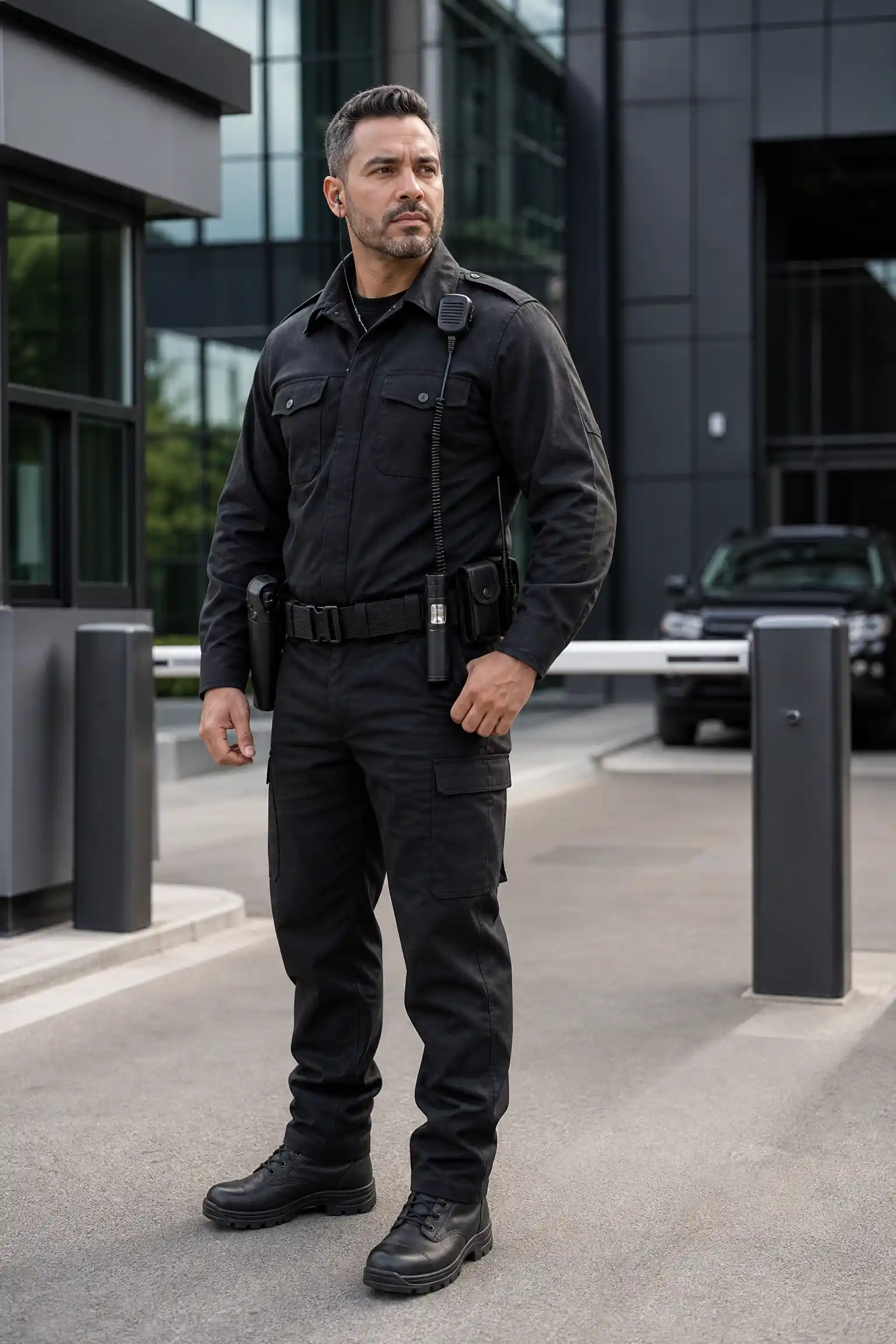

Why Choose Grand Protective Security for Armed Security in Oakland?
- Risk-Based Armed Deployment
- Site-Specific Post Orders
- Multiple Security Models to Compare
- California PPO and Verified Compliance
- Reporting and Supervision Where Verified
Define the Risk Decision Before Choosing an Armed Post
The first question should not be 'How many armed guards do we need?' It should be 'What risk or operational decision requires an armed presence?' Defining the decision helps separate high-value or elevated-threat needs from routine access, patrol, or monitoring problems that another security model may handle more effectively.
Separate High-Value Exposure From High-Interaction Posts
A property can contain both higher-risk asset areas and customer-facing areas. Armed presence may fit a restricted high-value zone while an unarmed officer is better suited to a public lobby or reception point. Security design should reflect the function of each area rather than apply one posture to the entire property.
Build Relief and Coverage Continuity Into the Armed Post
A higher-risk post cannot be treated as staffed only when the primary officer is available. The scope should define breaks, relief, replacement expectations, post handoff, instruction changes, and escalation when coverage continuity is disrupted. GPS should describe its exact backup process only after verification.
Review Armed Coverage When the Risk Profile Changes
A serious incident, tenant change, access-system upgrade, operating-hour change, new inventory profile, construction phase, or reduced threat exposure can change whether armed coverage is still justified. Periodic review prevents a temporary security decision from becoming a permanent default.
Use Armed Security as One Control, Not the Entire Security Plan
An armed officer cannot compensate for every weak door, poor access procedure, blind camera area, missing visitor rule, or inconsistent incident process. Stronger security combines the right staffing model with access control, CCTV, patrol, lighting, post orders, communication, and management follow-up.
Oakland Areas We Serve with Armed Security Guards
Armed security may support genuine Oakland assignments across Downtown, Uptown, Jack London, Lake Merritt, West Oakland, East Oakland, Fruitvale, Temescal, Rockridge, Oakland Hills, and other areas where GPS accepts service.
This section is intentionally concise. It supports local relevance without neighborhood keyword stuffing or implying contracts with the City of Oakland, Alameda County, the Port, hospitals, warehouses, or named institutions.
Frequently Asked Questions About Security Services in San Jose
Pricing depends on service type, number of guards or patrol visits, coverage hours, property complexity, duties, risk, supervision, reporting, contract duration, urgency and any specialized requirements. A site-specific quote is more useful than a generic hourly or monthly figure.
Request Armed Security Guard Services in Oakland
To request armed security guard services in Oakland, provide your name, company or property, phone, email, Oakland address, property type, number of sites, start date, coverage hours, guard count or ‘not sure,’ current security, access needs, serious incidents or threats, high-value assets, parking/perimeter concerns, armed/unarmed preference or ‘not sure,’ CCTV/alarms, and urgency.