
Unarmed Security Guards




Request a Free Quote!
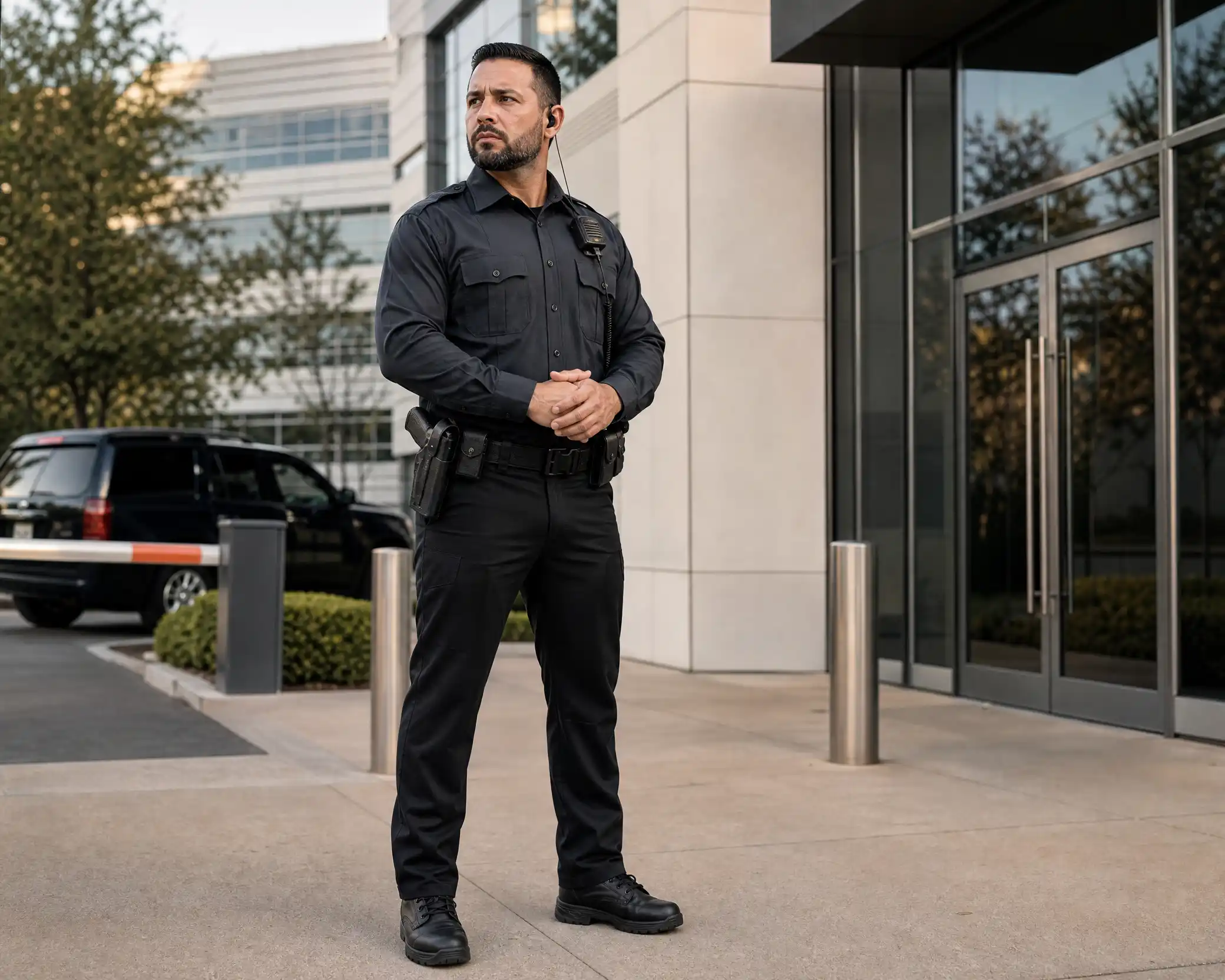
When Are Unarmed Security Guards the Right Choice in San Francisco?
When Unarmed Security May Not Be Enough
Unarmed security may not be enough when a property has a documented elevated threat, significant high-value or cash exposure, repeated serious violence, or another condition that supports continuous armed coverage. It may also be unnecessary when the property only needs intermittent after-hours checks.
Depending on the need, the alternative may be armed security, mobile patrol, CCTV monitoring, a security risk assessment or a layered security model. The choice should follow risk and operations rather than a generic preference.
What Does an Unarmed Security Guard Do at a San Francisco Property?
| Duty | Purpose | Typical Property Context |
|---|---|---|
| Visible professional presence | Provide a consistent on-site security point | Office, hotel, apartment, retail |
| Lobby / front desk security | Support visitor-facing access and building procedures | High-rise office, residential, hospitality |
| Access control | Check credentials and authorized entry | Restricted offices, mixed-use, healthcare |
| Visitor/vendor screening | Manage logs, authorization and delivery handoffs | Commercial, residential, construction |
| Foot patrol | Check assigned corridors, common areas or exterior zones | Office, garage, mixed-use |
| Garage/common-area checks | Observe access, hazards and unusual conditions | High-rise, apartment, parking |
| Rule enforcement | Apply site policies within the guard role | Retail, hotel, office, residential |
| Observation / hazard reporting | Identify and document relevant conditions | All assigned posts |
| Daily activity / incident reports | Create factual shift and incident records | All contracted posts |
| Emergency communication | Notify supervisors, clients or public responders as required | Serious incidents and emergencies |
How GPS Designs an Unarmed Security Post
- Review Property Layout and Operations
- Identify Access, Visitor and Patrol Requirements
- Define Post Location, Patrol Zones and Coverage Hours
- Write Site-Specific Post Orders
- Select and Brief Guards for the Site Profile
- Set Reporting, Escalation and Supervisor Procedures
- Review Performance and Adjust Post Orders
Site-Specific Post Orders for San Francisco Unarmed Guards
Post orders define what the guard is responsible for at the actual property. A San Francisco unarmed post can specify the post location, entrances, visitor/vendor rules, deliveries, tenant or resident procedures, restricted floors or rooms, patrol route, garage and loading access, elevators, emergency contacts, reporting, breaks, relief and escalation.
A useful program is more specific than simply placing a guard in a lobby. Written responsibilities make it easier for the officer, supervisor and client to understand what must happen during each shift.
Access Control, Visitor Screening and Front Desk Security
At a front desk or building entrance, an unarmed guard can support lobby security, employee or tenant credential checks, guest registration, visitor logs, vendor authorization, contractor access, delivery procedures, after-hours entry, restricted areas, service entrances and lobby presence according to post orders.
Professional communication matters because the guard may be the first person a visitor meets. The role should combine security policy with clear, respectful customer service rather than create unnecessary friction.
De-Escalation, Communication and Customer-Facing Security
Unarmed officers rely on observation, communication, policy enforcement, professional boundaries and de-escalation. Common situations can include a disruptive visitor, access dispute, loitering, a resident or guest issue, customer conflict or a vendor-authorization problem.
The officer should follow post orders and use appropriate communication and escalation. Serious threats should follow defined emergency-services coordination with supervisors, clients and public emergency services when required. This content does not provide tactical intervention or use-of-force instruction.
Unarmed Security for San Francisco Property Types
- Office Towers / Financial & Tech Offices
- Hotels / Hospitality
- High-Rise Residential / Mixed-Use
- Retail / Luxury Retail
- Healthcare / Medical / Public-Facing
- Construction / Conversion / Partially Vacant Buildings
- Parking Garages / Vehicle Areas
- Technology / Financial / Sensitive Offices
Unarmed Security Across San Francisco's Main Commercial Environments
- Financial District: high-rise offices, professional and financial tenants, lobby control and restricted-floor access.
- SoMa / Mission Bay: technology and life-science-adjacent offices, mixed-use buildings, construction/conversion, parking and service-access environments.
- Union Square / Downtown Retail: hotels, retail, high visitor volume, customer-facing presence and closing-period procedures.
- Embarcadero / waterfront commercial: office, hospitality, mixed-use and parking contexts without implying a named-facility or client relationship.
San Francisco geography is used to explain operational context, not to create repetitive neighborhood SEO paragraphs or sensational crime-statistics content.
High-Rise Unarmed Security: Lobby, Floors, Garage and Service Access
A high-rise unarmed security plan should define whether the guard is fixed at the lobby, which floors are restricted, whether garage or common-area patrol is included, whether loading and service entrances require coverage, who handles after-hours tenants or vendors, and who covers the primary post during rounds or breaks.
One guard cannot maintain continuous lobby control and simultaneously patrol a large multi-level property, garage or loading area without a relief or coverage plan. Staffing and post design should reflect that physical limitation.
Unarmed vs. Armed Security Guards in San Francisco
| Factor | Unarmed Guard | Armed Guard |
|---|---|---|
| Primary fit | Routine continuous presence, access and interaction | Elevated documented risk requiring armed presence |
| Customer-facing suitability | Strong | Site-specific; may be inappropriate |
| Lobby / front desk | Strong fit | Only if risk supports armed staffing |
| Access control | Strong | Strong |
| De-escalation / customer service | Core value | Still important; armed posture changes environment |
| Licensing | BSIS Security Guard Registration | Guard Registration + applicable Firearms Permit |
| Cost tendency | Lower | Higher |
| Best fit | Offices, hotels, apartments, retail, healthcare/public-facing | Higher-risk/high-value/sensitive sites |
Unarmed Security vs. Mobile Patrol in San Francisco
| Factor | Unarmed Standing Guard | Mobile Patrol |
|---|---|---|
| Presence | Continuous during contracted hours | Intermittent visits |
| Lobby/access control | Strong | Limited during visit |
| Visitor/customer interaction | Strong | Limited |
| Parking/perimeter | Can perform rounds but may leave main post | Strong recurring use case |
| Multi-site scalability | Lower | Higher |
| Best fit | Continuous staffed post | After-hours/distributed checks |
| Layered use | Lobby/front desk + patrol support | Garage/perimeter support to standing guard |
BSIS Registration and Training for California Security Guards
California BSIS guidance uses Security Guard Registration as the core registration for security guards. Current application guidance also references a DOJ/FBI background check and required Power to Arrest and Appropriate Use of Force training before initial registration, followed by security-officer skills training and continuing training requirements.
Foot Patrols, Common Areas and Property Rounds
Assigned foot patrol can cover lobby or entrance zones, corridors, common areas, a parking garage, loading or service areas, amenity spaces, restricted zones and exterior perimeter where the post orders include them. Patrol frequency and route should be defined by the property plan.
Daily Activity Reports, Incident Reports and Guard Accountability
Guard accountability can include shift logs or daily activity reports, incident reports, time and location evidence, photos where used, guard-tour or checkpoint verification, supervisor review and client communication. The buyer should know how presence is verified, how assigned rounds are documented and who reviews serious incidents.
Supervisor Oversight, Break Relief and Coverage Continuity
A continuous post needs an operational plan for supervisor checks, attendance, late or no-show escalation, meal or break relief, replacement coverage, post handoff and changes to instructions. This becomes especially important when a high-rise lobby or access point must remain continuously staffed.
How Many Unarmed Guards Does a San Francisco Property Need?
Guard count depends on the number of entrances, whether a lobby must stay continuously staffed, loading or service access, garage coverage, number of floors, visitor volume, patrol frequency, operating hours, breaks, relief, restricted zones, events and documented risk.
Unarmed Security for SF Property Managers and Multi-Site Portfolios
A multi-site portfolio can use different post orders, coverage hours and guard duties at different San Francisco properties while keeping standardized reporting, escalation contacts and account oversight. One building may need an unarmed lobby officer, another may need mobile patrol, and another may benefit from CCTV monitoring.
Layered Security: Unarmed Guards + CCTV + Mobile Patrol + Access Control
Layered security can combine an unarmed lobby officer with an access-control system, CCTV monitoring for wider visibility and mobile patrol for parking or perimeter checks. The guard can support visitor and access decisions while other controls cover areas that cannot be continuously watched from the main post.
How Much Do Unarmed Security Guards Cost in San Francisco?
Unarmed security pricing in San Francisco depends on coverage hours, officer count, property complexity, post duties, overnight/weekend/holiday schedules, supervisor or relief needs, reporting requirements, contract duration, urgency and any specialized site training required.
Why Choose Grand Protective Security for Unarmed Security in San Francisco?
- Service-Fit Guidance
- Site-Specific Post Orders
- Customer-Facing Access-Control Orientation
- Multiple Security Models to Compare
- California PPO and BSIS Compliance Context
- Reporting, Supervision and Relief Where Verified
Match the Guard Post to the Main Security Decision
Before assigning a guard, define the main decision that must be managed: visitor access, resident entry, front-desk presence, restricted floors, after-hours coverage, common-area patrol or another operational need. A clear purpose prevents one officer from being given unrelated duties that compete with the primary post.
Separate Public-Facing Duties From Secondary Patrol Zones
A San Francisco lobby officer may be ideal for customer-facing access while garages, loading docks, service entrances or upper floors require different coverage. Treating those zones separately helps determine whether relief, another officer, mobile patrol or CCTV is more appropriate than repeatedly leaving the main post.
Protect Continuous Posts From Patrol Overload
A guard assigned to continuous lobby or entrance control cannot also perform lengthy rounds without creating a gap. The post design should define which patrol tasks are compatible with the primary duty and which require relief or another security layer.
Make Escalation Rules Clear Before the First Incident
Post orders should define who the guard contacts for access disputes, disruptive behavior, property damage, emergencies, maintenance hazards and other exceptions. Clear escalation rules reduce uncertainty and improve reporting consistency when an incident occurs.
Review the Post When Tenants, Hours or Property Use Change
Tenant turnover, new operating hours, construction, new access systems, changing visitor volume or different use of common areas can make an old post design ineffective. Review duties, patrol zones, staffing count and reporting expectations whenever the property changes materially.
San Francisco Areas We Serve with Unarmed Security Guards
Unarmed security guard services may be available for genuine San Francisco assignments in the Financial District, SoMa, Mission Bay, Union Square, Embarcadero, Nob Hill, Pacific Heights, Marina, Mission District and other areas where Grand Protective Security operates.
Frequently Asked Questions About Unarmed Security Guards in San Francisco
Unarmed guards are often appropriate when a property needs continuous professional presence, access control, visitor interaction, patrol, reporting and de-escalation without a documented need for an armed posture. Offices, hotels, apartments, retail and other public-facing sites commonly fit this model.
An unarmed guard may manage access, greet or screen visitors and vendors, monitor a lobby or front desk, perform assigned foot patrol, observe property conditions, enforce site rules, report hazards, document incidents and follow defined emergency and escalation procedures.
Yes. Lobby and front desk security are strong unarmed use cases where the officer must combine credential checks, guest registration, visitor guidance, after-hours access rules and professional customer-facing communication according to the post orders.
Yes, when visitor/vendor screening is included in the site post orders. Duties can include checking IDs or credentials, confirming authorization, maintaining visitor logs, handling delivery procedures and controlling restricted access according to client rules.
They can perform assigned rounds when garages, corridors, common areas, loading zones or other locations are part of the post orders. If a guard must leave a critical lobby or access post, the property should define relief or another coverage method.
Yes. An armed standing officer may perform assigned foot patrols, parking or perimeter checks, restricted-area rounds, and other site inspections defined by the post orders. These on-site rounds are different from a separate vehicle-based Mobile Patrol service.
Post orders should follow a review of the property, entrances, visitors, deliveries, restricted areas, patrol needs, operating hours, reporting and escalation. They define what the officer is expected to do at that specific site instead of relying on generic guard instructions.
At a high level, an unarmed officer uses professional communication, policy enforcement, boundaries and de-escalation, then follows site escalation procedures. Serious threats should be referred to supervisors and public emergency services when required. No specific outcome can be guaranteed.
Armed security may be more appropriate when documented risk, high-value exposure, serious threat conditions or another higher-risk need supports armed continuous presence. Armed staffing should follow a site-specific risk decision rather than be treated as automatically better.
Guard count depends on entrances, lobby requirements, loading/service access, garage coverage, floors, visitor volume, patrol frequency, hours, breaks, restricted zones and risk. A single-entry property may need one officer; a complex high-rise may need multiple posts or layered coverage.
Verification may include daily activity reports, incident reports, supervisor checks, time or location evidence, photos or guard-tour/checkpoint systems where GPS actually uses them. The proposal should explain exactly what evidence and oversight the client receives.
Cost depends on officer count, coverage hours, duties, property complexity, overnight/weekend/holiday scheduling, relief or supervisor requirements, reporting, contract duration, urgency and any specialized site training. A site-specific quote is more accurate than a generic rate.
Request Armed Security Guard Services in Oakland
To request armed security guard services in Oakland, provide your name, company or property, phone, email, Oakland address, property type, number of sites, start date, coverage hours, guard count or ‘not sure,’ current security, access needs, serious incidents or threats, high-value assets, parking/perimeter concerns, armed/unarmed preference or ‘not sure,’ CCTV/alarms, and urgency.