
Armed Security Guard




Request a Free Quote!
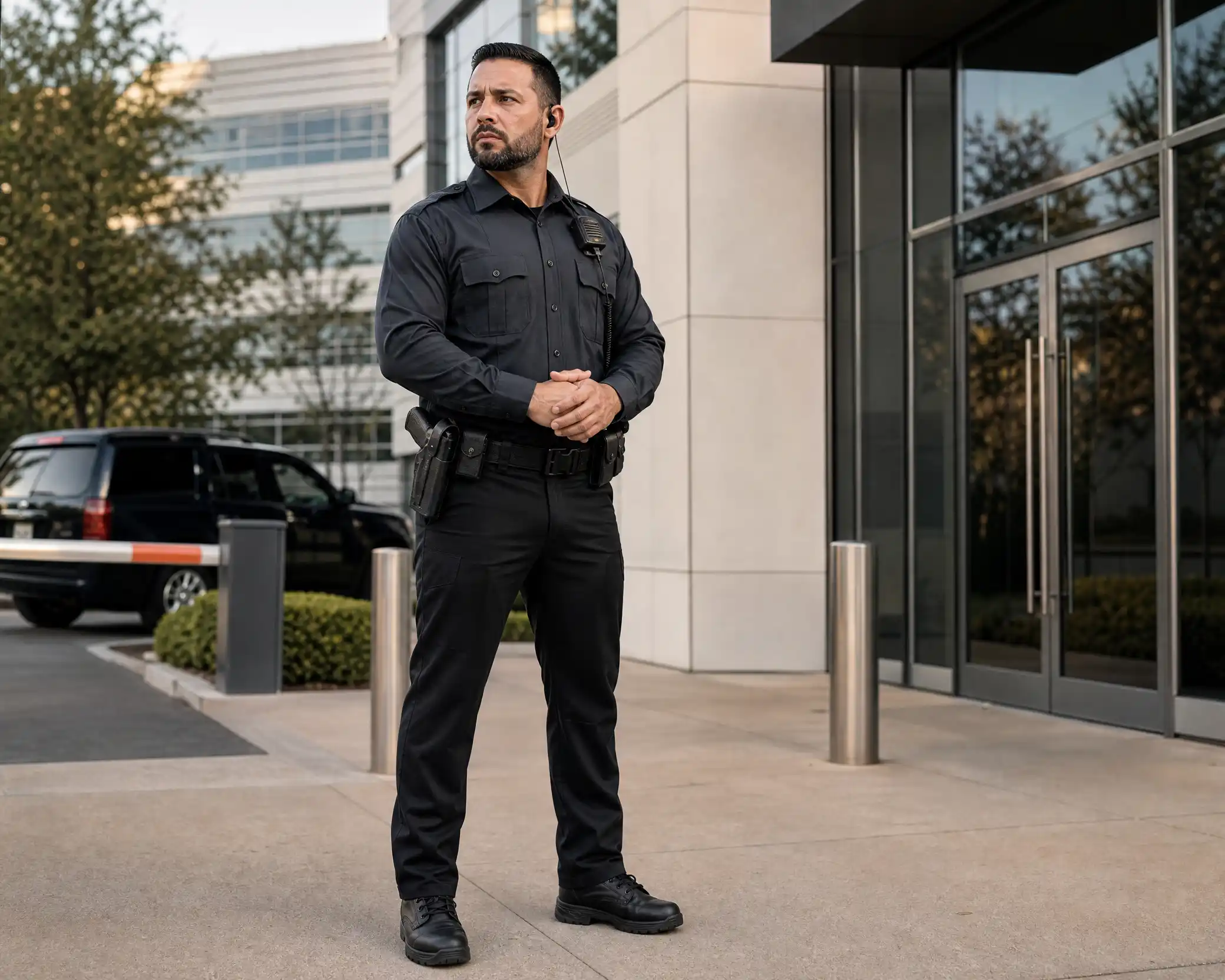
When Should a San Jose Business Consider Armed Security?
San Jose business may consider armed security when credible or elevated threats, high-value assets, sensitive controlled areas, repeated serious incidents, high-risk operating hours, or cash/value concentration create a risk profile that supports an armed post. The decision should follow a site-specific assessment rather than an assumption that armed security is always the stronger option. Unauthorized access patterns can also be relevant when they materially change the property risk.
For buyers searching for armed security guards San Jose CA or armed security guard services San Jose, the important question is not simply whether an officer carries a firearm. The more useful question is whether the property risk, access responsibilities, asset exposure, public interaction, and response expectations justify armed staffing.
When Armed Security May Not Be Necessary
What Do Armed Security Guards Do at a San Jose Property?
- Monitor Designated Entrances & Restricted Areas
- Verify Authorized Visitors & Credentials
- Conduct Assigned Patrols & Observations
- Record Incidents, Notifications & Follow-Ups
- Use Communication & De-Escalation Techniques
- Follow Post Orders & Emergency Procedures
01
Assess the Property, Risk Level and Operating Environment
Planning begins with the property itself: people, asset exposure, entrances, operating hours, previous serious incidents, existing guards, CCTV, access control, restricted areas, parking, loading areas, and emergency procedures. A downtown public-facing property may need a different security model from a controlled Silicon Valley campus, logistics facility, construction site, or high-value commercial environment.
02
Decide Whether the Post Should Be Armed, Unarmed or Layered
The service model should reflect credible threat conditions, asset sensitivity, public interaction, access responsibilities, operating hours, response expectations, and existing technology. A sensitive entry point may justify armed staffing while a public-facing lobby at the same property may be better suited to an unarmed officer. Other zones may be covered by CCTV monitoring or mobile patrol instead of another standing post.
03
Define Post Orders and Site-Specific Armed Duties
Post orders translate property needs into clear guard responsibilities. They should identify the post location, access rules, restricted zones, patrol route, visitor and vendor procedures, reporting expectations, prohibited duties, escalation contacts, and emergency procedures. Defining these responsibilities before deployment helps keep the armed role focused on the actual security decision instead of improvising duties after the assignment begins.
04
Verify Licensing, Firearms Permit and Assignment Requirements
California armed assignments require more than a general security title. At a high level, armed duty involves California BSIS Security Guard Registration plus the applicable BSIS Exposed Firearms Permit, required firearms training and qualification, and applicable assessment requirements. Grand Protective Security should verify assignment-specific credentials before deployment. The page does not use vague “certified armed guard” wording as a substitute for California credential terminology.
05
Deploy, Supervise and Document the Assignment
After the post is designed, deployment should include clear attendance expectations, reporting requirements, escalation contacts, shift handoff, and client communication. Supervisor checks, relief coverage, replacement procedures, daily activity records, and incident-report workflows should only be described as Grand Protective Security practices where they are operationally verified. Coverage quality depends on the system around the officer, not simply on the presence of a firearm.
Armed vs. Unarmed Security Guards in San Jose
Armed and unarmed security serve different risk profiles. Armed security may fit documented elevated threats, sensitive access, or high-value environments. Unarmed security often fits public-facing access control, visitor management, routine patrol, and professional presence where an armed post is unnecessary. The decision should consider risk, asset exposure, public interaction, licensing, operating hours, and the property’s specific duties.
| Decision Factor | Armed Security | Unarmed Security |
|---|---|---|
| Typical risk profile | Elevated or documented risk where armed presence is justified | Lower-risk or routine security needs requiring continuous professional presence |
| Public interaction | Can be appropriate, but armed presentation must fit the environment | Often well suited to lobbies, residents, customers and visitor-facing duties |
| Sensitive access / assets | May fit restricted, high-value or elevated-risk posts | May fit controlled access where risk does not justify armed staffing |
| Credentials | Security Guard Registration plus applicable Exposed Firearms Permit and armed requirements | Applicable California guard registration/training requirements |
| Best use | Risk-based armed post with defined duties and escalation | Access, observation, patrol, reporting and customer-facing security |
Armed Security for San Jose Technology and Corporate Campuses
North San Jose and wider Silicon Valley corporate environments can include a technology campus or corporate office with visitor, vendor and contractor credentials, sensitive equipment, restricted spaces, parking structures, and after-hours access. Armed security may be appropriate at specific sensitive posts when the assessed risk supports it, while public-facing areas may use unarmed security. Grand Protective Security does not imply affiliation with any named technology company or campus.
Armed Security for Data Centers and Controlled-Access Facilities
A data center or other controlled facility can require disciplined credential checks, restricted-area monitoring, visitor screening, vendor and contractor entry procedures, loading-zone awareness, after-hours access controls, and documented escalation. Armed coverage may fit only where the site or client risk requirements support it. Access control and CCTV monitoring may provide additional layers. Grand Protective Security does not claim named data-center clients or specialized experience unless verified.
Armed Security for Warehouses, Logistics and High-Value Inventory
Warehouses and logistics properties may have gates, loading docks, employee and vendor vehicles, trailers, high-value inventory, night operations, parking areas, and perimeter exposure. Armed guards may be considered for elevated-risk posts, while CCTV, access control, and mobile patrol can support distributed areas. The exact mix should reflect access patterns, asset value, operating hours, and incident history.
Armed Security for Construction and Redevelopment Sites
Construction and redevelopment sites can change rapidly as fencing, gates, contractors, equipment, materials, and work zones shift. Where documented risk justifies armed security, duties should be tied to specific access points, patrol areas, equipment exposure, and after-hours conditions. For lower-risk sites, unarmed guards or mobile patrol may be the more proportionate option.
Armed Security for Healthcare, Retail and Other Sensitive Properties
Healthcare, retail, and other sensitive properties can combine public access with staff, visitor, parking, cash, inventory, or restricted-area concerns. Armed security should be considered only where a site-specific risk assessment supports it. Customer-facing or routine access functions may be better suited to unarmed security, while higher-risk entry or value-concentration points may require a different model.
Armed Security for Parking, Garages and Vehicle-Intensive Properties
Parking facilities and vehicle-intensive properties involve pedestrian and vehicle flow, restricted parking, after-hours exposure, lighting conditions, camera coverage, and dispersed patrol areas. Mobile patrol or CCTV monitoring may be sufficient for many routine needs. A standing armed post should be reserved for conditions where the risk, access responsibility, or incident profile warrants continuous risk-appropriate presence.
Armed Security vs. Mobile Patrol vs. CCTV Monitoring
| Primary Need | Likely Model | Reason |
|---|---|---|
| Elevated documented threat / sensitive access | Armed guard may fit | Continuous physical presence with additional armed credentialing where justified. |
| Public-facing / customer / visitor management | Unarmed guard | Professional continuous presence without an armed post. |
| Distributed parking / perimeter / multiple sites | Mobile patrol | Recurring physical checks where continuous staffing is unnecessary. |
| Wide visual coverage / event verification | CCTV monitoring | Remote visibility, documentation and escalation support. |
| Unclear or mixed requirement | Security risk assessment | Determine the appropriate service mix before staffing. |
Access Control, Visitor and Vendor Screening for Armed Posts
Patrol, Observation and Restricted-Area Monitoring
De-Escalation, Judgment and Escalation
Armed Security for San Jose Property Managers and Multi-Site Portfolios
Why Choose Grand Protective Security for Armed Security in San Jose?
- Risk-Based Armed Security Selection
- Site-Specific Assessment & Post Orders
- Property-Tailored Access, Patrol & Reporting
- Clear Accountability & Escalation Procedures
- Layered Security Options
San Jose Areas and Property Environments We Serve
Grand Protective Security is based in Albany, California and serves San Jose properties based on operational availability. Local context may include Downtown San Jose, North San Jose, the Airport/First Street corridor, West San Jose and the Santana Row area, South San Jose, and industrial or logistics corridors where service is genuinely available. Supporting geography includes Santa Clara County, the South Bay, Silicon Valley, and the San Francisco Bay Area.
Define the Armed Post Before Scheduling Coverage
Before an armed assignment begins, define the post’s primary decision: what risk or access responsibility requires continuous armed presence at that location? This prevents the officer from becoming a catch-all resource and helps align staffing, post orders, reporting, and escalation with the actual reason the armed post exists.
Separate Sensitive Zones From Public-Facing Areas
Many San Jose properties contain both sensitive and public-facing areas. A restricted entrance or high-value zone may support armed staffing, while a reception lobby or visitor-facing area may be better served by an unarmed officer. Separating these zones can improve role clarity and avoid using armed coverage where it does not add operational value.
Match Coverage Hours to the Actual Risk Window
Risk can change by time of day, shift, delivery schedule, opening or closing period, tenant activity, or construction phase. Instead of assuming the same armed model is necessary at all hours, review when the higher-risk conditions actually exist and design coverage around those periods where practical.
Build Relief and Shift Handoff Into the Coverage Plan
A standing post can lose effectiveness if breaks, call-offs, or shift changes leave the primary responsibility unclear. Where Grand Protective Security has verified relief and replacement processes, the scope should define how coverage continuity, handoff information, escalation contacts, and report transfer are handled.
Reassess Armed Coverage When Risk Conditions Change
Armed security should not become permanent by default if the conditions that justified it change. New tenants, different operating hours, reduced asset exposure, improved access controls, new CCTV coverage, or a changed incident profile can justify reviewing whether the armed post should continue, change hours, or transition to another model.
San Jose Property Risk to Armed Post Decision Map
| Property Environment | Risk Question | Armed-Security Decision Logic |
|---|---|---|
| Tech / corporate campus | Restricted access, sensitive assets, contractor/vendor flow | May justify an armed post at a sensitive entry after assessment; an unarmed officer may fit a public-facing lobby. |
| Data center / controlled facility | Restricted zones, high-value infrastructure, vendor access | Armed coverage may fit where site or client risk requirements support it; layer with access control and CCTV. |
| Warehouse / logistics | Inventory, gate/loading activity, after-hours vehicle/vendor flow | Armed may fit high-value or elevated-risk posts; patrol or CCTV can cover distributed areas. |
| Construction | Equipment/materials, temporary access, night exposure | Use armed coverage only where documented risk supports it; otherwise unarmed or patrol may fit. |
| Retail / high-value sales | Cash/value concentration, opening/closing, customer interaction | Armed may fit elevated-risk posts; unarmed security may be more suitable for customer-facing duties. |
| Parking / garage | Vehicle access, after-hours exposure, dispersed footprint | Often patrol/CCTV first; standing armed coverage only where the risk warrants it. |