
Security Risk Assessment & Consulting in San Jose, CA




Request a Free Quote!
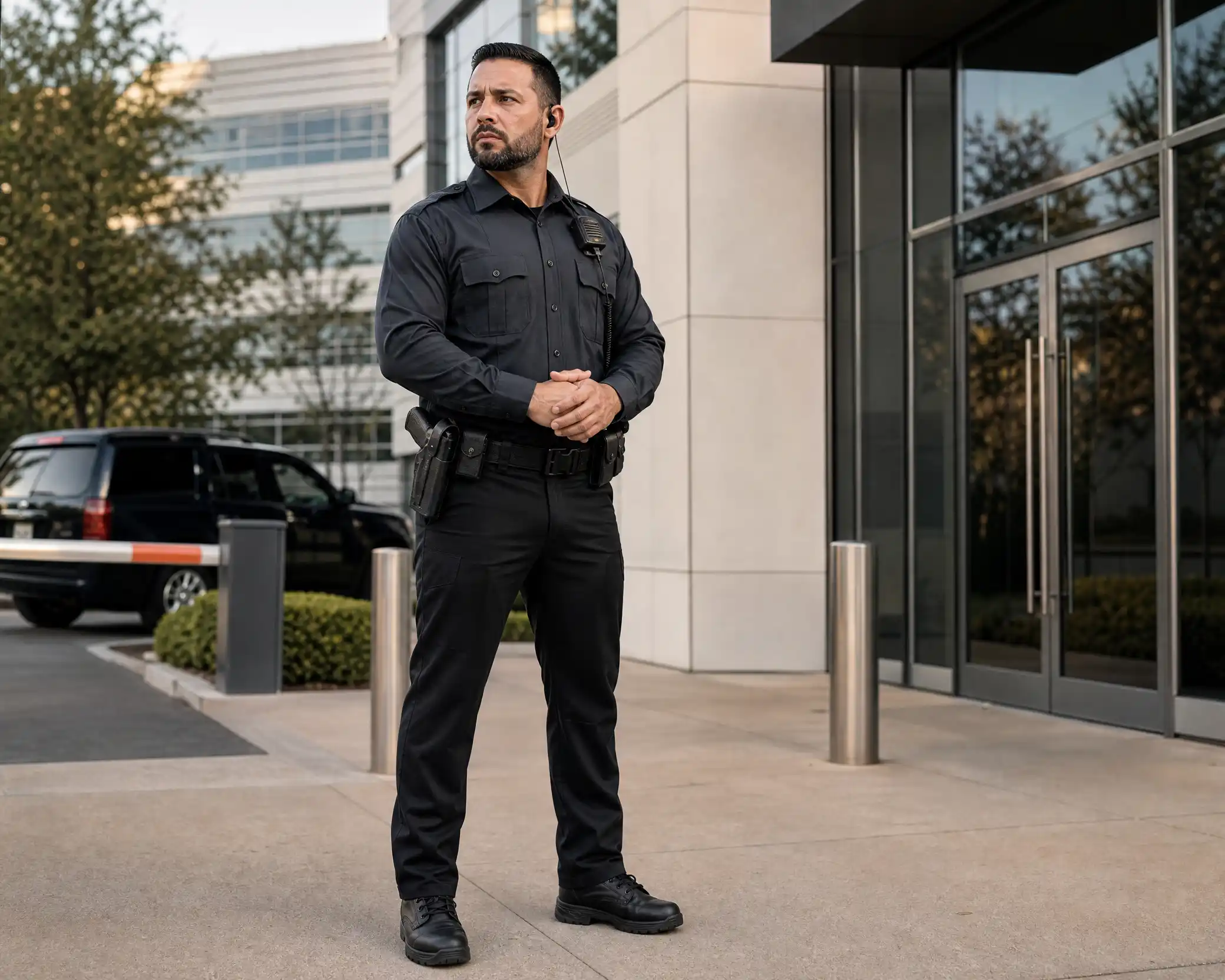
What Is a Physical Security Risk Assessment?
When Should a San Jose Business Request a Security Assessment?
- New Property, Expansion or Renovation
- Changes in Operating Hours
- Repeated Incidents or Unauthorized Access
- New Tenants, Contractors or Vendors
- Changes to Security Systems or Post Orders
- Multi-Site Security Standardization
- Review of Current Security Spending
What Does a San Jose Security Assessment Review?
The scope should match the property and buyer objective. A site security assessment San Jose engagement may review the physical environment, security procedures, existing staffing, technology, and accountability systems rather than focusing on a single product.
| Assessment Domain | What May Be Reviewed |
|---|---|
| Perimeter and layout | Property boundaries, visibility, fencing, gates, public-to-controlled transitions and blind areas. |
| Entrances and exits | Employee, visitor, vendor, contractor and delivery flow; after-hours entry; emergency egress. |
| Access control | Credentials, badges, restricted zones, authorization rules, denied-entry procedures and accountability. |
| Parking and loading | Vehicle flow, loading docks, garages, pedestrian transitions, lighting and after-hours exposure. |
| CCTV and alarms | Coverage, blind spots, monitoring use, escalation, integration and operational reliability. |
| Guards and patrol | Post locations, schedules, duties, routes, frequency, reporting, supervision and gaps. |
| Procedures | Post orders, SOPs, incident escalation, emergency communication, handoff and reporting. |
| Management controls | Responsibility, follow-up, documentation, stakeholder communication and business continuity. |
01
Define Assets, People, Operations and Security Objectives
The assessment begins by identifying what the property needs to protect and why. This may include employees, visitors, executives, equipment, inventory, vehicles, restricted areas, information-bearing spaces, facilities, and business continuity dependencies. For San Jose and Silicon Valley properties, the assessment should also consider how corporate, technology, industrial, logistics, and mixed commercial operations affect access and exposure.
02
Identify Credible Threats and Exposure
Threat identification should focus on property-specific conditions rather than generic San Jose crime statistics. Relevant factors may include incident history, unauthorized access, theft, vandalism, workplace concerns, contractor or vendor activity, after-hours exposure, parking and vehicle issues, perimeter gaps, or other credible events that could affect people, assets, or operations.
03
Identify Vulnerabilities and Control Gaps
A threat is something that could cause harm; a vulnerability is a weakness that may allow that threat to affect the property. The assessment looks for gaps in doors, gates, credentialing, visitor procedures, lighting, camera coverage, alarms, guard coverage, patrol routing, shift handoff, post orders, reporting, and escalation. Separating threat from vulnerability makes recommendations more precise.
04
Review Existing Security Controls Before Recommending More
Before adding cost, Grand Protective Security should review what is already in place: armed or unarmed guards, mobile patrol, CCTV monitoring, access control, alarms, procedures, vendors, schedules, reporting, and management oversight. A current-control efficiency review helps identify what is working, what is duplicated, what is underused, and where the control does not match the real risk.
05
Prioritize Risk Using Likelihood, Impact and Exposure
Prioritization should be transparent. A useful risk register can connect each finding to the threat, vulnerability, likelihood, impact, exposure, current-control strength, residual risk, priority, and recommended action. Grand Protective Security should not claim a proprietary scoring model unless one is actually used.
06
Build a Prioritized Mitigation Roadmap
Prioritization should be transparent. A useful risk register can connect each finding to the threat, vulnerability, likelihood, impact, exposure, current-control strength, residual risk, priority, and recommended action. Grand Protective Security should not claim a proprietary scoring model unless one is actually used.
What Deliverables Should a San Jose Security Assessment Include?
Security Assessment for Warehouses, Logistics and Industrial Properties
Warehouse and logistics assessments can examine gates, loading docks, yards, trailers and vehicle areas, employee and vendor access, inventory exposure, perimeter conditions, lighting, camera coverage, patrol routes, and after-hours controls. The goal is to identify where fixed guards, mobile patrol, CCTV monitoring, access control, or procedural changes add measurable operational value.
Security Assessment for Commercial Real Estate, Retail and Mixed-Use Properties
Security Assessment for Healthcare and Institutional Properties
A physical security assessment can review public entrances, controlled spaces, staff and visitor flow, parking, deliveries, service access, incident escalation, and continuity needs. Grand Protective Security should avoid healthcare-specific regulatory or compliance claims unless that expertise is verified and included in the contracted scope.
Security Assessment for Parking, Garages and Vehicle Areas
Parking environments require attention to entry and exit control, pedestrian transitions, visibility, lighting, camera coverage, mobile patrol access, restricted parking, vehicle flow, and after-hours exposure. The assessment should clarify whether the better control is improved lighting, CCTV, patrol, access rules, a standing guard, or a layered approach.
Multi-Site Security Assessments for San Jose / Silicon Valley Portfolios
Multi-site assessments can standardize the categories used across a portfolio while preserving site-specific risk. A portfolio risk matrix can compare each property by critical assets, top risks, current controls, priority actions, and the owner or timeline for each recommendation. This supports consistent governance without assuming every San Jose or Silicon Valley property needs the same security model.
Should the Assessment Recommend Armed Guards, Unarmed Guards, Patrol or CCTV?
The assessment should start with the problem, not a predetermined service. Armed guards may fit justified elevated-risk continuous posts; unarmed guards may fit continuous visible and customer-facing access duties; mobile patrol may fit intermittent physical checks; CCTV monitoring may fit remote visibility and verification; access control and procedures may solve process gaps. Complex requirements may need a layered plan.
Security Technology Review: CCTV, Access Control and Alarms
A security technology review should assess how systems are used operationally, not simply how old they are. Review areas may include camera coverage and blind spots, credential rules, alarm escalation, system reliability, integration, authorized access, and whether staff actually follow the procedures connected to the technology. This remains a consulting review, not a duplicate CCTV or installation page.
Guard Force and Mobile Patrol Review
The assessment can review guard post locations, shift schedules, assigned duties, patrol frequency and routes, overlap or gaps, incident responsibilities, reporting, relief expectations, and supervision. A Guard/Patrol Optimization Matrix can connect each post or zone to the relevant risk, required duty, coverage model, and accountability method.
Post Orders, SOPs and Emergency Procedures Review
Written procedures help convert security expectations into repeatable actions. Review areas may include duties, access rules, prohibited actions, escalation contacts, incident response, shift handoff, daily activity reporting, visitor and vendor processes, emergency communication, and management notification. Clear post orders and SOPs reduce ambiguity across shifts and personnel.
Vendor-Neutral and Budget-Aware Recommendations
A useful security assessment should allow findings to drive the recommendation rather than automatically adding guards or equipment. Where verified as part of Grand Protective Security's consulting approach, recommendations can prioritize procedural and operational fixes before new spending and compare security options by risk, practicality, dependency, and budget.
From Assessment to Implementation: What Happens Next?
After the assessment, management should convert findings into action. Common next steps include prioritizing quick wins, assigning owners, obtaining quotes or designs where necessary, revising post orders and SOPs, changing staffing or patrol coverage, improving CCTV or access control, communicating procedures, and scheduling a follow-up review. Implementation support should only be promised where contracted and verified.
How Often Should Security Risk Be Reassessed?
How Much Does a Security Risk Assessment Cost in San Jose?
Why Choose Grand Protective Security for Security Consulting in San Jose?
- Multi-Model Security Assessment
- Decision-Ready Security Findings
- Review of Existing Security Controls
- Prioritized & Phased Mitigation Roadmap
- Recommendations Linked to Security Services
Define the Security Decision Before Expanding the Program
Separate Control Failure From Control Absence
A missing control and a failing control are different problems. If a camera exists but does not cover the required zone, or an access rule exists but is not consistently followed, the solution may be redesign, maintenance, training, or accountability rather than purchasing an entirely new control.
Assign Ownership to High-Priority Recommendations
A recommendation without an owner can remain unresolved. Where the contracted deliverable supports it, priority actions should identify who is responsible for follow-up, what dependency must be resolved, and when management should review progress.
Use Residual Risk to Explain What Remains After Mitigation
No control removes every risk. Residual risk describes what remains after existing or proposed controls are considered. Explaining residual risk helps decision-makers understand whether a recommendation reduces exposure enough or whether additional procedures, staffing, patrol, CCTV, access control, or contingency planning is still justified.
Review Security Spend Against the Highest-Priority Risks
Security budgets should be compared with the risks that matter most. A useful review can identify areas where spending is concentrated on low-priority controls while higher-priority vulnerabilities remain unresolved, helping management sequence limited resources more effectively.
San Jose Areas and Property Environments We Serve
San Jose Property Environment -> Assessment Focus Map
| Property Environment | Assessment Focus | Information-Gain Angle |
|---|---|---|
| Tech / corporate campus | Credentialing, visitors/vendors, restricted zones, parking, loading, multi-building consistency | Access journey, restricted-area and portfolio controls |
| Warehouse / logistics | Gates, docks, yards, vehicles, inventory, perimeter, after-hours | Gate/loading/yard exposure and guard/patrol/CCTV fit |
| Construction | Temporary access, contractors, equipment/materials, phase changes | Dynamic risk and evolving patrol/access plan |
| Commercial / mixed-use | Lobby, tenants, service routes, parking, public-to-controlled transitions | Access, visitor/vendor and after-hours controls |
| Healthcare / institutional | Public access, controlled zones, parking, incident escalation | Public/controlled-space transitions and response procedures |
| Parking / garage | Entry/exit, pedestrian transitions, visibility, lighting, CCTV/patrol | Vehicle-area risk and coverage-model decision |
Frequently Asked Questions About Security Services in San Jose
The timeline depends on property size, number of sites, stakeholder interviews, documentation, observation requirements, assessment depth, and report complexity. Grand Protective Security should confirm the expected schedule after understanding the San Jose property and required deliverable.
At a high level, the officer observes and assesses, communicates or de-escalates where appropriate, follows law, training and post orders, notifies the client/supervisor/dispatch, contacts public emergency services when required, and documents the incident. This page does not provide tactical weapons-use instruction.
Yes. A layered plan may use an armed guard at a sensitive access point, CCTV for broader visibility, and mobile patrol for remote parking or perimeter areas. The mix should follow risk, property layout, operating hours, and response needs.
Pricing depends on service type, number of guards or patrol visits, coverage hours, property complexity, duties, risk, supervision, reporting, contract duration, urgency and any specialized requirements. A site-specific quote is more useful than a generic hourly or monthly figure.
Yes. One property may justify armed coverage while another uses unarmed guards, mobile patrol, CCTV, or a combination. Portfolio planning can standardize reporting and escalation while preserving site-specific post orders and risk decisions.
Cost depends on coverage hours, number of officers, risk level, property type, duties, overnight/weekend/holiday shifts, supervision, relief, reporting, contract duration, urgency, and any verified specialized qualifications. A site-specific assessment provides a more reliable quote.
Request Armed Security Guard Services in Oakland
To request armed security guard services in Oakland, provide your name, company or property, phone, email, Oakland address, property type, number of sites, start date, coverage hours, guard count or ‘not sure,’ current security, access needs, serious incidents or threats, high-value assets, parking/perimeter concerns, armed/unarmed preference or ‘not sure,’ CCTV/alarms, and urgency.