
San Jose CCTV Monitoring Services




Request a Free Quote!
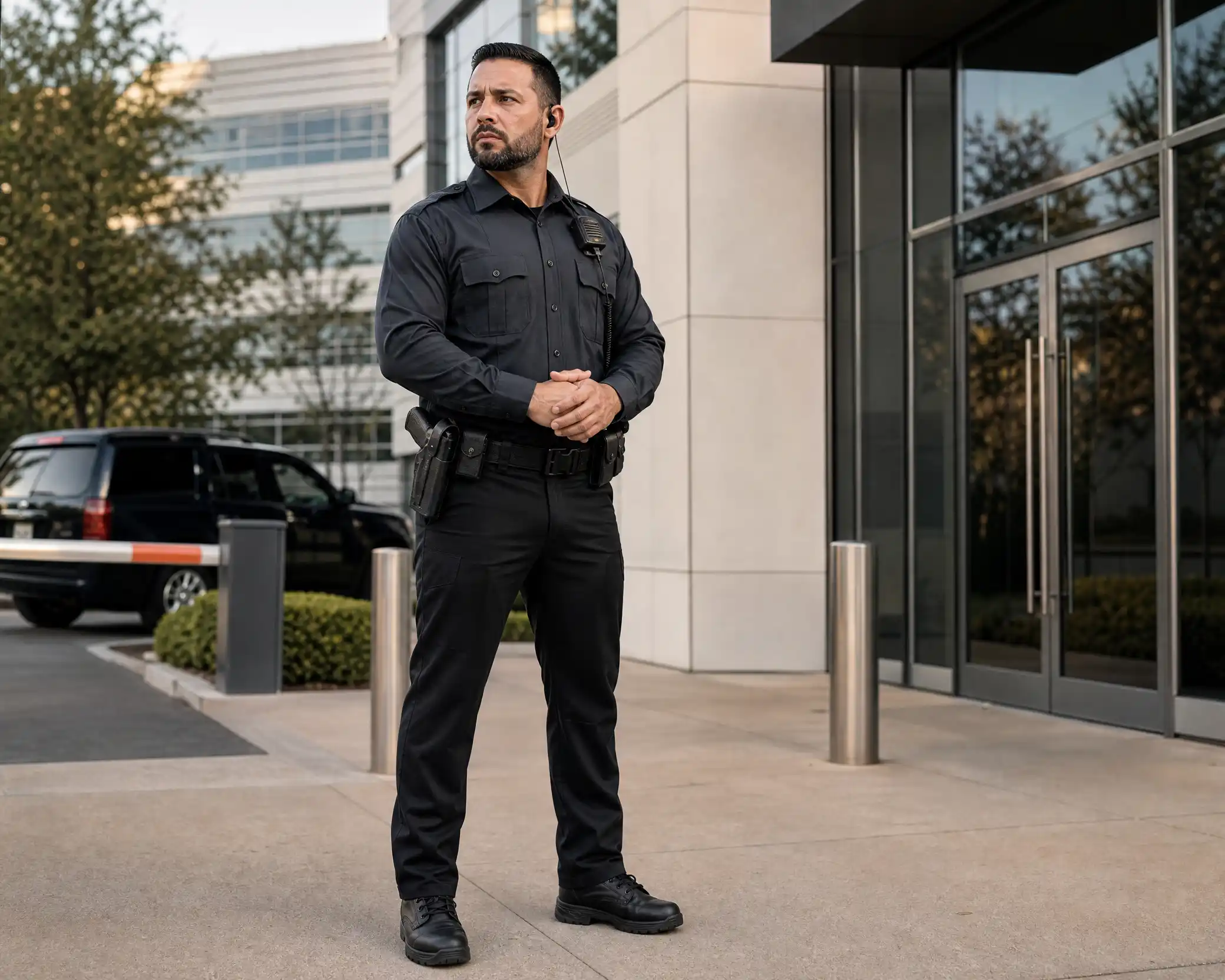
What Is CCTV Monitoring and How Is It Different from Recording-Only Cameras?
Does Someone Watch Every Camera 24/7?
When Does a San Jose Property Need Monitored CCTV?
How Grand Protective Security CCTV Monitoring Works: Detect -> Verify -> Respond -> Document
01
Assess the Property, Existing Cameras and Monitoring Goals
Review the site layout, operating hours, prior incidents, entrances, parking, loading/service access, restricted areas, camera coverage, blind spots, stream reliability and client priorities. For San Jose properties, the monitoring design should reflect the actual environment rather than assuming a technology office, warehouse, construction site or parking facility needs the same camera strategy.
02
Define Priority Camera Zones and Access Journeys
Identify the feeds that matter most: entrances, reception areas, gates, loading docks, parking, perimeter zones, high-value areas, construction access points and after-hours routes. The monitoring schedule should identify when each priority zone requires active or event-driven oversight. An access-journey approach follows how people or vehicles move through the property and connects each stage to the camera zones that provide useful visibility.
03
Define Monitoring Hours, Event Rules and Normal Activity
Separate normal employee, customer, resident, delivery and contractor activity from events that require review. Site-specific event rules may cover after-hours presence, restricted-zone access, prolonged loitering, gate or door anomalies, vehicle activity or movement in closed areas. Rules should reflect authorized activity and the client’s actual operating schedule.
04
Verify Events and Reduce False Escalation
Verification adds context before an event is escalated. Time, location, camera zone, known schedules and authorized activity can help distinguish a genuine concern from routine workers, approved deliveries, weather, lighting changes or other non-actionable triggers. Analytics may assist where available, but the page does not claim zero false alarms or unsupported artificial-intelligence capabilities.
05
Follow a Site-Specific Response Protocol
A response protocol should define who receives a notification, what information is shared and when a patrol officer, on-site guard or emergency service may become part of the response where that capability is contracted and verified. Grand Protective Security should not imply automated dispatch, two-way audio, live intervention or guaranteed response times unless those functions are confirmed.
06
Document Incidents and Preserve Relevant Evidence
Where available under the monitoring agreement, documentation can include the event time, camera or zone, monitoring observations, client notifications, response actions, screenshots, video clips, event logs or incident reports. The goal is a clear evidence chain: event -> verification -> action -> documentation, with access limited to authorized parties.
Can Grand Protective Security Monitor Existing Cameras in San Jose?
What If the Existing CCTV System Has Blind Spots or Poor Image Quality?
Human Monitoring, Video Analytics and Event Verification
CCTV Monitoring for San Jose Technology and Corporate Campuses
CCTV Monitoring for Warehouses, Logistics and Industrial Properties
CCTV Monitoring for Construction and Redevelopment Sites
CCTV monitoring for construction site San Jose properties may focus on temporary gates and fencing, equipment and material zones, access points, parked vehicles and changing after-hours exposures. Because construction layouts evolve, camera priority zones and event rules should be reviewed as site phases, storage areas and access routes change.
CCTV Monitoring for Retail, Mixed-Use and Customer-Facing Properties
Commercial CCTV monitoring San Jose properties can support entrances, storefront perimeter, service or loading access, parking/common areas and closed-hours activity. Monitoring should be limited to authorized property areas and aligned with client policy and applicable law, especially where customers, tenants and employees share the environment.
CCTV Monitoring for Apartments, HOAs and Residential Communities
For an apartment/HOA property, cameras may cover authorized entrances, garages, package/service zones, common areas, perimeter and other property-managed spaces. Monitoring should not imply access to private dwelling interiors. Event rules and evidence access should be defined by property policy and the agreed monitoring scope.
CCTV Monitoring for Parking Lots, Garages and Vehicle Areas
Security camera monitoring San Jose parking environments, including a parking garage, can focus on entry and exit points, drive aisles, pedestrian transitions, restricted parking zones, blind spots and after-hours activity. Cameras provide visibility, but distributed garages or recurring physical concerns may also justify mobile patrol for on-site checks.
CCTV Monitoring for Multi-Site San Jose and Silicon Valley Portfolios
Multi-site monitoring works best when event terminology and reporting are standardized while each property retains its own priority zones, schedules and escalation contacts. A portfolio event matrix can map Site -> Priority Zone -> Event Rule -> Response Contact -> Evidence so property managers can compare incidents without forcing every location into the same monitoring plan.
CCTV Monitoring vs. Recording-Only Video Surveillance
| Factor | Monitored CCTV | Recording-Only CCTV |
|---|---|---|
| Primary purpose | Detect or verify relevant events and support response | Record footage for later review |
| Human/event review | According to monitoring model and rules | Usually after an incident |
| Real-time escalation | Possible under a defined response protocol | Usually not part of recording-only setup |
| False-alert filtering | Can include contextual verification | Not central unless alerts are configured |
| Incident evidence | Can combine footage with event/action documentation | Video evidence unless separately documented |
| Best fit | Properties needing active oversight or verification | Properties mainly needing visibility or evidence |
CCTV Monitoring vs. Mobile Patrol vs. On-Site Security Guards
CCTV monitoring provides remote visibility and event verification. Mobile patrol provides intermittent physical checks. Unarmed or armed security guards provide continuous physical presence at an assigned post, with armed coverage reserved for situations where a risk-based assessment supports it. A security risk assessment can help when the right mix is unclear.
| Security Model | Coverage Pattern | Typical Fit |
|---|---|---|
| CCTV Monitoring | Remote visibility / event verification | Broad camera coverage, incident verification, documentation |
| Mobile Patrol | Intermittent physical checks | Parking, perimeter, distributed properties, after-hours checks |
| Unarmed Guard | Continuous professional presence | Access control, lobby, visitor/customer-facing posts |
| Armed Guard | Continuous higher-risk presence | Sensitive or elevated-risk post where assessment supports it |
| Security Risk Assessment | Planning / model selection | Complex or uncertain security requirements |
CCTV Monitoring + Mobile Patrol + Guards: When Layered Security Makes Sense
Define the Monitoring Decision Before Adding More Cameras
Separate Camera Coverage Problems From Monitoring-Rule Problems
Before adding feeds, define the decision each camera should support. Is the goal after-hours verification, entrance oversight, loading-area awareness, parking visibility or incident evidence? A clear monitoring decision prevents camera count from becoming a substitute for useful coverage.
Build Response Contacts Into the Monitoring Plan
A verified event is only useful when the next step is clear. The monitoring plan should identify the appropriate property contact, management escalation path and any contracted patrol or guard response. This reduces uncertainty without promising actions that are not included in the service scope.
Review Monitoring Rules When Property Operations Change
Tenant turnover, construction phases, new operating hours, changes to loading areas or access-control rules can make an old monitoring plan less useful. Review priority zones, event rules and response contacts when the property changes instead of treating the original setup as permanent.
Use Evidence to Improve Future Monitoring Decisions
Incident logs, event times, repeated false triggers and recurring camera-zone issues can reveal where the monitoring plan needs adjustment. The goal is not simply to collect more footage; it is to improve which events are reviewed, how they are verified and what response is expected.
Privacy, Authorized Camera Access and Footage Control
A professional monitoring plan should define authorized camera access, secure credentials, approved monitored areas, who may request or receive evidence, and who is responsible for retention or storage. These are operational and privacy-planning questions, not legal advice. Grand Protective Security should use only the access and retention processes that are actually documented for the client assignment.
Incident Reports, Screenshots, Clips and Monitoring Accountability
Buyers should know what evidence is available after an event and how it is delivered. Depending on the contracted capability, useful records may include timestamps, screenshots, video clips, event logs, incident reports, client notifications and response actions. Grand Protective Security should only promise deliverables it can reliably produce and should restrict evidence sharing to authorized recipients.
San Jose Monitoring Need -> Camera Zone -> Response Map
| Property Environment | Priority Camera Zones | Event / Response Logic |
|---|---|---|
| Tech / corporate campus | Entrances, contractor/vendor routes, parking, restricted zones | Verify unauthorized or after-hours activity; notify designated contact and follow site rules. |
| Warehouse / logistics | Gate, loading dock, yard, perimeter, trailer/vehicle area | Verify movement or access anomaly; contact client and use patrol/guard layer only if included. |
| Construction | Temporary gate/fence, equipment/material area, perimeter | Verify after-hours or restricted-zone activity; follow construction-site escalation plan. |
| Retail / mixed-use | Entrances, storefront/service access, parking/common area | Verify closed-hours or unusual activity; notify designated response contact. |
| Apartment / HOA | Entrances, garage, package/service/common areas | Verify relevant common-area event; follow management-defined protocol. |
| Parking / garage | Entry/exit, drive aisles, pedestrian transitions, restricted parking | Verify suspicious or unauthorized activity; escalate according to site rules. |
How Much Does CCTV Monitoring Cost in San Jose?
Why Choose Grand Protective Security for CCTV Monitoring in San Jose?
- Site-Specific Monitoring Plans
- Verification Before Escalation
- Existing Camera & VMS Compatibility
- Clear Response & Documentation
- Layered Security Options