
Security Risk Assessment & Consulting Services
Grand Protective Security provides security risk assessment and consulting services for a business owner, property manager, facility manager, operations leader, security manager, ownership/board and other organization decision-makers who need a clearer understanding of physical security risk before changing guards, patrol, CCTV, access control or procedures. The engagement reviews threats, vulnerabilities, existing controls and day-to-day operations, then organizes practical recommendations around risk priority, risk mitigation, business needs and budget.
Request a Security Risk Assessment or schedule a security consultation at (510) 417-6817.




Request a Free Quote!

What Is a Security Risk Assessment?
A security risk assessment is a structured physical security assessment of threats, vulnerabilities, existing controls and operating conditions. It identifies where exposure exists, evaluates likelihood and impact, and prioritizes practical mitigation. A consultation is the advisory engagement; the assessment is the evidence-gathering and analysis component; the security plan is the recommended course of action.
A professional security assessment should produce decision-ready findings rather than a generic list of concerns or a disguised quote for more guards, cameras or patrol.
What Does a Physical Security Assessment Review?
Perimeter and Property Layout
Review fencing, boundaries, approaches, visibility, blind areas, neighboring exposure and the way the physical site layout affects control and observation.
Entrances, Exits and Access Control
Review doors, gates, credentials, visitor management, vendor procedures, restricted area rules and after-hours access to identify control gaps and unclear responsibilities.
Lighting, Parking and Exterior Areas
Review parking, garages, loading dock areas, walkways, lighting, exterior visibility and places where people or vehicles move between public and controlled space.
CCTV, Alarms and Monitoring
Review CCTV coverage, camera visibility, blind areas, monitoring approach, alarm escalation and how video or alarms support verification without turning the assessment into a CCTV service proposal.
Security Guards and Mobile Patrol
Review security guards, post locations, shift coverage, patrol route design, schedules, responsibilities and whether the current guard or mobile patrol model matches the risk profile.
Policies, Post Orders and SOPs
Review post orders, security SOPs, access rules, visitor handling, deliveries, restricted zones, incident procedures and escalation expectations.
Our Service Areas
Grand Protective Security provides Security and risk assessment services across California and the San Francisco Bay Area. Our service areas include Albany, Oakland, Berkeley and San Jose.
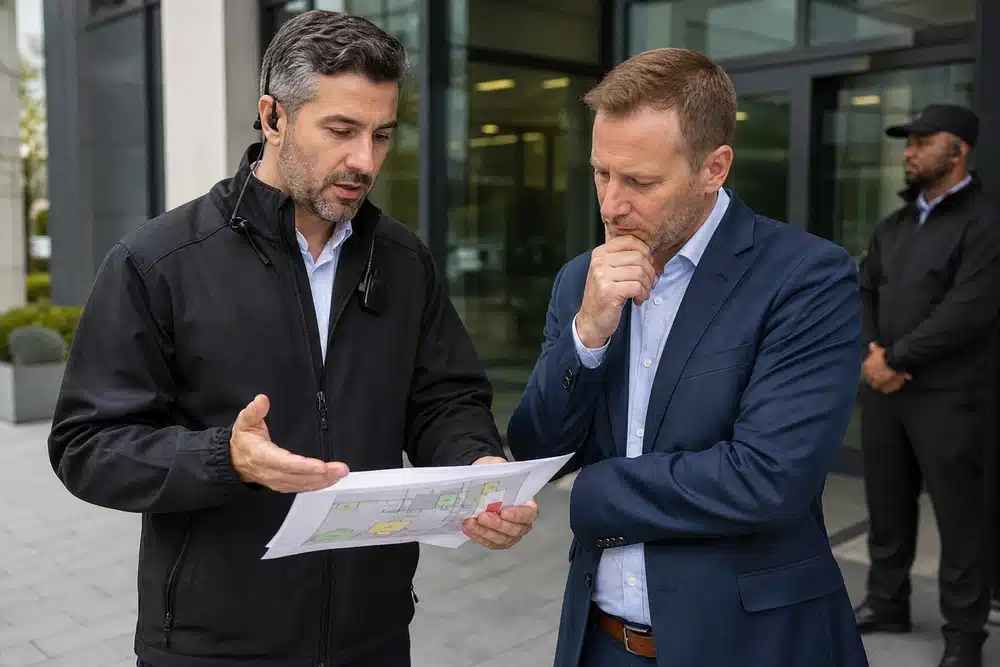
How Grand Protective Security Prioritizes Security Risk
Risk prioritization should consider practical factors such as likelihood, potential impact, exposure, current control strength, operational importance and remediation effort or cost. The client should be able to see what needs attention first, what can wait and why.
Where a risk register or scoring model is used, it should be transparent enough to explain the priority.
What You Receive After a Security Assessment
Executive Summary
A concise view of the property’s current security posture, the most important findings and the decisions ownership or leadership should consider first.
Key Findings and Vulnerabilities
Clear observations describing the control gap, affected area or process and why it matters to the site’s operation.
Prioritized Risk Register or Findings List
A structured list showing priority, impact, affected area and related controls.
Practical Security Recommendations
People, process and technology recommendations tied to specific findings rather than generic improvement ideas.
Phased Security Improvement Roadmap
Immediate actions, near-term improvements and longer-term investments organized into a remediation roadmap or phased roadmap.
Implementation Priorities and Next Steps
Clear ownership questions, sequencing and follow-up actions so the assessment can move from findings to an implementation plan.
From Assessment to an Actionable Security Plan
Guard Force and Staffing Recommendations
Recommend whether armed security guards or unarmed security guards fit the risk, along with post locations, schedules, front-desk or access roles, patrol duties and relief needs only where the assessment findings support them.
Mobile Patrol Strategy
Recommend mobile patrol security zones, frequency, after-hours checks or multi-site use cases when intermittent physical verification fits better than continuous staffing.
CCTV and Monitoring Recommendations
Identify camera-coverage priorities, blind areas, monitoring needs and escalation opportunities without replacing the dedicated CCTV Monitoring service page.
How Our Security Risk Assessment Process Works
Security Consulting That Reviews People, Process and Technology
| Term | Meaning | Example |
|---|---|---|
| Threat | A person, event or condition that could cause harm or loss | Unauthorized person attempting entry |
| Vulnerability | A weakness or gap a threat could exploit | Uncontrolled side door or unclear visitor process |
| Risk | Potential consequence when a threat interacts with a vulnerability, considered with likelihood and impact | Intrusion, theft or disruption through the weak entry point |
Security Assessment by Property and Organization Type
When Should a Business Request a Security Risk Assessment?
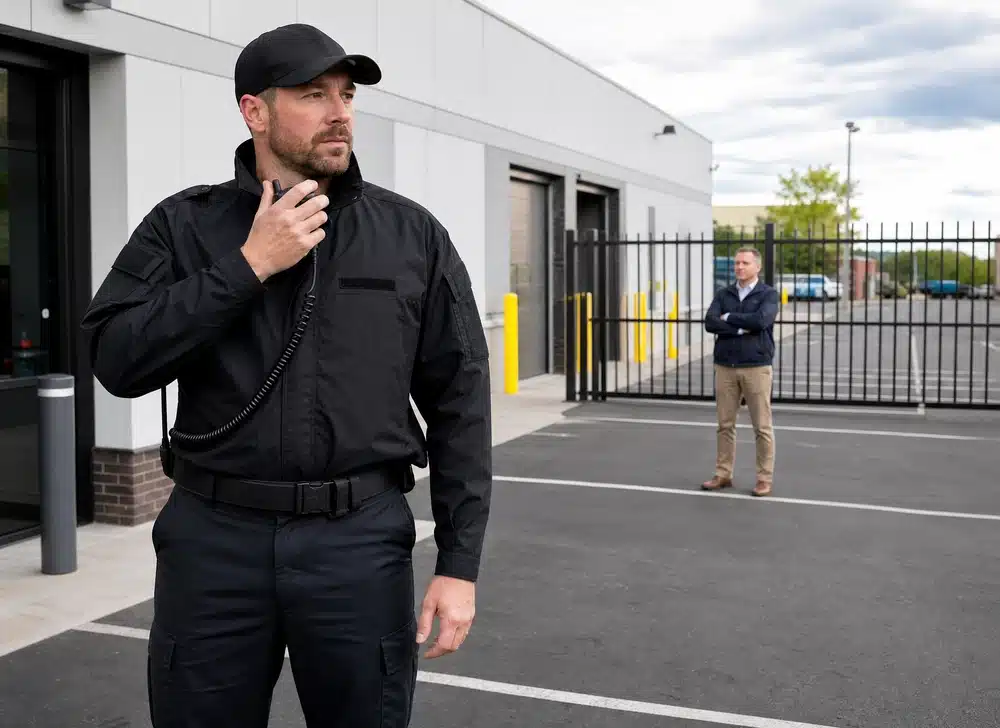
A business should consider a security assessment before opening or acquiring a site, after a theft or serious incident, after repeated trespassing, before changing guard vendors, when adding cameras or access control, when security costs are rising, after major layout or operating changes, before a major event, or when leadership needs a documented security improvement plan.
It is also useful when procedures are inconsistent across multiple properties or when management cannot clearly explain which risks current spending is meant to address.
Security Assessment vs. Security Audit vs. Security Consultation
| Layer | What a Security Consultant Reviews | Typical Questions |
|---|---|---|
| People | Security guards, mobile patrol, supervisors, building staff, communication | Are duties clear? Is staffing aligned with actual risk? |
| Process | Access rules, post orders, visitor flow, incident report workflow, escalation procedure, emergency routines | Are responsibilities defined and consistently followed? |
| Technology | CCTV, alarm, access control, intercoms, monitoring | Does technology support detection, verification and access decisions? |
| Property / Environment | Perimeter, doors, gates, lighting, parking, loading, surrounding exposure | Does site design create avoidable vulnerabilities? |
A professional physical security consultant should evaluate how these layers work together. Upgrading one control can leave the underlying problem unresolved if the surrounding process, staffing or property condition is weak.
How to Request a Quote
Call (510) 417-6817 or use the quote form on this page. Tell us your property type, the hours you need covered, and the kind of coverage you are looking for, and our team will prepare your quote.

Why Choose Grand Protective Security for Security Risk Consulting?
Frequently Asked Questions About Security Risk Assessment & Consulting
Have any inquiry?
A security risk assessment is a structured review of threats, vulnerabilities, existing security controls and operating conditions. It helps identify where exposure exists, prioritize the most important risks and recommend practical mitigation across people, process, technology and the physical environment.
Scope can include perimeter, access points, parking, lighting, loading areas, CCTV, alarms, access control, visitor management, security guards, mobile patrol, post orders, SOPs, incident history, reporting, escalation and emergency readiness. Exact scope should be defined before the engagement.
A threat is something that could cause harm or loss. A vulnerability is a weakness that could be exploited. Risk is the potential consequence when a threat interacts with a vulnerability, considered together with likelihood, impact, exposure and existing controls.
Deliverables include an executive summary, findings, a prioritized risk register or findings list, practical recommendations, a remediation roadmap and implementation priorities. The proposal should state exactly which written outputs and debriefs are included.
Yes, existing guards, patrol, CCTV, alarms, access control, visitor procedures, post orders and reporting can be reviewed as parts of the current control environment. The assessment should determine whether each control fits the actual risk rather than automatically recommending replacement.
Potentially. A business security assessment can identify duplicated coverage, poorly aligned post hours, weak procedures or controls that are being paid for without addressing the main risk. The goal is to prioritize security spending, not guarantee cost reduction.
There is no universal schedule. Reassess after major incidents, acquisitions, renovations, operating changes, new security systems, staffing changes or other material changes in exposure. Higher-risk or rapidly changing environments may benefit from more frequent review.
There is no universal schedule. Reassess after major incidents, acquisitions, renovations, operating changes, new security systems, staffing changes or other material changes in exposure. Higher-risk or rapidly changing environments may benefit from more frequent review.
An assessment identifies and prioritizes threats, vulnerabilities and control gaps. A security audit evaluates against defined criteria or expected controls. A consultation is the broader advisory process used to define needs, interpret findings and plan or support improvements.
Yes. A phased roadmap can separate immediate actions, near-term improvements and longer-term investments according to risk, cost and operational disruption. This helps leadership move first on the highest-priority findings without treating every recommendation as equally urgent.
Provide your business or property information, number of locations, current security measures, main concerns, recent incidents, assessment goal, decision timeline and whether implementation support is needed.
Request a Security Risk Assessment
To request a security risk assessment, provide your name, business name, phone, email, property type, city, number of locations, current security measures, main security concerns, recent incidents if relevant, assessment goal, timeline, whether implementation support is needed and any additional details.