
Mobile Patrol Security Services
Grand Protective Security provides mobile patrol security services through planned scheduled and randomized patrol visits. Patrol officers inspect designated property areas, create visible security presence, document observations, and escalate concerns under site-specific procedures. Mobile patrol is designed for properties that need recurring checks, after-hours security presence, or coverage across multiple zones without a continuously stationed officer at one fixed post.
Get a Mobile Patrol Quote or request a Security Assessment at (510) 417-6817.




Request a Free Quote!
What Are Mobile Patrol Security Services?
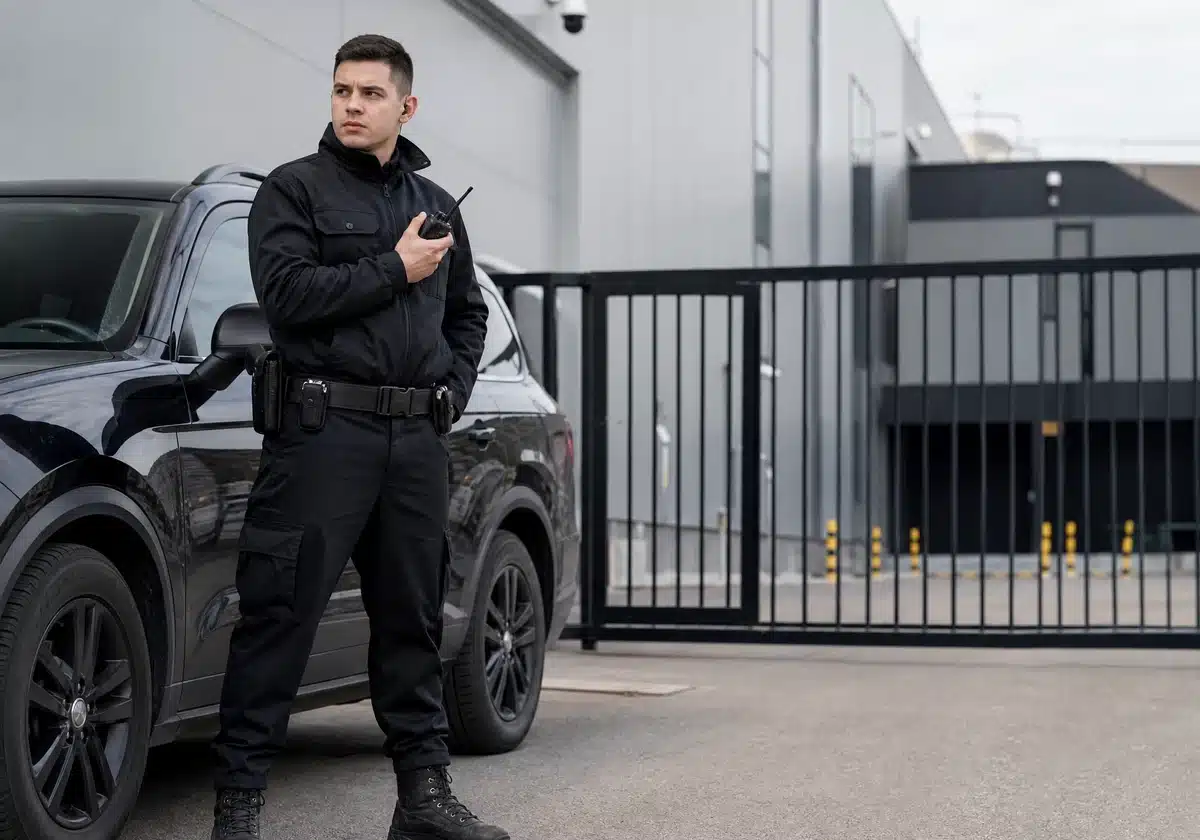
Mobile patrol security services provide intermittent, planned security visits by a patrol officer or security officer using a patrol vehicle/security vehicle and, where required, on-foot checks. As part of our broader professional security services, this type of coverage can be tailored to the property’s operating conditions and security needs. Visits can be scheduled, randomized, or combined. Officers inspect designated checkpoints, observe property conditions, document activity, and follow approved escalation procedures rather than remaining continuously stationed at one post. This structured approach reflects the site-specific protection provided by Grand Protective Security.
What Happens During a Mobile Patrol Visit?
A useful mobile patrol visit is a defined property inspection, not a vague drive-by. The contracted post orders should identify which areas are checked, what the officer is expected to observe, what requires documentation, and when a condition must be escalated. Property owners can also discuss patrol requirements with our security team before finalizing site-specific post orders.
- Perimeter and Access-Point Checks
- Parking Lots, Garages and Exterior Areas
- Building and Property Condition Checks
- Lock-Up and Unlock Services
- Suspicious-Activity Observation
Other Security Services
What Does Mobile Patrol Security Guards Check
| Patrol Visit Checklist | What the Officer May Check |
|---|---|
| Access points | Gates, doors, entrances/exits, fences and restricted access points |
| Exterior zones | Perimeter, parking, garages, lighting, yards and common exterior areas |
| Property condition | Visible damage, open areas, hazards or unusual changes |
| Assigned tasks | Lock/unlock or alarm response only if contracted |
| Activity | Trespassing, loitering, suspicious vehicles or after-hours movement |
| Documentation | Visit record, incident report or other verified reporting method |
Scheduled vs Randomized Security Patrols
Scheduled patrols are useful when a property needs checks during defined windows, shift transitions, opening/closing tasks, or other required-time procedures. Randomized patrols vary arrival timing to reduce predictability. Many properties benefit from a hybrid model that combines required-time visits with random security patrols during higher-risk or after-hours periods, especially for commercial properties that need added coverage outside normal operating hours.
| Factor | Scheduled Patrol | Randomized Patrol |
|---|---|---|
| Timing | Defined time or visit window | Arrival varies within agreed periods |
| Best use | Operational checks, lock/unlock, transitions | Unpredictable visible presence and recurring checks |
| Strength | Reliable timing for required tasks | Reduces predictability |
| Limitation | Can become predictable if used alone | Not appropriate for exact-time tasks |
| Hybrid use | Required visits | Random visits between required checks |
When Is Mobile Patrol the Right Security Solution?
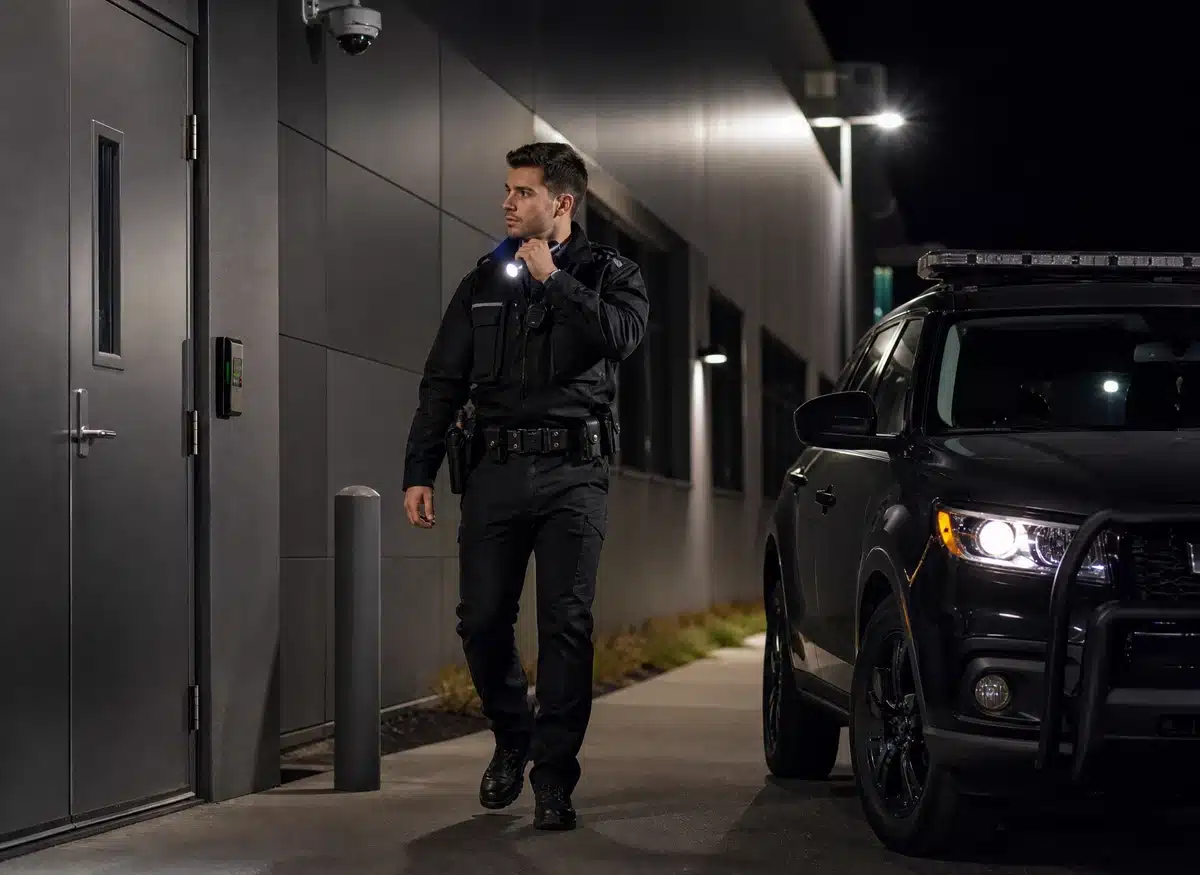
Mobile patrol security often fits properties that need recurring security presence and documented checks but do not require a guard stationed on-site every minute. It can be effective for large properties, after-hours exposure, multiple exterior zones, parking areas, periodic access checks, vacant periods, several nearby sites, or budgets where continuous standing coverage is not justified.
When Mobile Patrol May Not Be Enough
Mobile patrol may not be enough when a property requires continuous controlled entry, customer-facing security, immediate on-site intervention, persistent observation, or a continuously staffed higher-risk post. Those needs may justify unarmed security guards, armed security guards where risk supports them, CCTV monitoring, or a layered security plan. A security risk assessment can help when the correct service mix is unclear.
The right security model should follow the property need rather than forcing patrol coverage into every situation.
Mobile Patrol vs. On-Site Security Guards
| Factor | Mobile Patrol | Standing Guard |
|---|---|---|
| Presence model | Periodic scheduled/randomized visits | Continuous presence during assigned shift |
| Best for | Large properties, after-hours checks, parking/perimeter, multiple nearby sites | Entry control, customer-facing posts, persistent risk |
| Coverage footprint | Moves between zones or multiple sites | Focused on assigned property/post |
| Access control | Can inspect designated access points | Can continuously staff and manage entry |
| Cost tendency | Often lower when intermittent checks are sufficient | Typically higher because labor is continuously assigned |
| Verification | Patrol logs/checkpoints/reports where used | Shift/activity reporting and supervision |
| Decision basis | Risk, frequency, site size, after-hours needs, budget | Need for continuous presence, access control, interaction or immediate on-site coverage |
Mobile Patrol Security by Property Type
Residential Properties
Hotels
Construction Sites
Commercial Spaces
FireWatch
Parking Lots and Garages
Healthcare Security
Government Facilities
Mobile Patrol Reporting and Accountability
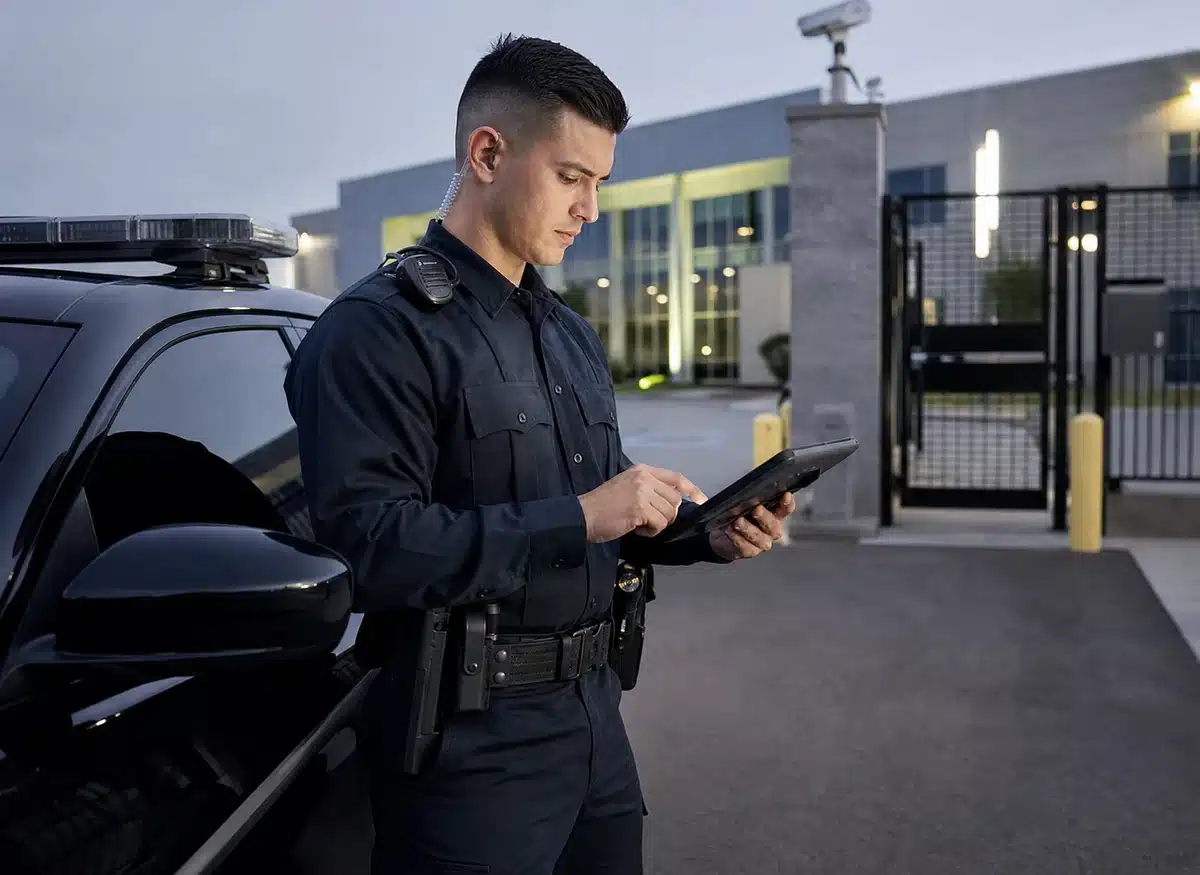
A commercial client should be able to understand how patrol completion is documented. Mobile patrol reporting can include patrol logs, activity reports, visit timestamps, incident reports, property-condition notes, client notifications, and supervisor or dispatcher review.
Alarm Response and Incident Escalation
If alarm response is part of the contracted service, the response should define how the call is received, what the patrol officer is authorized to inspect, which client contacts are notified, how post orders guide the visit, and when law enforcement, fire, or EMS should be contacted. The exact alarm-response scope and geographic limitations must be confirmed before publication.
When a patrol officer finds suspicious activity, the high-level process is to observe, verify what can be safely verified, follow site instructions, notify the appropriate contact, take authorized private-security action, escalate when required, and document the event. Mobile patrol is not a replacement for 911 or public emergency services.
Mobile Patrol + CCTV + On-Site Guards: Layered Security
Mobile patrol can complement CCTV monitoring and on-site security guards when the property has different security needs across different areas or time periods. CCTV can provide continuous or event-driven observation where offered, patrol can physically verify remote zones, and a standing guard can manage access or public-facing duties.
A layered plan may place a guard at an entrance while patrol covers parking and perimeter, use CCTV for remote observation plus patrol for physical verification, or use one coordinated patrol route across multiple buildings.
How Much Do Mobile Patrol Security Services Cost?
Mobile patrol security cost depends on the number of patrol visits, property size, route complexity, distance between approved sites, required tasks, hours and days, armed or unarmed requirements where applicable, alarm-response scope, reporting requirements, urgency, and contract duration. A site-specific quote is more reliable than a generic patrol rate.
Patrol can be more economical than continuous staffing where intermittent checks are enough, but it is not equivalent to having a standing officer on-site at all times
Why Choose Grand Protective Security for Mobile Patrol?
Define the Patrol Decision Before Setting the Frequency
Patrol frequency should follow the task. A site needing one closing check has a different requirement from a multi-building property with parking, gates, loading zones, and recurring after-hours activity.
Separate Drive-By Presence From On-Foot Property Checks
Vehicle patrol creates visible presence, but some checkpoints require the officer to stop and perform a foot patrol or closer property check.
Build Exception Reporting Into the Patrol Scope
A patrol program should define what counts as an exception: an open gate/door, visible damage, repeated loitering, lighting outage, suspicious vehicle, alarm condition, or other property change.
Use Route Design to Avoid Paying for Low-Value Checks
Not every area needs the same patrol attention. Prioritize checkpoints that affect access, property exposure, parking, high-value zones, recurring incidents, or after-hours operations.
Review Patrol Routes When the Property Changes
New tenants, construction phases, closed entrances, new gates, changed parking patterns, repeated incidents, new cameras, or revised hours can make an old patrol route ineffective.
Service Coverage
Grand Protective Security is an Albany-based licensed security company serving Bay Area and California properties where operationally available.
Mobile patrol security services provide scheduled, randomized, or hybrid visits by a patrol officer who checks designated property areas, documents observations, and follows site-specific escalation procedures. Mobile patrol provides recurring physical checks and visible presence rather than a continuously stationed officer.
The officer checks the areas defined in the patrol plan. These may include gates, doors, entrances, perimeter, parking, garages, lighting, loading/service areas, common exterior zones, vacant areas, or other approved checkpoints. The exact route should be written into post orders.
They can be scheduled, randomized, or combined. Scheduled security patrols are useful for required-time checks such as closing tasks. Random security patrols reduce predictability. A hybrid plan can use both depending on the property's operations and deterrence goals.
There is no universal visit count. Patrol frequency depends on property size, number of checkpoints, risk, incident history, hours, required tasks, response expectations, number of sites, route complexity, and budget. Frequency should be an assessment outcome rather than a preset package.
Mobile patrol provides intermittent visits across zones or multiple properties. A standing guard provides continuous presence during contracted hours and is better suited to ongoing access control, visitor interaction, or persistent on-site risk. The two models can also be combined.
Yes, where the properties are operationally suitable for one coordinated route. Each location should still have its own checkpoints, visit requirements, post orders, escalation contacts, and reporting expectations.
Yes, those are common patrol checkpoints when included in the contracted scope. Officers can inspect designated gates, doors, entrances, parking lots, garages, perimeter zones, lighting, and other approved areas and document visible conditions or exceptions.
The officer follows site-specific post orders: observe and assess, verify what can be safely verified, notify designated contacts, take authorized private-security action, escalate to public emergency services when appropriate, and document the event. Alarm response must be part of the contracted scope.
Cost depends on patrol frequency, time on site, property size, route complexity, number of properties, distance between sites, hours, required tasks, alarm-response scope, reporting, urgency, and contract duration. Request a site-specific mobile patrol security quote.
Provide your business name, property type, city, number of properties, coverage hours, desired patrol frequency, scheduled/random preference, lock/unlock or alarm-response needs, start date, main security concerns, and additional requirements.
Request Mobile Patrol Security Service
To request mobile patrol security coverage, provide your name, phone, email, property type, city, number of properties, desired coverage hours and patrol frequency, and any additional requirements. Grand Protective Security will review the scope and prepare a site-specific patrol proposal.