
Businesses have different security needs depending on their property size, layout, operating hours, and potential risks. Two common options are mobile patrols and stationary security guards, but each approach provides a different type of coverage.
When comparing Mobile Patrols vs. Stationary Security Guards, businesses should consider how each option protects property, monitors activity, manages access, and responds to security concerns. Understanding these differences can make it easier to choose a security approach that fits the property.

What Is a Stationary Security Guard?
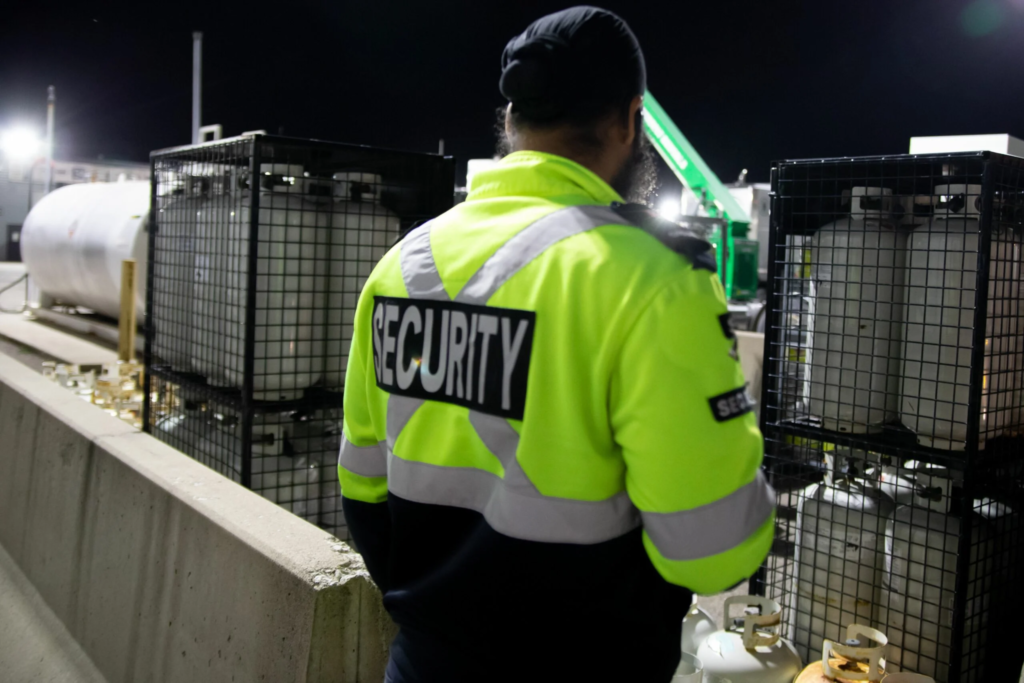
A stationary security guard remains at a designated location for a specific period. Their position may be at an entrance, reception area, gate, lobby, parking entrance, or another important access point.
Because the guard stays in one location, they can continuously monitor activity around that area. They may check visitors, verify credentials, control access, observe suspicious behavior, and respond when an incident occurs.
Stationary guards are particularly useful when a property requires constant human presence at a specific point. For properties that need a visible presence without an armed response, unarmed security guards can monitor entrances, reception areas, and other designated locations.
High-Traffic Entrances
Businesses with frequent visitors, employees, deliveries, or contractors may benefit from having a guard stationed at the main entrance.
The guard can observe who enters and leaves, assist with access procedures, and identify unusual activity that automated systems may not recognize.
Controlled Facilities
Facilities with restricted areas may need a guard to monitor access throughout operating hours. This can be important for warehouses, commercial buildings, industrial sites, and other properties where unauthorized access could create security concerns.
Reception and Visitor Areas
A stationary guard can also provide a visible security presence near reception or visitor areas. They can help direct visitors, verify authorization, and notify management when someone attempts to access a restricted area.
High-Risk Access Points
Some properties have specific entrances or areas that require continuous monitoring. Keeping a guard at these locations allows security personnel to focus their attention on a particular point rather than moving between different areas.

What Is a Mobile Patrol?
A mobile patrol involves security personnel traveling around a property or between multiple locations during scheduled or random visits.
Instead of remaining at one position, patrol officers move through designated areas to check for unusual activity, property damage, unauthorized access, safety concerns, or other security issues. Businesses can also use mobile security patrols to provide a visible security presence across different areas of a property.
Mobile patrols can be performed using marked security vehicles or other patrol methods, depending on the property and security requirements.
Mobile Patrols vs. Stationary Security Guards
The main difference between these two approaches is how security personnel cover the property.
| Feature | Mobile Patrols | Stationary Security Guards |
| Coverage | Moves between designated areas | Remains at a specific location |
| Presence | Periodic or scheduled | Continuous during the assigned shift |
| Property size | Useful for larger areas | Useful for specific access points |
| Access control | Can check areas during patrols | Can continuously monitor entrances |
| Visibility | Patrol vehicle or moving officer | Visible guard at a fixed position |
| Multiple areas | Can cover several locations | Usually focused on one assigned area |
| Best suited for | Large or spread-out properties | Entrances and controlled areas |
Neither approach is automatically suitable for every property. The right option depends on what needs to be monitored and how frequently security personnel need to be present. When comparing Mobile Patrols vs. Stationary Security Guards, coverage is one of the main factors businesses should consider.

When Stationary Security Guards Make Sense
Stationary security guards can be useful when a property needs continuous attention at a specific location.
High-Value Entrances
If a business has one main entrance that requires constant monitoring, a stationary guard can remain there throughout the assigned shift.
Access-Controlled Facilities
Facilities with strict access requirements may need a guard who can continuously verify employees, visitors, contractors, and deliveries.
Reception Areas
Hotels, offices, residential buildings, and other properties may benefit from having a security professional near reception to monitor visitors and respond to concerns.
Sensitive Locations
Some areas may contain valuable equipment, sensitive information, or restricted materials. A fixed security presence can provide continuous observation of these areas.
When Mobile Patrols Make Sense
Mobile patrols can be useful when security coverage needs to extend across a larger area rather than remain focused on one location.
Large Commercial Properties
Large commercial properties may have multiple buildings, parking areas, entrances, and outdoor spaces. A mobile patrol can move between these areas and check for security concerns.
Construction Sites
Construction sites often contain equipment, materials, tools, and partially completed structures. Patrols can provide visible security checks during periods when workers are not present.
Vacant Properties
Vacant buildings may have limited daily activity, but they can still require periodic security checks. Mobile patrols can visit the property and look for signs of trespassing, damage, or other problems.
Parking Lots and Garages
Large parking areas can be difficult to monitor from a single fixed position. Patrol officers can move through different sections and provide a visible security presence.
Coverage: Fixed Position vs. Moving Presence
Stationary guards provide continuous coverage around their assigned location. This makes them useful when a particular entrance, lobby, gate, or restricted area requires constant attention.
Mobile patrols provide moving coverage. Officers can travel through different parts of a property and check areas that may otherwise remain unattended.
When comparing Mobile Patrols vs. Stationary Security Guards, coverage is one of the most important factors to consider. A business should look at whether it needs continuous monitoring in one location or periodic checks across a wider area.
Response Considerations
Response needs can also differ between mobile patrols and stationary guards.
A stationary guard may already be present when an issue occurs within their assigned area. This can allow them to observe the situation directly and follow the property’s established response procedures.
A mobile patrol officer may discover an issue while conducting a scheduled or random check. Depending on the situation, the officer can document the issue, notify the appropriate personnel, or follow the required security response process.
The actual response time depends on the property’s layout, patrol schedule, incident type, and security procedures.
Can Mobile Patrols and Stationary Guards Work Together?
Yes. Businesses do not always have to choose only one security method.
A property may use stationary guards at important entrances while mobile patrol officers check parking areas, outdoor spaces, secondary buildings, or other locations.
This combination can provide both fixed security coverage and mobile monitoring. Businesses can also combine these services with CCTV monitoring to maintain visibility across areas that may not have a guard or patrol officer present at all times.
For example, a commercial facility could have a stationary guard at the main entrance during business hours while mobile patrols check the property after hours.

Mobile Patrols vs. Stationary Guards: Which Is Better?
There is no single approach that fits every property. The choice depends on the property’s security requirements, layout, access points, operating schedule, and potential risks. Understanding Mobile Patrols vs. Stationary Security Guards can help businesses determine which type of coverage best suits their property.
A stationary guard may be more appropriate when continuous monitoring is required at one specific location. Mobile patrols may be more suitable when security personnel need to cover multiple areas or conduct periodic checks.
The important consideration is not simply which option sounds more comprehensive, but which type of coverage matches the property’s actual security needs.
Factors to Consider Before Choosing
Several factors can help businesses determine which security approach fits their property .Properties facing higher security risks may also consider armed security guards when their security plan requires an armed presence.
Property Layout
Consider the size of the property and how many separate areas require monitoring. A large property with multiple outdoor areas may require mobile coverage, while a single controlled entrance may benefit from a stationary guard.
Security Risks
A security risk assessment can help businesses identify vulnerable areas and determine what type of security coverage may be appropriate. Organizations can also use established risk-management approaches when evaluating security needs. The National Institute of Standards and Technology (NIST) provides guidance on risk management and identifying appropriate protective measures.
Operating Hours
Consider whether security is needed continuously or only during certain periods. Some businesses may require a guard during operating hours and mobile patrols after closing.
Number of Locations
Businesses managing multiple properties may benefit from mobile patrol services that allow security personnel to visit different locations according to an established schedule.
Budget and Coverage Requirements
Security decisions should also consider how much coverage is needed and how frequently security personnel must be present. The goal should be to match the security approach with the property’s actual requirements.
How to Choose the Right Security Approach
The choice between Mobile Patrols vs. Stationary Security Guards should be based on the areas that need continuous attention and those that only require periodic checks.
Before choosing a service, businesses should consider:
Mobile Patrols vs. Stationary Security Guards can each provide effective security coverage, depending on the property’s specific needs.
- Which areas require constant monitoring?
- Does the property have multiple buildings or outdoor areas?
- Are there specific entrances that require access control?
- Is security needed during business hours, after hours, or both?
- How frequently should security personnel check the property?
- Are there previous security incidents that should influence coverage?
- Would combining mobile patrols and stationary guards provide more appropriate coverage?
Answering these questions can help businesses develop a security plan based on their actual property conditions rather than relying on a one-size-fits-all approach. A clear understanding of Mobile Patrols vs. Stationary Security Guards can also help businesses choose coverage that matches their property’s specific needs.
Conclusion
Mobile Patrols vs. Stationary Security Guards involves two different approaches to physical security. Stationary guards provide continuous monitoring from a designated position, while mobile patrol officers move between areas to conduct security checks. Mobile Patrols vs. Stationary Security Guards offers two different approaches to physical security, with each option providing a different type of coverage.
For properties that need constant attention at an entrance or restricted area, stationary security guards may be appropriate. For larger or spread-out properties that need periodic monitoring, mobile patrols can provide broader coverage.
In some situations, combining both approaches can provide a practical security solution by placing guards where continuous presence is needed while using patrols to monitor other areas.
FAQs
What is the main difference between mobile patrols and stationary security guards?
The main difference is how they provide coverage. Stationary guards remain at a designated location, while mobile patrol officers move through different areas of a property to conduct security checks.
Are mobile patrols suitable for large properties?
Yes. Mobile patrols can be useful for large properties because officers can move between different buildings, parking areas, entrances, and outdoor spaces.
When should a business use a stationary security guard?
A stationary guard can be useful when a business requires continuous monitoring at a specific entrance, gate, reception area, or restricted location.
Can mobile patrols and stationary guards be used together?
Yes. Businesses can combine both services when they need continuous security at certain locations and periodic checks across other areas of the property.
Do mobile patrols operate on a fixed schedule?
They can operate according to scheduled patrols, although some security plans may also include random checks depending on the property’s requirements.
Which type of security is better for a vacant property?
Vacant properties may benefit from mobile patrols because security personnel can periodically inspect the property for signs of trespassing, damage, or other security concerns.
How should a business choose between mobile patrols and stationary guards?
Businesses should consider property size, access requirements, security risks, operating hours, and the areas that require continuous versus periodic monitoring.