
CCTV Monitoring Services in Berkeley, CA
Grand Protective Security provides CCTV monitoring and remote video monitoring services in Berkeley, California for apartments, mixed-use, commercial, retail, professional, construction, and parking properties that need verified visibility across approved areas. Berkeley is the primary service geography, with East Bay and Alameda County as supporting context. Effective monitoring combines usable camera views, defined rules, human verification, a site-specific response protocol, and incident documentation where available.
Request a Berkeley CCTV Monitoring Assessment or call (510) 417-6817. Grand Protective Security publishes CA PPO 122124 and 24/7 on-call availability. This page does not imply that every camera is continuously watched 24/7; actual monitoring hours and monitoring model must match the contracted service.




Request a Free Quote!
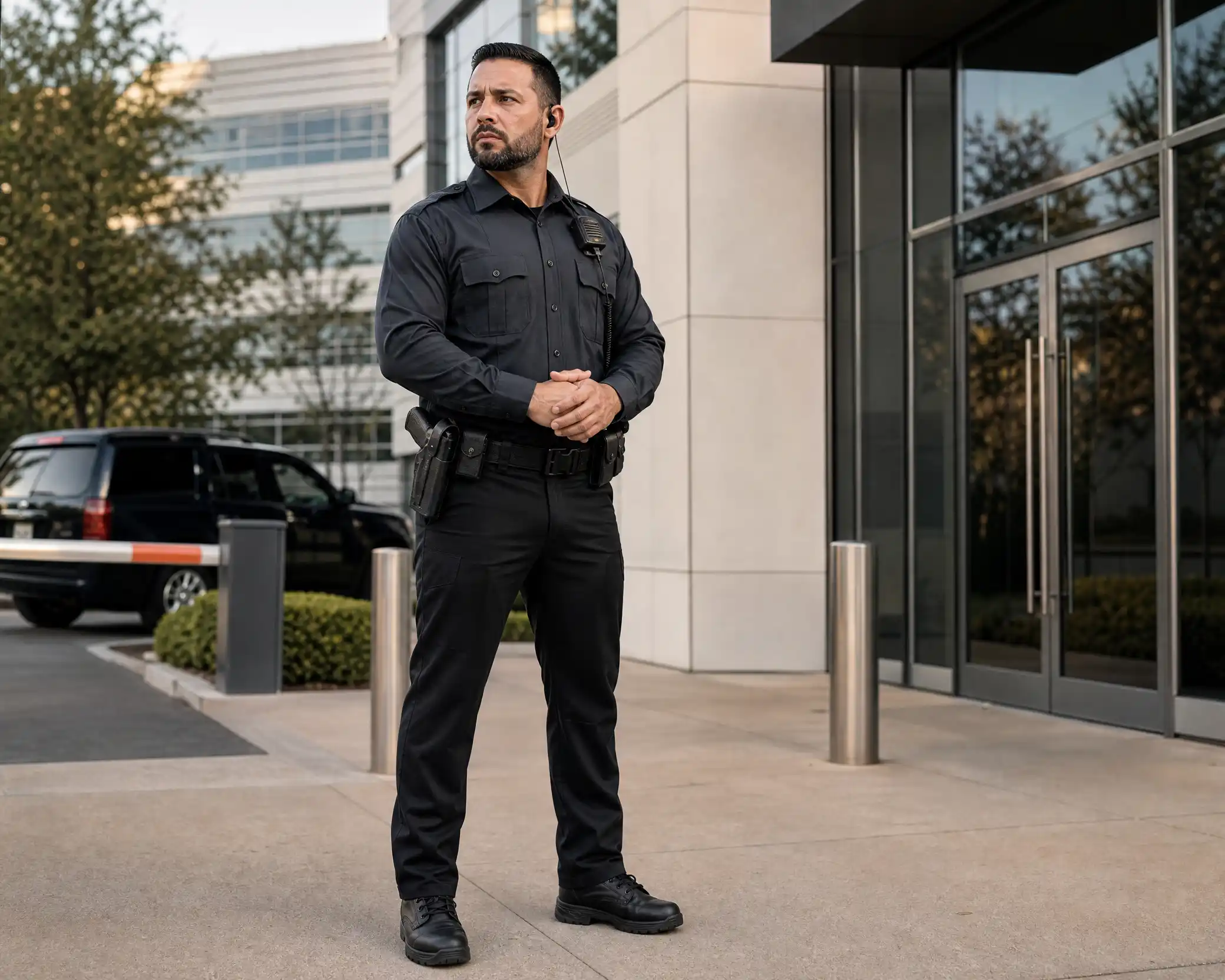
What Is CCTV Monitoring and How Is It Different from Recording-Only Cameras?
Recording-only CCTV mainly stores footage for later review. CCTV monitoring adds an active or event-driven process in which a security camera or CCTV feed can be reviewed through a monitoring center or other verified monitoring function, followed by video verification and a defined response or escalation protocol. Depending on the service model, monitoring may be event-based, continuously live during selected periods, or a hybrid.
Does monitoring mean someone watches every camera continuously? Not necessarily. That depends on the monitoring model and contracted hours. Grand Protective Security should describe continuous live viewing only where that workflow is verified.
When Does a Berkeley Property Need Monitored CCTV?
Monitored CCTV can help with after-hours visibility, parking or garage oversight, common areas, loading/service zones, construction, multiple entrances, or repeated access and property incidents.
Monitoring works best when camera views are usable, normal resident, student, visitor, customer, employee, vendor, contractor, and delivery activity is understood, and response contacts are defined before an event occurs.
Active CCTV Monitoring vs. Passive Video Surveillance
| Factor | Monitored CCTV | Recording-Only CCTV |
|---|---|---|
| Primary purpose | Detect/verify events and support response | Record evidence for later review |
| Human review | According to monitoring model or events | Usually after an incident |
| Real-time escalation | Possible under protocol | Usually no |
| Incident evidence | Yes | Yes |
| False-alert management | Rules + verification can reduce irrelevant alerts | Not central unless alerting exists |
| Best fit | Properties needing active verification / response | Properties primarily needing evidence / visibility |
Event-Based Monitoring vs. Continuous Live Monitoring
Event-based monitoring uses supported analytics or rules to flag activity for human review. This can be useful for Berkeley apartments, mixed-use properties, retail, and other public-facing sites with significant normal foot traffic. Continuous live monitoring means designated feeds or periods are actively watched by monitoring staff. The better model depends on operating hours, normal activity, property risk, camera count, and the response plan. Grand Protective Security should state only the monitoring model it can document for the specific account.
Can GPS Monitor Existing Security Cameras in Berkeley?
Existing cameras may be usable when technically compatible and reliable. A compatibility assessment should review the camera system, NVR, VMS, image quality, night visibility, network conditions, event support, camera health, and authorized access. The practical options are to monitor compatible existing feeds, upgrade selected equipment, redesign specific views, or replace only the parts that cannot support the required monitoring model. This avoids assuming a full system replacement is always necessary.
Camera Coverage for Apartments, Mixed-Use and Shared-Entry Properties
For university-adjacent apartments, mixed-use buildings, and shared entries, CCTV should follow real resident, guest, vendor, delivery, and service movement. Useful zones may include entrances, intercom areas, packages, common spaces, garages, parking, walkways, and exterior access. Private residential interiors and other inappropriate private spaces should not be monitored. Camera placement should focus on approved common or commercial areas and the events the property manager may actually need to verify.
Access Control + CCTV: Why Entry Data and Video Should Support Each Other
Access control and CCTV provide different context. Access data can show a credential or intercom event; video can help explain who entered, what happened at the door, and whether the event matched normal activity. This can be useful for a shared entrance, visitor/vendor authorization, contractors, deliveries, restricted spaces, and after-hours access. Exact integration capability should be claimed only where GPS supports the relevant access-control and video systems.
Camera Placement, Useful Views and Blind-Spot Planning
Camera planning should prioritize useful views, not maximum camera count. Entrances, storefronts, parking, alleys, loading areas, common spaces, and restricted zones should be reviewed for lighting, obstructions, sight lines, and the event each camera must help verify. Older or mixed-use Berkeley buildings may require more careful wiring, network, mounting, and sightline planning than a standardized layout. No design should promise every angle or zero blind spots.
Detection Rules for Berkeley's Public-Facing and Mixed-Use Environments
Berkeley properties often have late normal movement from residents, students, visitors, customers, employees, deliveries, contractors, and pedestrians. Detection rules must account for that activity. Useful monitoring rules define detection zones, operating schedules, access windows, virtual lines, event types, and exclusions so normal public or resident movement does not create constant unnecessary escalation.
Video Analytics and False-Alert Filtering
Where supported, camera analytics may identify a person/vehicle event, movement across a virtual line, activity in a detection zone, dwell or loitering-type events, or schedule-based exceptions. Sensitivity and exclusions can be adjusted to reduce irrelevant triggers. Can CCTV eliminate false alarms? No. Better rules, usable camera views, operating schedules, and human verification can reduce irrelevant alerts, but no monitoring system should promise perfect detection or zero false alarms.
Human Verification: What Happens Before an Alert Is Escalated?
Human verification reviews context before escalation. The reviewer may compare the camera feed with operating hours, access patterns, deliveries, visitor/resident activity, and property instructions to decide whether activity is authorized, routine, suspicious, or abnormal. This reduces the chance that every analytic trigger becomes an unnecessary escalation.
Response and Escalation for Verified CCTV Events
A verified CCTV event should follow the property's response protocol. Depending on the contract, that may include notifying a property manager or client contact, alerting an on-site guard, requesting mobile patrol, issuing a supported lawful audio warning, or contacting emergency services. Response rules should differ for apartments, retail, medical/professional offices, construction, and commercial or light-industrial properties. The page does not promise police priority, arrest, prevention, or a fixed response time.
Incident Clips, Reports and Video Documentation
Incident documentation may include a timestamp, camera or zone, clip or snapshot, monitoring notes, notification, response action, and known outcome. These records can support property management and factual incident review. Grand Protective Security should publish exact report format, clip delivery, export options, and retention only after those processes are verified.
Remote Access, User Permissions and System Health
Where supported, secure remote access may let approved users view cameras while user permissions control viewing and export. System-health functions may include camera status, offline-camera alerts, or maintenance escalation. These features should not be assumed. GPS should verify its actual portal or app, secure remote-access model, user permissions, camera-health monitoring, and offline-camera workflow before making stronger claims.
How GPS CCTV Monitoring Works: Detect -> Verify -> Respond -> Document
- Review property layout and video coverage.
- Define monitored zones, schedules, priority events.
- Assess camera, NVR, VMS system compatibility.
- Detect activity through supported monitoring tools.
- Review event context and authorized access.
- Follow site-specific response protocols when warranted.
- Document alerts, camera health, property changes.
Privacy, Footage Access, Retention and Audio Considerations
Berkeley property owners should define authorized viewers, monitored common/commercial areas, retention, footage export/release, and any audio or two-way communication. Private spaces should be excluded from routine monitoring.
Berkeley’s current private-camera registry does not give police direct access to a registered private camera; owners may be contacted to share relevant footage. Local institutional video policies also emphasize controlled access and privacy-sensitive camera use. These are local context points, not evidence that GPS serves the City or UC Berkeley.
Retention, footage access, audio, signage, and release procedures can involve legal and policy considerations. This section is operational guidance, not legal advice.
CCTV Monitoring for Berkeley Property Types
Some properties need more than one type of security coverage. Depending on your risk level, operating hours and property layout, our security services can include armed security guards working alongside, or being replaced by, another security service.
University-Adjacent Apartments / Multifamily
Entrances, package and delivery zones, common areas, garages, exterior access, resident/guest movement, and shared-entry events can be monitored in approved common areas. Rules should reflect normal late-night or high-traffic movement.
Mixed-Use / Downtown Commercial
Shared entrances, tenants, customers, deliveries, service access, parking, and after-hours activity require detection rules that distinguish legitimate use from review-worthy events.
Retail / Restaurants / Storefronts
Entrances, closing periods, back-of-house or service access, exterior approaches, and parking can support event verification while avoiding constant escalation from expected customer traffic.
Institutional / Educational / Nonprofit
Public-facing entrances, common spaces, and restricted areas require controlled access and privacy-aware monitoring. No named institution is presented as a GPS client.
Medical / Professional / Research-Adjacent
Entrances, reception-adjacent common areas, parking, restricted access, and after-hours activity may benefit from monitored video, but privacy-sensitive zones require careful design.
West Berkeley Commercial / Light-Industrial
Gates, yards, loading/service areas, equipment, employee/vendor vehicles, parking, and after-hours perimeter activity are strong use cases for remote surveillance monitoring Berkeley properties.
Construction / Redevelopment
Changing access points, equipment/material zones, temporary power/network conditions, contractor schedules, and after-hours activity require monitoring rules that change with the site.
Parking / Vehicle Areas
Entries, exits, vehicle and pedestrian areas, garages, and related common zones may benefit from CCTV monitoring for parking garages Berkeley properties where usable views and response procedures are defined.
CCTV Monitoring Across Berkeley's Main Commercial Environments
- Downtown Berkeley / Shattuck Avenue: retail, offices, mixed-use buildings, apartments, shared entrances, parking and delivery activity.
- Telegraph / University-Adjacent: retail, apartments, mixed-use, high pedestrian flow, visitors, residents, deliveries and late activity.
- Fourth Street / West Berkeley: retail, commercial, service/light-industrial properties, loading areas, parking, yards and vehicle movement.
- North / South Berkeley: apartments, neighborhood commercial properties, resident/guest access, garages and common areas.
These areas are used as property-operation context, not as neighborhood keyword stuffing or evidence that a named local business, school, hospital, lab, institutional/public-facing property, or public agency is a GPS client. The same principle applies to any commercial office or research-adjacent property mentioned as a use case.
University-Adjacent Monitoring: Define Normal Movement Before Defining Alerts
University-adjacent monitoring should first define normal movement: late residents or students, public sidewalks, deliveries, resident-only doors, move-ins, events, and seasonal traffic.
If these patterns are not defined, ordinary public or resident movement can generate unnecessary alerts. Useful monitoring depends on property-specific schedules, detection zones, private/common-area boundaries, and clearly defined events.
West Berkeley Yard and Light-Industrial Monitoring
West Berkeley commercial and light-industrial monitoring may cover gates, yards, loading areas, vehicles, equipment, parking, and after-hours movement. Authorized deliveries, vehicle schedules, and access windows should be defined so normal operations are not treated as security events.
CCTV can be layered with mobile patrol when physical checks or response are needed.
Construction-Site CCTV Monitoring as the Site Changes
Construction monitoring should change with the site. Cameras, detection zones, and authorized-worker schedules may need updates as fencing, entrances, equipment, storage, power, network conditions, or contractor routes change.
Urban Berkeley construction may sit beside active sidewalks, residences, or businesses. Detection rules should exclude normal adjacent public movement. Add guards or patrol when the site needs physical checks or on-site response rather than remote visibility alone.
Event -> Verification -> Response Map
| Observed Event | Verification | Potential Response |
|---|---|---|
| Person enters apartment garage after hours | Check schedule, access context and camera zone | Notify contact/guard/patrol if unauthorized; document |
| Delivery at active mixed-use entrance | Compare expected hours and location | No escalation if normal; log if required |
| Loitering near storefront/common entrance | Assess duration and behavior under site rules | Client/audio/patrol response if supported; document |
| Forced entry / visible damage | Verify event and affected access point | Client + guard/patrol + emergency services as warranted; preserve clip/report |
| Camera offline / view obstructed | Confirm health alert or operator observation | Notify authorized contact/maintenance; record outage |
| Repeated trigger from public sidewalk | Review boundary and event source | Adjust zone, sensitivity or schedule where supported |
CCTV Monitoring vs. Security Guards in Berkeley
CCTV monitoring is strongest for remote visibility, video evidence, wide camera coverage, and multi-site scalability. An on-site guard is strongest for continuous physical presence, access control, resident or customer interaction, direct policy enforcement, and immediate physical verification.
Use CCTV when remote visibility and verification are sufficient. Add an unarmed or armed guard when the property needs continuous staffed access, public interaction, or a level of physical presence that cameras cannot provide.
CCTV Monitoring vs. Mobile Patrol in Berkeley
CCTV monitoring provides continuous or event-driven visual oversight depending on the service model. Mobile patrol provides physical property checks of doors, gates, parking, perimeter, and other checkpoints during scheduled or randomized visits.
A layered model can use CCTV to verify activity and mobile patrol to perform physical checks or response where contracted.
CCTV vs. Guard vs. Mobile Patrol Decision Table
| Factor | CCTV Monitoring | On-Site Guard | Mobile Patrol |
|---|---|---|---|
| Presence | Remote visual coverage | Continuous physical presence | Intermittent physical visits |
| Resident/visitor access | Limited unless integrated | Strong | Limited |
| Wide-area visibility | Strong across cameras | Limited by officer position | Limited to visit route |
| Physical verification | Needs paired response | Yes | Yes during visit/response |
| Incident evidence | Strong video evidence | Officer report + video | Patrol report + video |
| Multi-site scalability | High | Lower | High |
| Best fit | Remote visibility / verification | Continuous staffed post | After-hours / checkpoints / response |
Layered Security: CCTV + Access Control + Guards + Mobile Patrol
CCTV monitoring provides continuous or event-driven visual oversight depending on the service model. Mobil
Layered security works when each control has a defined role: video explains events, access data adds credential context, guards manage people and entrances, and mobile patrol provides physical checks or response.
Only actual GPS integrations and response workflows should be described as live capabilities. The page should not imply that every CCTV account automatically includes access-control integration, patrol response, or on-site guard dispatch.
e patrol provides physical property checks of doors, gates, parking, perimeter, and other checkpoints during scheduled or randomized visits.
A layered model can use CCTV to verify activity and mobile patrol to perform physical checks or response where contracted.
When CCTV Monitoring Is Not Enough
CCTV may not be enough when a staffed entrance is needed, repeated breaches require on-site presence, privacy or blind zones limit visibility, connectivity is unreliable, risk requires physical security, or no practical response path exists.
In those cases, the buyer should compare Berkeley Unarmed Security, Armed Security, Mobile Patrol, or Security Risk Assessment services instead of trying to make cameras solve a physical-presence problem.
How Much Does CCTV Monitoring Cost in Berkeley?
CCTV monitoring cost depends on camera/feed count, monitoring hours, monitoring model, compatibility, analytics/configuration, upgrades if required, connectivity, reporting, retention/storage, multi-site scope, and physical-response integration.
For a Berkeley CCTV monitoring quote, provide the property type, number of sites, existing cameras, approximate camera count, NVR or VMS brand if known, monitored hours, main zones, normal after-hours activity, recent incidents, remote-access needs, reporting requirements, and whether physical response is required.

Why Choose Grand Protective Security for CCTV Monitoring in Berkeley?
- Verify expected activity before triggering escalation.
- Plan detection for mixed-use public-facing properties.
- Assess existing cameras before recommending replacements.
- Combine CCTV with layered security options.
- Document incidents with accountable monitoring records.
Design Monitoring Around the Event the Property Actually Needs to Verify
Define the event the property needs to verify before adding more cameras or analytics—for example unauthorized garage entry, after-hours loading, package-area access, or repeated storefront loitering. This keeps monitoring focused on useful decisions.
Separate Public Movement From Property-Specific Security Events
Berkeley's pedestrian and mixed-use environments create constant normal motion. A useful plan separates public sidewalks, expected residents, customers, vendors, and deliveries from zones where access, timing, or behavior actually requires review.
Decide the Response Path Before Enabling More Alerts
More alerts do not help if nobody knows what happens next. Define who receives verified events, when guard or patrol response applies, when emergency services are appropriate, and what gets documented before monitoring begins.
Use Camera Health and View Quality as Part of Security Accountability
A camera may be installed yet provide poor evidence because the view is blocked, lighting is weak, connectivity is unstable, or the feed is offline. Where supported, camera-health and view-quality checks should be part of the monitoring program.
Review Monitoring Rules When Tenants, Hours or Site Conditions Change
Tenants, hours, construction phases, delivery schedules, seasonal movement, access rules, and parking patterns can change normal activity. Detection rules should be reviewed when those conditions change.
Berkeley Areas We Serve with CCTV Monitoring
CCTV monitoring may support genuine Berkeley service needs in Downtown Berkeley, Shattuck Avenue, Telegraph Avenue, Fourth Street, West Berkeley, North Berkeley, South Berkeley, Elmwood, and other local properties within GPS’s actual service coverage.
This section is intentionally concise. It supports Berkeley relevance without neighborhood stuffing or implying a Berkeley office, named client, or institutional relationship.
Frequently Asked Questions About CCTV Monitoring in Berkeley
CCTV monitoring adds an active or event-driven review process to security cameras. Instead of only recording footage for later investigation, monitored CCTV can identify relevant activity, verify the event, and follow a site-specific response or escalation protocol.
Recording-only cameras mainly preserve footage for later review. Monitored CCTV adds human or event-driven review, verification, and potential real-time escalation according to the monitoring model. Both can provide evidence, but monitoring adds an operating process around the video.
Not necessarily. Monitoring may be event-based, continuously live during selected periods, or a hybrid. The exact model and hours depend on the contracted service. GPS should not claim every camera is continuously watched unless that workflow is verified.
Possibly. Existing cameras can be assessed for compatibility, feed reliability, image quality, night visibility, NVR/VMS support, network conditions, and authorized access. Compatible equipment may be retained, while only the parts that cannot support monitoring need to be changed.
The monitoring plan should define normal movement, public sidewalks, resident or visitor access, delivery schedules, operating hours, and private/common-area boundaries. Detection zones and schedules are then designed so expected activity does not create constant unnecessary escalation.
The response follows the property's protocol. Depending on the event and contract, GPS may notify a client contact, alert an on-site guard, request mobile patrol, use supported lawful audio communication, or contact emergency services when warranted. The event may also be documented.
Yes, a response protocol can include mobile patrol, on-site guards, or emergency services where the contracted workflow supports it and the event warrants escalation. The page does not promise police priority, fixed response times, or a guaranteed outcome.
Clips, timestamps, snapshots, monitoring notes, or incident reports may be available depending on the service. GPS should confirm the exact report format, delivery process, retention, and export options before these features are promised in the contract or public copy.
Remote viewing may be available where the system and GPS service support secure remote access. User roles should control who can view or export footage. The exact portal, app, access method, and permission controls should be verified for the proposed system.
Footage access should be limited to authorized viewers under the property owner's policies and the contracted monitoring arrangement. Berkeley's current camera registry does not give police direct access to registered private cameras; owners remain in control of voluntary sharing.
Guards are better when the property needs continuous physical presence, staffed access control, resident/customer interaction, direct policy enforcement, or immediate on-site verification. CCTV is stronger for remote visibility, video evidence, and scalable observation across camera zones.
Cost depends on camera count, monitoring hours, monitoring model, existing-system compatibility, analytics, configuration, connectivity, reporting, retention/storage, multiple sites, and whether equipment upgrades or physical guard/patrol response are part of the service.
Request CCTV Monitoring Services in Berkeley
To request CCTV monitoring services in Berkeley, provide the property address or area, property type, number of sites, whether cameras already exist, approximate camera count, camera or VMS brand if known, interior and exterior zones, shared entrances or common areas, parking or garage needs, loading or yard areas, desired monitoring hours, normal after-hours activity, recent incidents, internet/power conditions, remote-access needs, reporting requirements, and whether patrol or guard response may be needed. Primary CTA: Request a Berkeley CCTV Monitoring Assessment. Secondary CTA: Get a Security Quote or call (510) 417-6817.