
Security & Risk Management Consultation




Request a Free Quote!
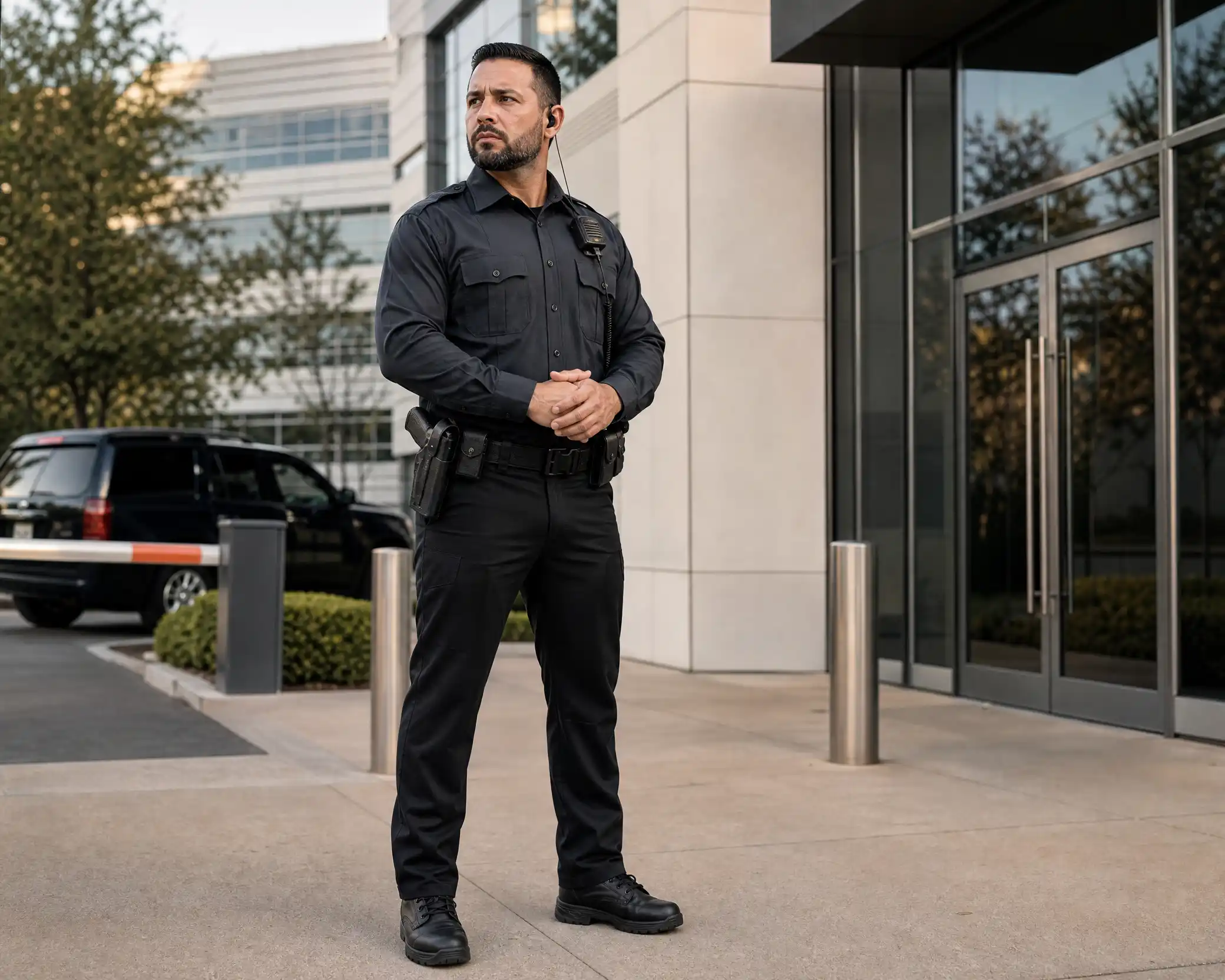
What Is a Physical Security Risk Assessment?
A physical security risk assessment is a structured review of assets, threats, vulnerabilities, existing controls and operating conditions used to identify and prioritize practical security improvements. It can examine people, procedures and technology together, then convert findings into a risk-based roadmap. It is broader than a guard quote or a camera inspection.
Security Consultation vs. Full Risk Assessment vs. Security Program Review
| Factor | Full Risk Assessment | Consultation | Program Review |
|---|---|---|---|
| Best for | Defined property / formal findings | Early-stage or focused question | Existing security program / multi-site maturity |
| Site walkthrough | Usually | Optional / scoped | Usually |
| Written findings | Yes, where offered | May be brief | Yes, where offered |
| Risk prioritization | Yes | Limited | Yes |
| Current controls review | Yes | Focused | Comprehensive |
| Roadmap | Prioritized site roadmap | Next-step guidance | Program / portfolio roadmap |
The right engagement depends on the buyer's question. A focused consultation may be enough to frame a decision, while a full assessment is more appropriate when the property needs structured evidence and prioritized recommendations. A program review is useful when an organization already operates guards, patrol, CCTV, access control and reporting across one or several sites.
When Should an Oakland Property Request a Security Risk Assessment?
What Does GPS Assess at an Oakland Property?
| Assessment Area | Examples Reviewed | Why It Matters |
|---|---|---|
| Assets | People, tenants/residents, visitors, equipment, inventory, vehicles, sensitive spaces, critical operations | Clarifies what needs protection and what disruption would matter most |
| Threats | Unauthorized access, theft, vandalism, violence, trespass, disruption, vehicle/property risk | Identifies credible event scenarios without relying on generic crime statistics |
| Vulnerabilities | Doors/gates, perimeter, lighting, blind areas, visitor flow, loading areas, parking, staffing/procedure gaps | Shows where threats can create meaningful exposure |
| Existing controls | Guards, mobile patrol, CCTV, alarms, access control, locks/barriers, lighting, post orders, escalation, management oversight | Prevents recommendations from ignoring what the client already has |
01
Define Security Objectives, Assets and Operational Priorities
Start with business and operational impact rather than a product or guard count. Identify what must remain operational, who and what require protection, which areas cannot tolerate disruption, where high-value or sensitive assets are located, what visitor/vendor access is necessary, and which incidents would create the greatest operational or financial harm.
02
Review Incident History, Near Misses and Operating Patterns
Review client-provided incident history, near misses, recurring complaints, time-of-day patterns, entry points, maintenance/security records where available, and changes in tenant mix, construction phase, staffing, deliveries or operating hours. The purpose is to understand actual patterns and consequences rather than fill the page with sensational local crime statistics.
03
Conduct the Site Walkthrough and Physical Security Review
A site walkthrough can review the perimeter, gates, doors, lobby, parking garage, loading and service areas, stairs and common areas, yards, roof or secondary access points, lighting and visibility. The review can also consider employee, tenant, resident, contractor, vendor, visitor and delivery flow, plus existing cameras, alarms, access control and communications. If stakeholder interview or document-review steps are part of the GPS process, those should be described only after the company verifies them.
04
Identify Threats, Vulnerabilities and Existing Control Gaps
Risk becomes clearer when a credible threat or event scenario is connected to an exposed asset and a specific vulnerability. Examples include an uncontrolled service door combined with after-hours contractor activity, a poorly covered garage entrance, inconsistent visitor procedures, or a patrol route that misses a loading area. The analysis should remain high-level and operational. It should not publish tactical attack-path details.
05
Step 6: Build a Practical Mitigation Roadmap
Recommendations should be phased so the client can act on the highest-value changes first. Immediate priorities may include critical access or procedural fixes. Near-term priorities may include staffing, post orders, patrol, CCTV or access-control changes. Planned improvements may include capital work, redesign, multi-site standardization or longer-term program updates. A mitigation roadmap should consider risk reduction, operational impact and practical cost rather than present an unranked list of products.
06
Prioritize Risk by Likelihood, Impact and Control Strength
| Risk Factor | Likelihood | Impact | Current Control | Gap | Priority |
|---|---|---|---|---|---|
| After-hours service-door access | Medium | High | Key/credential process + CCTV | Inconsistent contractor validation | Near-term / high |
| Parking-garage blind area | Medium | Medium | Partial camera coverage | View obstruction + weak lighting | Planned / medium |
| Lobby visitor process | Low-Medium | Medium | Reception practice | No consistent visitor rule | Near-term / medium |
GPS should not describe a proprietary scoring formula unless it actually uses one. The page can explain likelihood, impact, existing control and residual risk without inventing a formal algorithm.
What Should an Oakland Security Assessment Deliver?
A well-scoped Oakland security assessment should make it clear what the client receives. Depending on the verified GPS service, deliverables may include:
- Executive summary of key findings and business implications.
- Site observations and documented control gaps.
- Prioritized risk register or risk matrix.
- Existing-control findings across guards, patrol, CCTV, access control, alarms, lighting and procedures.
- People, process and technology recommendations.
- Post-order or SOP recommendations where GPS actually offers them.
- Immediate, near-term and planned mitigation priorities.
- Responsible owner, decision point or timeline where useful.
- Implementation plan or follow-up recommendations where included in scope.
Redacted sample report pages, risk matrices and implementation examples would provide strong first-party E-E-A-T proof once GPS has approved examples.
Access Control, Visitor Flow and Entry-Point Assessment
Access review can include doors and gates, credentials, keys, intercoms, visitor management, vendor and contractor authorization, deliveries, loading/service entrances, after-hours access and the site policy that governs exceptions. The assessment should ask who is allowed through each entry point, how authorization is verified, what happens when access fails and how exceptions are documented.
- Perimeter, Parking, Lighting and Environmental Security Review
- Guards, Post Orders and Staffing Coverage Review
- Mobile Patrol Route and Frequency Assessment
- CCTV, Alarm and Access-Control System Assessment
- Incident Response, Escalation and Reporting Review
- Post Orders, SOPs and Emergency Procedure Recommendations
Security Assessment for Oakland Property Types
Downtown / Uptown Commercial & Offices
Review lobby and visitor access, garages, after-hours tenants, service/loading access, mixed public/private movement, access procedures and the balance between physical presence and technology.
Jack London / Waterfront Commercial
Review hospitality, office, mixed-use and parking conditions, loading/service access, public-facing movement and after-hours operations without implying a named waterfront or Port client relationship.
West Oakland / I-880 / Logistics
Review gates, trucks, drivers, vendors, the logistics yard, loading areas, equipment, perimeter, multi-shift operations and overnight exposure. Port-adjacent context does not imply secured Port-terminal work.
Multifamily / Apartments
Review resident and guest access, packages, garages, common areas, vendor flow, management procedures, after-hours coverage, CCTV placement and incident reporting.
Construction / Redevelopment
Review changing perimeter and access, contractors, equipment/materials, temporary barriers, cameras, lighting and after-hours coverage as the site evolves.
Retail / Mixed-Use
Review customers, staff, deliveries, opening/closing procedures, parking, access points, loss/event escalation and customer-facing guard needs.
Healthcare / Public-Facing
Review visitor flow, access procedures, de-escalation and response responsibilities, parking and sensitive areas. Specialized healthcare-security claims require first-party proof.
Parking / Garages
Review vehicle and pedestrian access, lighting, elevators/stairs, blind areas, CCTV views, patrol coverage and practical response capability.
Oakland Risk Assessment by Operating Environment: Property Need -> Risk Question
| Property Environment | Risk Question | Evidence to Review | Likely Control Categories |
|---|---|---|---|
| Warehouse gate | Who is authorized after hours? | Gate rules, driver/vendor process, access logs, incident history | Credential/access changes, guard, patrol, CCTV, post orders |
| Downtown lobby | How are visitors and deliveries handled? | Visitor process, staffing, access rules, delivery flow | Reception/access procedure, unarmed guard, post orders |
| Parking garage | Which blind/access zones create exposure? | Lighting, camera views, access points, patrol logs, time patterns | Lighting, CCTV, patrol, guard response |
| Construction site | How does changing access affect risk? | Fence/gate changes, contractor lists, equipment zones, schedules | Gate control, patrol, CCTV, updated procedures |
| Multifamily property | Where do resident/visitor procedures break down? | Guest flow, package process, garage access, incident history | Access rules, unarmed coverage, patrol, CCTV |
How Do You Decide Between Armed Guards, Unarmed Guards, Patrol and CCTV?
| Factor | Armed Standing Guard | Mobile Patrol |
|---|---|---|
| Presence | Continuous during contracted post hours | Intermittent scheduled/random visits |
| Best use | Continuous higher-risk post or access point | Distributed after-hours checks or multiple sites |
| Access control | Strong continuous fit | Limited during each visit |
| Patrol | Foot/site rounds from assigned post | Vehicle/foot checks across a route |
| Scalability | One assigned post/site | Can cover several properties |
| Cost tendency | Higher continuous labor | Often lower when intermittent checks are sufficient |
People, Process and Technology: The Three-Layer Security Model
Multi-Site and Property-Portfolio Risk Assessments in Oakland
How Often Should a Security Risk Assessment Be Updated?
What Does a Security Risk Assessment Cost in Oakland?
Why Choose Grand Protective Security for Security & Risk Consultation in Oakland?
- Assessment Before Service Selection
- People + Process + Technology Framework
- Prioritized, Budget-Aware Roadmap
- Operational Translation Where GPS Provides the Service
- Oakland Property-Environment Decision Framework
- First-Party Proof Once Available
Separate Immediate Risk From Important but Deferrable Improvements
Not every finding should be labeled urgent. Separating critical exposure from near-term operational fixes and planned capital work helps decision-makers protect continuity without turning the assessment into an unaffordable wish list. This also makes the mitigation roadmap easier to explain internally and budget against.
Test Existing Security Controls Before Recommending More Coverage
A site may already have guards, cameras, access control or patrol, yet still experience gaps because duties, schedules, camera zones, reporting or esc alation are poorly aligned. The assessment should first test whether existing controls are being used effectively before recommending additional staffing or technology.
Tie Each Recommendation to a Decision Owner and Trigger
Recommendations become more useful when the client knows who owns the next step and what event should trigger action. A property manager may own access-rule changes, facilities may own lighting, security may own post orders, and management may approve staffing or capital improvements.
Use Residual Risk to Explain What Remains After Improvements
Security controls reduce exposure but do not eliminate all risk. Explaining residual risk helps the client understand what remains after a control is added and whether the remaining exposure is acceptable, needs another layer, or should be monitored over time.
Review Whether Security Spending Matches the Highest-Priority Risks
A risk assessment can reveal spending that is disconnected from the property's most important exposure. Right-sizing may mean increasing coverage in one area, reducing low-value checks elsewhere, improving a procedure instead of adding staff, or phasing technology upgrades according to risk priority.
Oakland Areas and Property Environments We Assess
Security assessment and consultation may support genuine Oakland assignments across Downtown Oakland, Uptown, Lake Merritt, Jack London, West Oakland, I-880 and port-adjacent commercial areas, East Oakland and other Oakland locations where GPS provides service. These local entities are used as operating context rather than thin neighborhood pages. The content does not imply that the Port of Oakland, City of Oakland, Alameda County or any named property is a GPS client.