
CCTV Monitoring Services in Oakland, CA
Grand Protective Security provides CCTV monitoring and remote video monitoring services in Oakland, CA for businesses and properties that need active or event-driven video oversight across approved camera zones. A monitoring plan can cover entrances, perimeter areas, parking, yards, loading zones, common areas, retail storefronts, and other authorized views, with relevant events reviewed, verified, documented, and escalated under a defined response protocol.
Request an Oakland CCTV Monitoring Assessment or call (510) 417-6817. Grand Protective Security publishes CA PPO 122124 and is based in Albany, California, serving Oakland, Alameda County, and the broader East Bay where operationally available. Actual monitoring hours, live-human versus event-driven workflow, installation, remote-access tools, analytics, audio warnings, retention, and patrol/guard escalation should be described only after GPS verifies those capabilities.




Request a Free Quote!
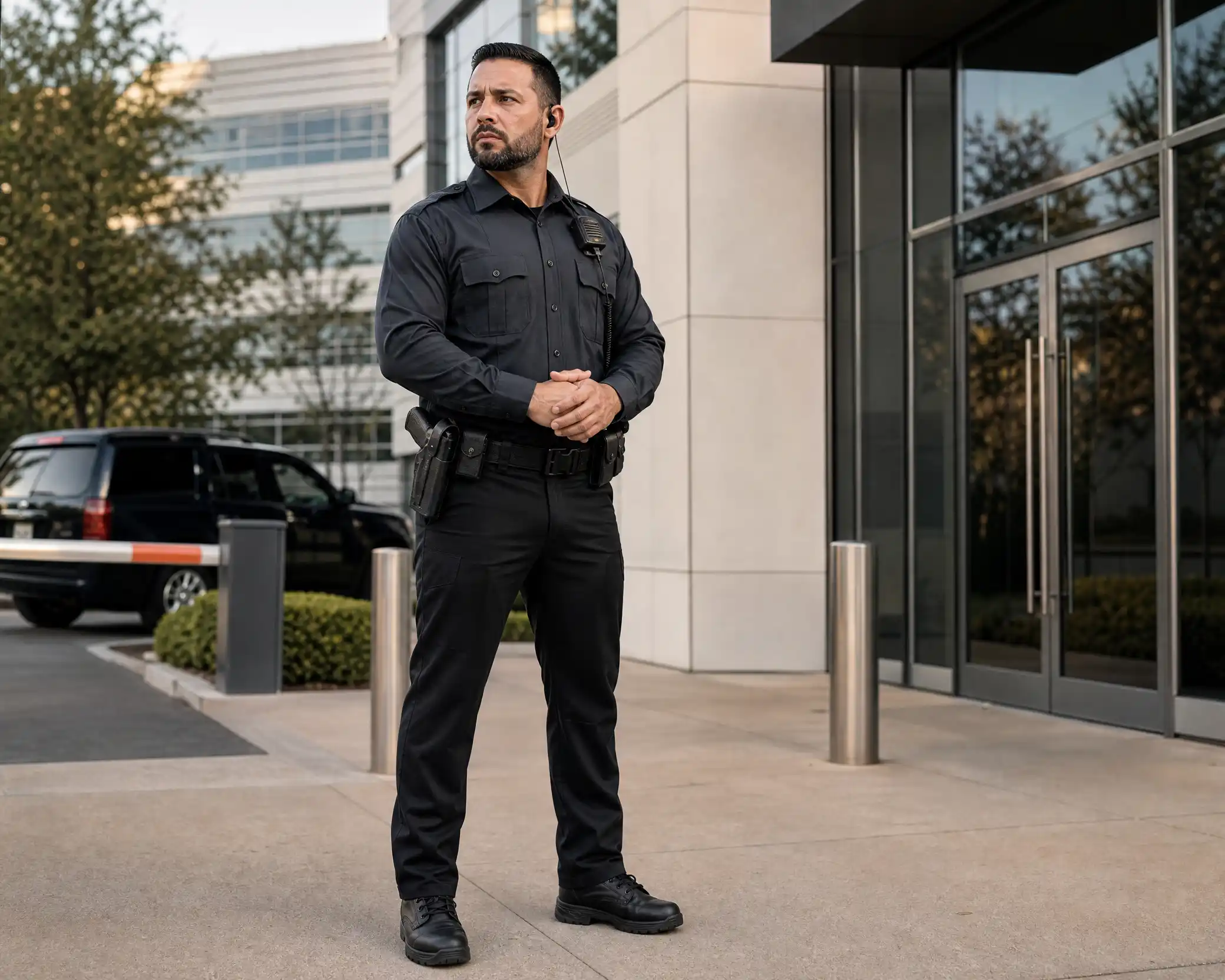
What Is CCTV Monitoring and How Is It Different from Recording-Only Cameras?
CCTV monitoring is the active or event-driven review of authorized security-camera feeds under defined monitoring rules. Recording-only cameras mainly store footage for later review. Monitored CCTV adds detection or observation, video verification, an agreed response protocol, and incident documentation so relevant activity can be addressed while it is still operationally useful.
Whether someone watches every camera continuously depends on the actual service model. A professional page should not imply 24/7 human viewing unless Grand Protective Security confirms that specific arrangement for the contracted service.
When Does an Oakland Property Need Monitored CCTV?
Monitored CCTV can be a strong fit when an Oakland property has after-hours exposure, large exterior areas, repeated trespassing, theft or vandalism concerns, parking or vehicle areas, loading yards, construction activity, multiple access points, remote sites, or a need for better incident documentation.
CCTV is strongest where cameras have usable sightlines, reliable power and network connectivity, clearly defined detection zones, and a practical response plan. More cameras do not automatically create better security if the monitoring rules or response path are unclear.
How GPS CCTV Monitoring Works: Detection -> Verification -> Response -> Documentation
- Assess Risk, Layout, Lighting and Operating Conditions
- Define Monitored Zones, Schedules and Event Rules
- Connect Compatible Cameras or Define Required Changes
- Monitor or Detect Activity Under the Approved Model
- Verify Relevant Events Before Escalation Where Possible
- Follow the Site-Specific Response Protocol
- Document Relevant Events
- Review False Alerts, Blind Spots and Changing Site Conditions
Active CCTV Monitoring vs. Passive Video Surveillance
| Factor | Monitored CCTV | Recording-Only CCTV |
|---|---|---|
| Primary purpose | Detect/verify events and support response | Record footage for later review |
| Human review | According to monitoring model or events | Usually after an incident |
| Real-time escalation | Possible under protocol | Usually no |
| Incident evidence | Yes, where recording is available | Yes |
| False-alert management | Can use verification and rules | Not applicable unless alerts are enabled |
| Best fit | Properties needing active/event response | Properties mainly needing evidence or general visibility |
The deciding question is whether the property mainly needs evidence after an incident, active verification during an incident, or both.
Event-Based Monitoring vs. Continuous Live Monitoring
Can GPS Monitor Existing Security Cameras in Oakland?
Camera Placement, Coverage Zones and Blind-Spot Planning
Video Analytics, Detection Rules and False-Alert Filtering
Human Verification: What Happens Before an Event Is Escalated?
Response and Escalation for Verified CCTV Events
Incident Clips, Reports and Video Documentation
Client Remote Access, Permissions and System Health
Privacy, Camera Placement, Audio and Retention Considerations
CCTV Monitoring for Oakland Property Types
Some properties need more than one type of security coverage. Depending on your risk level, operating hours and property layout, our security services can include armed security guards working alongside, or being replaced by, another security service.
Warehouses / Logistics / Distribution
A warehouse or distribution yard may prioritize perimeter, yard, loading docks, gates, trailer or vehicle areas, and after-hours movement. Monitoring rules should distinguish normal loading activity from unusual access.
Construction Sites
Construction CCTV monitoring should cover changing access points, equipment/material zones, perimeter, temporary power/network conditions, and after-hours activity. Camera positions and event rules may need regular adjustment as the site changes.
Auto Dealers / Vehicle Properties
An auto dealership or vehicle property may monitor inventory rows, entrances/exits, service areas, lot perimeter, and after-hours vehicle activity, with response thresholds matched to the site schedule.
Commercial Offices / Mixed-Use
Commercial office and mixed-use properties may prioritize entrances, lobbies where appropriate, garages, loading/service areas, exterior doors, and after-hours common areas.
Multifamily / Apartments
Multifamily properties may monitor entrances, common areas, garages, package areas, exterior zones, and parking, with privacy-sensitive placement and clear resident/visitor rules.
Retail
Retail monitoring may focus on entrances, closing periods, back-of-house or service access, storefront perimeter, parking, and after-hours activity.
Parking Lots / Garages
Parking garage or lot monitoring can cover vehicle and pedestrian zones, entries/exits, elevator or payment areas, perimeter views, and after-hours conditions.
Industrial / Multi-Site
Industrial property and multi-site portfolios may use centralized monitoring across yards, equipment zones, gates, perimeter areas, parking, and several properties where technically and operationally supported.
CCTV Monitoring Across Oakland's Main Commercial Environments
- Downtown Oakland / Uptown / Lake Merritt: offices, mixed-use properties, retail, garages, entrances, common areas, and after-hours visibility.
- Jack London / Waterfront: commercial, hospitality, mixed-use, parking, loading, service-access, and exterior monitoring without implying a Port or named-facility client relationship.
- West Oakland / I-880 / port-adjacent commercial area: warehouses, distribution yards, vehicles, gates, loading areas, and perimeter coverage.
- East Oakland: industrial, vehicle, warehouse, parking, retail, and commercial property contexts requiring site-specific monitoring rules.
Oakland geography is used only to explain property operations. The page does not rely on neighborhood repetition, crime sensationalism, or unsupported claims that public agencies or named facilities are GPS clients.
Oakland Warehouse and Yard Monitoring: Cameras Need Rules, Not Just Coverage
Large warehouse and logistics sites create plenty of normal activity, so monitoring quality depends on rules as much as cameras. A useful plan asks which gates are active after hours, which loading areas are high priority, what movement is normal, who is authorized overnight, which vehicle patterns are expected, and what events trigger client or patrol escalation. That decision logic can make warehouse monitoring more useful than simply adding more cameras without clear event thresholds.
Construction-Site CCTV Monitoring as the Site Changes
Construction sites change quickly. Fences move, access points open or close, material zones shift, lighting changes, and temporary power or internet can be interrupted. CCTV monitoring for construction sites should therefore be reviewed as the project changes, with cameras re-aimed or relocated, detection rules updated, and contractor schedules kept current. CCTV expands visibility, but mobile patrol or on-site guards may still be needed for physical checks, controlled entry, or response.
CCTV Monitoring vs. Security Guards in Oakland
CCTV monitoring provides wide visual coverage, remote observation, video evidence, after-hours visibility, and multi-camera oversight. An on-site guard provides physical presence, access control, direct interaction, immediate on-site verification, and a staffed response point. CCTV may be enough when remote visibility and verification meet the property's need. Add an unarmed or armed guard when continuous physical presence, controlled entry, customer-facing management, or higher-risk response is required.
CCTV Monitoring vs. Mobile Patrol in Oakland
CCTV provides continuous or event-based remote visibility depending on the monitoring model. Mobile patrol provides intermittent physical visits, door and gate checks, property inspection, site presence, and in-person response during the visit.
A layered plan can use CCTV to detect and verify activity while contracted mobile patrol responds physically or performs scheduled checks in parking, perimeter, yards, and other areas.
| Factor | CCTV Monitoring | On-Site Guard | Mobile Patrol |
|---|---|---|---|
| Presence | Remote visual coverage | Continuous physical presence | Intermittent physical visits |
| Access control | Limited unless integrated | Strong | Limited |
| Wide-area visibility | Strong across cameras | Limited by officer location | Limited to visit route |
| Physical verification | No unless paired with response | Yes | Yes during visit/response |
| Incident evidence | Video evidence | Officer report + cameras where used | Patrol report + cameras where used |
| Multi-site scalability | High where infrastructure exists | Lower; staffing needed at each post | High for approved routes |
| Best fit | Remote visibility and verification | Continuous staffed post | After-hours checks and physical response |
CCTV Monitoring + Access Control + Guards: Building a Layered Security Plan
Layered security connects different controls instead of expecting cameras to do everything. Camera events can support access investigations, access-control logs can add context, an on-site guard can verify or manage people, and mobile patrol can provide after-hours physical response or recurring checks.
The design should follow the property’s risk, layout, hours, blind areas, and response needs. Only actual GPS integrations, platforms, and dispatch workflows should be presented as confirmed capabilities.
When CCTV Monitoring Is Not Enough
CCTV monitoring may not be enough when a property needs a continuously staffed access point, has blind areas that cannot be practically covered, suffers unreliable power or connectivity, experiences repeated physical breaches, requires customer-facing interaction, or has no realistic physical response plan.
Depending on risk, the property may need unarmed security, armed security, mobile patrol, access control, or a security risk assessment in addition to or instead of monitored video.
Depending on risk, the property may need unarmed security, armed security, mobile patrol, access control, or a security risk assessment in addition to or instead of monitored video.
| Observed Event | Verification | Potential Response |
|---|---|---|
| Person enters closed yard after hours | Review event context and schedule | Notify client/patrol; emergency services if warranted; document |
| Vehicle enters authorized loading area | Compare time, zone and site rules | No escalation if authorized; log if required |
| Loitering near entrance | Assess duration and behavior under client rules | Client/audio warning/patrol if supported; document |
| Forced entry / visible damage | Verify event and affected area | Client + patrol/guard + emergency services as warranted; save clip/report |
| Camera offline / view obstructed | System-health or operator detection | Notify authorized contact/maintenance; record outage |
| Repeated nuisance alert | Review cause and detection rule | Adjust zone, sensitivity or schedule where supported |
How Much Does CCTV Monitoring Cost in Oakland?
CCTV monitoring cost in Oakland depends on the number of cameras or feeds, monitoring hours, event-based versus continuous model, camera compatibility, analytics or configuration, installation or upgrades where applicable, connectivity, reporting, storage or retention, multi-site setup, remote access, and patrol or guard response integration.
There is no reliable one-price-fits-all rate. Request a site-specific Oakland CCTV monitoring quote based on the existing system, number of cameras, monitoring zones, hours, response needs, and reporting requirements.

Why Choose Grand Protective Security for CCTV Monitoring in Oakland?
- Verification and Response Rules, Not Vague ‘Watching’
- Ability to Layer CCTV With Mobile Patrol and On-Site Guards
- Oakland Property-Type Planning
- Incident Documentation and Accountability Where Provided
- Existing-Camera Compatibility Assessment Where Supported
- CA PPO 122124 and Bay Area Security-Service Entity
Define the Security Decision Before Adding More Cameras
Before expanding camera count, define the decision each monitored view should support. Does the feed help verify an after-hours entry, distinguish authorized loading from trespassing, confirm a gate breach, review a parking-area event, or support a patrol response? Camera coverage earns value when it supports a clear security decision.
Separate Camera Coverage Problems From Response Problems
A property may have excellent video coverage but no practical response path, or a strong patrol/guard response but poor camera visibility. Those are different problems. The assessment should identify whether the gap is detection, verification, communication, physical response, access control, or evidence retention before recommending more technology.
Build Camera-Outage Procedures Into the Monitoring Plan
A monitored zone can lose value when a camera goes offline, the lens is blocked, network connection fails, or lighting changes. The plan should define how camera health issues are noticed, which contact receives the outage notice, whether temporary patrol coverage is needed, and how long a critical blind area can remain unresolved.
Use Incident Reviews to Improve Monitoring Rules
Incident clips and nuisance alerts can reveal which detection rules are too broad, which zones create noise, which schedules are outdated, or which camera views need adjustment. Periodic review can turn monitoring from a static camera service into a more useful operating process.
Keep Access, Retention and Evidence Responsibilities Explicit
Monitoring contracts should clearly state who can view feeds, who controls secure credentials, who stores footage, how long video retention lasts, who can request an incident clip, and how evidence is exported. Clear responsibility reduces confusion after a serious event and supports stronger privacy and E-E-A-T practices.
Oakland Areas We Serve with CCTV Monitoring
CCTV monitoring may support genuine Oakland assignments in Downtown, Uptown, Lake Merritt, Jack London, West Oakland, I-880 and port-adjacent commercial areas, East Oakland, and other Oakland locations where GPS provides service.
This coverage section is intentionally concise. It supports Oakland relevance without neighborhood keyword stuffing or implying a Port of Oakland, City of Oakland, public-agency, warehouse, construction, or named-property client relationship.
Frequently Asked Questions About CCTV Monitoring in Oakland
CCTV monitoring is active or event-driven review of authorized camera feeds under defined rules. Unlike recording-only surveillance, monitored CCTV can add event detection or observation, human verification where applicable, a client-defined response protocol, and incident documentation while the event is still operationally relevant.
Yes. Recording-only cameras mainly preserve footage for later review. Monitored CCTV adds live or event-based review, verification, notification and escalation procedures. A property may need both active monitoring and reliable recording depending on its risk and evidence requirements.
Not necessarily. Monitoring can be event-based, scheduled live, continuous live, or hybrid. The exact model and hours should be stated in the service agreement. GPS should not imply that every camera is continuously watched by a person unless that capability is specifically verified.
Potentially. Compatibility depends on the camera system, NVR or VMS, network access, secure credentials, stream stability, image quality, resolution, lighting and event capability. A technical review should confirm whether existing feeds can be used or what upgrades are required.
Verification can include reviewing the event clip, site schedule, camera zone, related feeds, property rules and known authorized activity. The goal is to distinguish normal activity from a potentially suspicious event before escalation where possible.
The monitoring function follows the agreed escalation protocol. That may include notifying the client or site contact, alerting an on-site guard, requesting contracted mobile patrol, using an approved audio warning where supported and lawful, or contacting emergency services when warranted.
A monitoring plan can include mobile patrol escalation or emergency-services contact when those actions are part of the approved protocol and operationally available. The service should not promise police priority or a fixed public-response time.
They may, depending on the verified GPS process. Documentation can include timestamps, incident clips, snapshots, monitoring notes, notifications and incident reports. The contract should state what the client receives, how quickly, and how retention/export access works.
Remote viewing may be possible where the camera/VMS platform, permissions and GPS service model support it. Authorized users should use secure credentials and defined user permissions. GPS should verify its actual portal or mobile-app capability before promising remote access.
Warehouses, distribution yards, construction sites, auto dealerships, commercial offices, mixed-use properties, multifamily communities, retail sites, parking garages and industrial properties may benefit when they need remote visibility, after-hours oversight, event verification or documented evidence.
On-site guards are usually better when the property requires continuous physical presence, direct access control, visitor interaction, immediate on-site verification or a staffed higher-risk post. CCTV is stronger for remote visibility, broad camera coverage and video evidence. Many properties use both.
Cost depends on camera/feed count, monitoring hours, event-based versus continuous review, compatibility, analytics/configuration, connectivity, reporting, storage/retention, remote access, multi-site setup, installation or upgrades where applicable, and patrol/guard response integration.
Request CCTV Monitoring Services in Oakland
To request CCTV monitoring services in Oakland, provide your name, company or property, phone, email, Oakland address or area, property type, number of sites, existing cameras, approximate camera count, camera/NVR/VMS brand if known, interior or exterior coverage, monitoring hours, priority zones, recent incidents, internet/power conditions, remote-access needs, reporting expectations, patrol/guard integration, start date, and urgency.