
When Is the Right Time to Hire Unarmed Security Guards?
Cameras, alarms, locks, and access-control systems can protect a property up to a point — but technology alone can’t watch every entrance, question every visitor, or respond in real time when something looks wrong. That’s where unarmed security guards come in.
Short answer: A business should consider hiring unarmed security guards when it needs a visible security presence, access control, property patrols, visitor monitoring, or extra protection for employees, customers, and assets. Unarmed guards work well for businesses that want professional security without changing the tone of a customer-facing environment.
The right level of coverage depends on your industry, property size, location, operating hours, assets, and history of incidents

What Unarmed Security Guards Actually Do
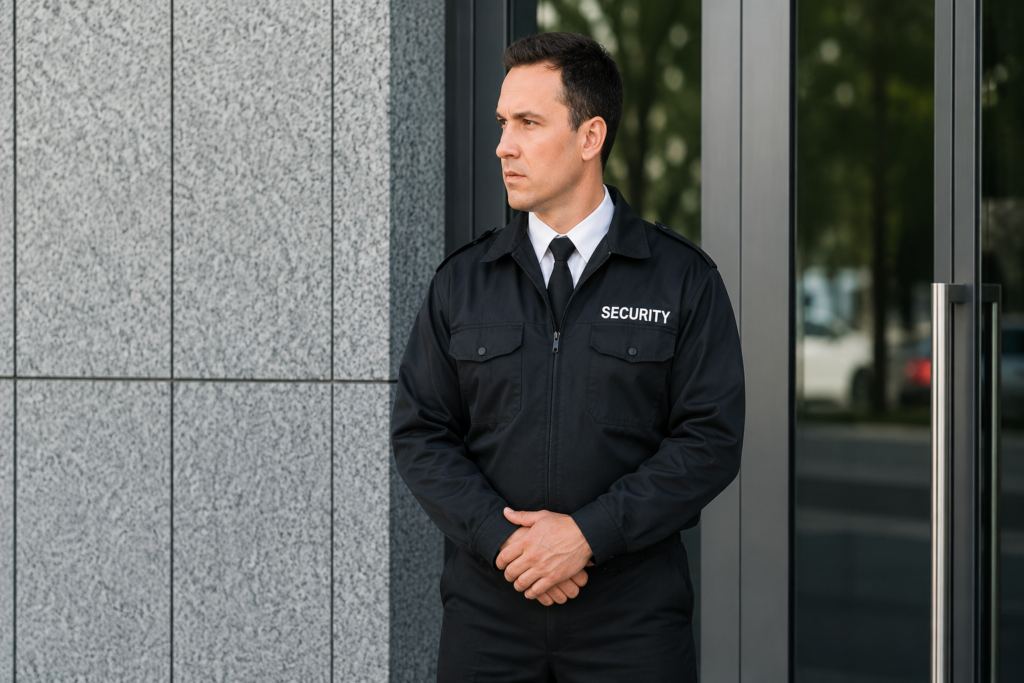
Unarmed security guards are trained professionals who protect people, property, and facilities without carrying firearms. Their exact duties depend on the site, but generally include:
- Monitoring entrances and exits
- Checking visitors and maintaining logs when required
- Conducting property patrols
- Observing CCTV systems
- Documenting and reporting incidents
- Assisting employees or visitors with security concerns
Their real value isn’t reacting after something happens — it’s preventing it. A visible, professional presence discourages theft, trespassing, and vandalism before they escalate.
10 Signs Your Business Needs Unarmed Security
1. You’re Losing Money to Theft or Shoplifting
Repeated theft — merchandise, tools, equipment, materials — is one of the clearest signals it’s time to act. According to National Retail Federation survey data, U.S. retailers were on track to lose an estimated $132 billion to theft in 2024, and security providers increasingly report that guard presence has become a standard line item for businesses that have been repeatedly targeted. A guard adds a visible deterrent and can monitor high-risk areas, but should work alongside lighting, cameras, and access controls rather than replace them.
2. Unauthorized People Keep Getting In
Someone wandering into an employee-only area, warehouse, or restricted zone is a real liability. Guards can staff access points, verify visitors against company procedure, and flag violations — creating a consistent process instead of ad hoc enforcement.
3. You Want a Visible, Reassuring Presence
Sometimes there’s no single crisis — you just want employees and customers to feel safe. A uniformed officer at an office, retail store, hotel, or parking facility does that, while discouraging opportunistic trespassing or vandalism.
4. Employees or Customers Have Raised Safety Concerns
If staff are reporting suspicious individuals, aggressive behavior, or discomfort entering and leaving the building, that’s a warning sign worth acting on before it becomes an incident report.
5. You Operate Late Nights, Early Mornings, or Weekends
A busy daytime property can be nearly empty overnight — fewer people to notice a break-in, vandalism, or unauthorized entry. Scheduled coverage during overnight shifts, closing procedures, or holidays fills that gap.
6. Your Property Is Large or Hard to Monitor
Multiple buildings, entrances, and storage areas create blind spots employees don’t have time to check. Guards can patrol systematically; larger sites sometimes pair on-site staff with mobile patrol services.
7. You Get Heavy Visitor Traffic
Office buildings, hotels, and residential communities often need more than a receptionist to manage visitor flow. A guard handles that so administrative staff aren’t pulled away from their actual jobs. Unarmed security guards can help manage visitors while maintaining a professional environment.
8. You’ve Had Vandalism or Trespassing Incidents
Damage to buildings, vehicles, or signage adds up in repair costs. Alongside a guard’s visible deterrent and patrols, it’s worth reviewing lighting, fencing, camera placement, and landscaping blind spots.
9. You’re Running a Construction Site
Tools, machinery, building materials, and fuel are attractive, portable targets — and sites often sit unattended nights and weekends. Heavy-equipment theft alone costs the industry roughly $1 billion a year in the U.S., according to National Insurance Crime Bureau data, and less than a quarter of stolen equipment is ever recovered. A guard can control access, patrol the perimeter, and flag unsafe or unauthorized activity, with coverage weighted toward the hours when no one else is around.
One practical example: a mid-size contractor that had lost two trailers of tools over a single summer added a guard for overnight and weekend shifts only, rather than 24/7 coverage — since that’s when the site sat unattended. The targeted schedule addressed the actual risk window without paying for coverage the site didn’t need.
10. Employees Are Doing Security Work That Isn’t Their Job
When a receptionist has to leave the desk to check on a suspicious visitor, or a manager handles closing-time walkthroughs on top of everything else, security becomes a distraction from their actual role. Bringing in a dedicated guard frees staff to focus on what they were hired to do.
Where Should a Guard Be Positioned?
Placement matters as much as headcount. A guard stationed at the main entrance is best suited for access control and visitor screening. One assigned to patrol covers more ground across a large property. A third scenario — a loading dock, parking structure, or high-value storage area — may need dedicated attention of its own.
Before assigning a post, weigh:
- Main entry and exit points
- Areas with a history of incidents
- High-value assets and restricted zones
- Parking, loading areas, and blind spots
- Emergency access routes
The right position is wherever a guard’s presence and observation address your biggest actual risk — not necessarily the most visible spot on the property.
Which Businesses Typically Use Unarmed Security?
Because duties can be tailored to the property, unarmed guards show up across a wide range of industries:
- Retail stores — theft deterrence, customer safety, access monitoring
- Office buildings — visitor management, access control, employee safety
- Warehouses — protecting inventory, equipment, and loading areas
- Hotels — maintaining a safe environment without disrupting guest experience
- Construction sites — guarding against theft, vandalism, and unauthorized entry
- Residential communities — monitoring entrances, common areas, and visitors
The common thread isn’t the industry — it’s a need for prevention, monitoring, and a professional presence rather than confrontation with high-level threats.
Is There a Security Gap You’re Not Seeing?
Not every weakness shows up as a reported crime — sometimes an area is simply never being watched. Ask yourself:
If a security incident happened right now, who would notice it first, and what would they be expected to do?
If you can’t answer that clearly, you likely have an operational gap. Watch for practical red flags: doors left unsecured, unverified visitors, poorly lit parking areas, and employees quietly taking on security duties outside their job description.
What a Guard’s Duties Cover
| Responsibility | How It Helps |
| Access control | Manages entry into restricted areas |
| Visitor monitoring | Keeps visitor traffic organized |
| Property patrols | Surfaces suspicious activity early |
| Incident reporting | Documents events for pattern analysis |
| CCTV observation | Adds human judgment to surveillance |
| Opening/closing checks | Reduces risk during vulnerable windows |
| Emergency communication | Speeds up incident response |
Well-kept reports do more than record what happened — they reveal patterns. Repeated notes about one unsecured door, or several incidents in the same parking area, point to exactly where to invest next (lighting, cameras, patrol frequency).
Do You Need 24/7 Coverage — or Just the Right Hours?
Most businesses don’t need round-the-clock guards. Look at when your risk actually concentrates:
- When past incidents occurred
- When staffing is lowest
- When valuable assets sit unattended
- Whether weekends or holidays add risk
The goal isn’t to maximize hours — it’s to put coverage where the actual risk lives. Unarmed security guards can provide coverage during the specific hours when your business faces the highest risk.

Unarmed vs. Armed: How to Decide
Unarmed security is generally the right fit when the core concerns are access control, theft prevention, visitor monitoring, trespassing, and general presence — not high-risk threats. Base the decision on your property’s actual risk profile, not on which option sounds more serious or costs less.
Choosing a Security Provider: What to Check
When hiring unarmed security guards, choose a provider with relevant experience and properly trained personnel.
- Licensing & training — confirm the company and guards meet requirements for your location
- Relevant experience — a warehouse and a hotel have very different needs
- Custom planning — the plan should reflect your actual vulnerabilities, not a generic template
- Reporting process — ask who receives reports and how urgent issues are communicated
- Availability — nights, weekends, holidays, and flexible scheduling
- Integration — the guard should work alongside your existing cameras and access systems, not in isolation
Before you request a quote, it also helps to have basic information ready: property size and number of entrances, operating hours, staff and visitor volume, any past incidents, and existing equipment like cameras or alarms. A provider can give you a far more accurate — and useful — quote when it’s based on your actual scope of work rather than just a headcount.
Questions Worth Asking Before You Sign
- What exact duties will the guard perform?
- Fixed post or active patrol?
- Who receives incident reports, and how fast?
- What happens if the assigned officer is unavailable?
- Can coverage flex during higher-risk periods?
- How will we know the plan is working?
Quick Self-Check
You may benefit from unarmed security if you answer “yes” to several of these:
- Have you experienced theft or vandalism?
- Are there areas no one consistently monitors?
- Do unauthorized people get onto your property?
- Do you operate with minimal staff at certain hours?
- Are employees handling security duties that aren’t their job?
- Do cameras alone leave real blind spots?
Answering “yes” doesn’t mean you need the maximum package — it means it’s worth a closer look.
A Simple 5-Step Process to Get Started
- Identify your main concerns — theft, unauthorized access, vandalism, after-hours risk
- Map where and when problems happen — specific entrances, shifts, days
- Review what’s already in place — cameras, alarms, lighting, locks
- Define the guard’s role — access control, patrols, visitor management, or a mix
- Talk to a security professional — get an assessment before committing to a schedule or headcount
FAQ
Are unarmed guards actually effective?
Yes, for most business environments — effectiveness depends on training, deployment, and clear procedures matched to the property’s real risks.
What kinds of businesses use unarmed security?
Retail stores, offices, warehouses, hotels, construction sites, and residential communities, when the priority is prevention and monitoring rather than confronting high-level threats. Many businesses rely on unarmed security guards for prevention, monitoring, and access control.
Do I need coverage 24/7?
Not usually. Many businesses only need coverage during closing, overnight hours, or other higher-risk windows.
Can guards prevent theft entirely?
No guarantee, but visible presence, patrols, and reporting meaningfully reduce it.
Can a guard work with the cameras and alarms I already have?
Yes — guards typically complement existing systems rather than replace them.

Conclusion
If your business is dealing with theft, unauthorized access, vandalism, or safety concerns raised by employees and customers, unarmed security guards can add a real layer of protection — without introducing firearms into a customer-facing environment. Start by identifying where and when you’re actually vulnerable, then match coverage to that, not to a one-size-fits-all package.
Grand Protective Security offers unarmed guards, armed security, mobile patrol, CCTV monitoring, and risk consultation — built around your property’s actual needs rather than a standard package.
This guide draws on industry data from the National Retail Federation and National Insurance Crime Bureau, and reflects standard practice for licensed unarmed security operations in the U.S.