
Businesses face different security challenges depending on their location, property, employees, customers, assets, and daily operations. Security cameras, alarms, access-control systems, and other technologies can provide valuable protection, but some businesses may also need trained security professionals on-site.
Understanding the benefits of armed security guards can help business owners determine whether armed protection is appropriate for their specific security requirements. Armed security personnel can provide a visible deterrent, monitor access points, protect designated areas, identify suspicious activity, and follow established procedures during security incidents.
However, armed security is not automatically necessary for every business. The appropriate level of protection depends on factors such as the property’s risk profile, valuable assets, operating hours, previous incidents, and potential security threats.
Below are seven important ways armed security guards can support business security.
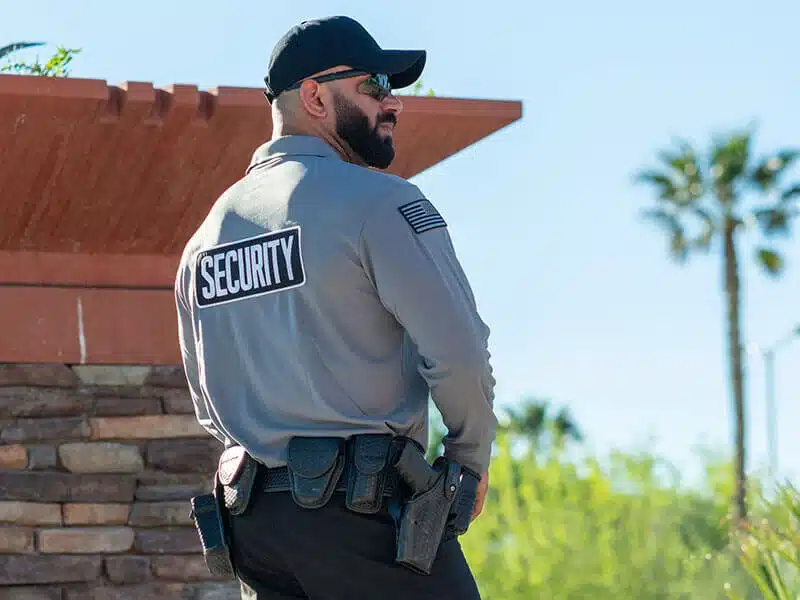
1. Provides a Strong Visible Security Deterrent
One of the primary benefits of armed security guards is their visible presence on a business property.
A trained armed security officer stationed at an entrance, parking area, reception point, or other designated location can make it clear that security is actively being maintained. This visible presence may discourage unauthorized individuals from attempting theft, trespassing, vandalism, or other unwanted activity.
Armed security can be particularly relevant for businesses that:
- Handle valuable merchandise or equipment
- Store expensive inventory
- Manage large amounts of cash
- Operate during late-night or overnight hours
- Have experienced previous security incidents
- Protect restricted or sensitive areas
- Face elevated security concerns
A visible guard should not be viewed as a guarantee that crime cannot occur. Instead, security personnel can form one part of a broader security strategy designed to reduce vulnerabilities and identify potential problems.
Businesses can further strengthen this approach by combining guards with CCTV cameras, access-control systems, alarms, lighting, and clearly defined security procedures.
2. Helps Protect Employees, Customers, and Visitors
People are one of the most important considerations in any business security plan. Employees, customers, contractors, vendors, and visitors may all enter and leave a property throughout the day.
Another of the benefits of armed security guards is having trained personnel physically present to observe the environment and follow established procedures when security concerns arise.
Depending on the assignment, an armed security officer may:
- Monitor entrances and exits
- Observe unusual behavior
- Verify authorized access
- Patrol designated areas
- Monitor restricted locations
- Communicate with management
- Document incidents
- Follow emergency escalation procedures
Security personnel should have clear post orders explaining their responsibilities and the procedures they must follow.
For example, a security officer may be responsible for monitoring a main entrance while also watching for suspicious activity around the surrounding property. If a situation develops, the officer can follow the appropriate communication and escalation procedures.
This type of on-site presence can be particularly useful for businesses where employees regularly interact with the public or where valuable property and people are present simultaneously.
3. Helps Protect Valuable Business Assets
Businesses can lose significant amounts of money when equipment, inventory, materials, or other valuable assets are stolen or damaged.
One of the important benefits of armed security guards is the ability to assign trained security personnel to locations where valuable assets require additional protection.
These locations may include:
- Warehouses
- Distribution facilities
- Construction sites
- High-value retail properties
- Commercial buildings
- Equipment storage areas
- Cash-intensive businesses
- Restricted facilities
Security officers can monitor designated areas, control or observe access points, conduct assigned patrols, and report suspicious conditions.
For businesses with expensive equipment or inventory, physical security can also complement technological systems. CCTV may record activity, for example, while a security officer provides an active physical presence and can report unusual conditions.
The objective should be to match security coverage with the property’s actual vulnerabilities instead of simply adding security personnel without a defined purpose.
4. Strengthens Access Control and Property Monitoring
Access control is an important component of business security. Employees, customers, contractors, delivery drivers, vendors, and visitors may all require different levels of access.
A further benefit among the benefits of armed security guards is the ability to support access-control procedures while simultaneously observing the surrounding environment.
Depending on the property and assignment, security personnel may:
- Monitor designated entrances
- Verify authorization
- Monitor visitor access
- Observe restricted areas
- Check assigned access points
- Conduct foot patrols
- Identify unusual activity
- Maintain incident records
This human oversight can complement electronic access-control systems.
For example, an electronic system can determine whether a credential has been accepted, but a trained security officer can observe the surrounding circumstances and follow the property’s procedures if something appears unusual.
This is particularly useful when businesses use a layered approach that combines access control, CCTV monitoring, physical security personnel, and mobile patrols.
5. Supports Incident Recognition and Emergency Response
Security incidents can develop quickly. Unauthorized entry, suspicious activity, property damage, disturbances, or other emergencies may require immediate attention.
One of the practical benefits of armed security guards is having trained personnel physically present to observe conditions and follow established response and escalation procedures.
An armed security officer does not replace law enforcement, fire services, or emergency medical services. Private security personnel operate within their lawful responsibilities, assignment requirements, company procedures, and applicable regulations.
Depending on the assignment, a security officer may:
- Observe and assess the situation.
- Follow established post orders.
- Notify the appropriate supervisor or client contact.
- Use professional communication and de-escalation when appropriate.
- Contact emergency services when required.
- Secure designated areas within the lawful scope of the assignment.
- Document the incident and actions taken.
Clear procedures are essential because effective security is not only about having someone on-site. Security personnel also need to know what they are responsible for, who should be contacted, and how incidents should be documented.
6. Supports Business Continuity and Operational Security
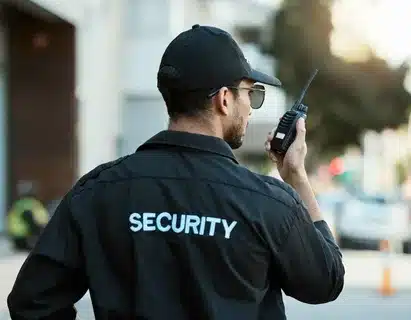
A serious security incident can affect much more than physical property. Theft, vandalism, unauthorized access, or a major disturbance can interrupt normal business operations.
Another consideration among the benefits of armed security guards is their ability to become part of a property’s wider operational security plan.
Security personnel may help monitor areas that are important to:
- Employee operations
- Customer access
- Deliveries
- Inventory management
- Equipment
- Parking areas
- Building entrances
- Restricted facilities
Security officers can also provide incident reports that give business owners and property managers information about what happened.
Over time, these reports may help identify recurring patterns. For example, repeated incidents at one entrance or during specific operating hours may indicate that the business should review its access controls, lighting, CCTV coverage, staffing, or patrol schedule.
Security should therefore be treated as an ongoing process rather than a one-time solution.
7. Creates a Layered Security Strategy
The final benefit is the ability to integrate armed security with other security measures.
A business does not necessarily need to rely on a single security solution. Different security layers can address different vulnerabilities across the property.
For example, a business could combine:
- Armed security guards
- CCTV monitoring
- Mobile patrols
- Access-control systems
- Security alarms
- Appropriate lighting
- Visitor management procedures
This layered approach is another important consideration when evaluating the benefits of armed security guards.
An armed officer can provide an on-site security presence, while CCTV can provide visibility across additional areas. Mobile patrols can inspect parking lots, perimeter areas, or multiple properties, while access-control systems can help manage authorized entry.
Grand Protective Security provides armed and unarmed security services, mobile patrol, CCTV monitoring, and security and risk management consultation, allowing businesses to consider different layers according to their security requirements.
When Should a Business Consider Armed Security?
The benefits of armed security guards are most relevant when a business’s risk profile supports the need for armed protection.
Businesses may consider armed security when they have:
- Valuable assets or equipment
- Significant cash exposure
- Sensitive or restricted operations
- Repeated serious security incidents
- Credible security threats
- Large or difficult-to-monitor properties
- Extended operating hours
- Locations requiring a higher level of physical security
The decision should be based on the property’s actual conditions rather than the assumption that armed security is always necessary.
For some businesses, unarmed guards may provide sufficient protection through access control, observation, patrols, and reporting. Other properties may have circumstances that justify armed coverage.
A professional security assessment can help identify vulnerabilities and determine what combination of security personnel, technology, patrols, and monitoring is appropriate.
What Should You Look for When Hiring Armed Security Guards?
Choosing a security provider is an important part of creating an effective security plan. Businesses should evaluate both the provider and the specific requirements of the assignment.
Licensing and Credentials
Make sure the security company and assigned personnel meet applicable California licensing, training, and permit requirements for the duties they will perform.
Relevant Training and Experience
Ask about the personnel’s relevant training and experience, including communication, de-escalation, emergency procedures, reporting, and other skills appropriate to the assignment.
Clear Post Orders
Security personnel should receive clear instructions about their responsibilities. Post orders can identify patrol areas, access procedures, restricted locations, reporting requirements, emergency contacts, and escalation procedures.
Reliable Communication and Reporting
Security personnel need reliable methods for communicating with supervisors and designated client contacts. Accurate incident reports can also help management understand recurring security concerns.
Appropriate Coverage
Determine whether your business needs continuous security coverage, selected hours, temporary protection, or a combination of services.
Risk-Based Planning
A professional security provider should be able to explain how the proposed security coverage relates to the property’s actual vulnerabilities and operational requirements.
Armed vs. Unarmed Security Guards
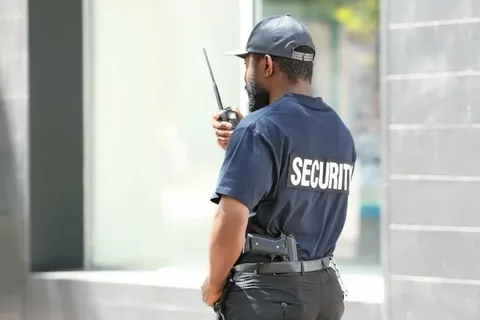
Armed and unarmed security guards can both perform important security functions. These may include access control, observation, patrols, reporting, communication, and professional interaction.
The appropriate option depends on the property’s risk profile and the responsibilities assigned to security personnel.
Unarmed security may be suitable for environments where the primary requirements involve access management, visible presence, observation, patrols, and incident reporting.
Armed security may be considered when elevated risks, valuable assets, serious incident history, sensitive operations, or other documented conditions justify an armed presence.
The choice should therefore be based on the business’s specific security requirements rather than assuming that one type of security is appropriate for every property.
How Armed Security Works With Other Security Services
Businesses often have multiple security requirements that cannot be addressed by one measure alone.
For example, an armed security officer could monitor a primary entrance while CCTV provides visibility across parking areas and other monitored locations. Mobile patrol officers could then inspect perimeter areas or additional buildings.
This approach can create multiple layers of protection across a property.
Grand Protective Security offers armed security, unarmed security, mobile patrol, CCTV monitoring, and security and risk management consultation. Businesses can evaluate these services according to their property’s layout, operating conditions, risks, and security objectives.
Frequently Asked Questions About Armed Security
What are the main benefits of armed security guards?
The main benefits of armed security guards can include visible deterrence, protection of people and assets, access-control support, incident recognition, security monitoring, and integration with broader security measures.
Are armed security guards suitable for every business?
No. Armed security is generally considered when a property’s risk profile and security requirements justify an armed presence. A business should evaluate its assets, operating conditions, incident history, and potential threats before choosing armed coverage.
Can armed security guards work with CCTV?
Yes. Armed security personnel can work alongside CCTV monitoring to provide both a physical security presence and broader camera-based visibility. The exact combination should depend on the property’s security requirements.
Are armed security guards police officers?
No. Armed security guards are private security personnel and do not have the same authority as law enforcement officers. Their responsibilities are determined by applicable laws, licensing requirements, employer procedures, client instructions, and the specific security assignment.
How can a business determine whether it needs armed security?
A business can begin with a professional security risk assessment. Factors such as previous incidents, valuable assets, access points, operating hours, property size, sensitive areas, and documented threats can help determine the appropriate level of security.
Final Thoughts
The benefits of armed security guards can extend beyond simply having an armed professional on a business property. When properly planned, armed security can contribute to visible deterrence, protection of people and assets, access-control support, incident recognition, operational security, and layered protection.
However, armed security should be selected according to the property’s actual security requirements. Businesses should consider their vulnerabilities, assets, operating conditions, previous incidents, and specific security objectives before determining the appropriate level of coverage.
For businesses in the San Francisco Bay Area that are evaluating their security requirements, Grand Protective Security provides professional security services designed around different property types and operational needs. A professional assessment can help identify vulnerabilities and determine whether armed security, unarmed security, mobile patrol, CCTV monitoring, or a combination of services is appropriate.